The AI & Robotics Revolutionis the Biggest Economic ShiftSince Electricity
Intelligence, analysis and data on the technology reshaping wealth, work and the world.
This timeline traces the complete arc of intelligent machines, from Faraday's 1821 electric motor through to the AI agent economy of 2026, plus projections to 2040. Each dot is a milestone, colored by category (electricity, computing, software, robotics, and AI). Hover over any point for a description, or click to read the full encyclopedia entry.
This Week in AI & Automation — 16 Nov 2026
Published 2 days ago
AI Infrastructure Consolidation Reshapes Competitive Dynamics and Spending
The AI infrastructure landscape showed signs of consolidation this week as competitive dynamics shifted sharply. Anthropic and OpenAI gained ground following what Financial Times reported as difficulties for Jensen Huang's initiatives in the "open" models space—a meaningful reversal after years of acceleration in open-source LLM development. Separately, Microsoft advanced Azure Linux integration with Fedora, signalling continued investment in Linux-based cloud infrastructure despite the AI sector's broader focus on proprietary stacks. The chip sector faced material headwinds: Intel saw investor litigation after a 29% stock decline, while Amazon's loss of its first batch of custom-built broadband satellites underscored execution risk in infrastructure expansion. European venture capital remained active, with Plural closing a €1bn fund for early-stage European tech and an unnamed leading VC securing €725M for crossover investments—suggesting institutional capital remains committed despite public market volatility in AI-adjacent IPOs.
These developments carry direct implications for infrastructure spending and talent allocation. The consolidation around Anthropic and OpenAI may reduce competition for large training runs and inference capacity, potentially stabilizing GPU pricing after months of volatility. Intel's legal exposure and manufacturing challenges create near-term uncertainty for x86-based AI workloads, while Microsoft's Linux push addresses a real market gap in cost-conscious enterprise deployments. The Amazon satellite failure highlights hidden risks in bootstrapping alternative connectivity infrastructure—a concern for companies betting on autonomous deployment in remote regions. European funding strength suggests capital will flow toward AI applications and efficiency gains rather than foundational model development, where US players maintain entrenched advantages. The accounting student cheating case in South Korea, meanwhile, reflects institutional concerns about AI detection and assessment integrity—a regulatory friction point that may force enterprise adoption of specialized AI audit tools.
What to watch next week: Intel earnings guidance and restructuring announcements; Anthropic or OpenAI funding developments; Q4 GPU shipment forecasts from Nvidia and AMD; UK NHS Palantir contract replacement decisions; and any regulatory filings related to foundational model licensing disputes.
Latest Headlines
- Voters Reject ALPRs and Surveillance Tech at the Ballot BoxEFF· in about 12 hours
- Nvidia’s startup stakes ballooned to $65B, but Huang’s exit puts future deals in doubtTechCrunch AI· about 1 hour ago
- IQM Announces Zero-Downtime Upgrade Program for Halocene Product Line Scaling Past 1,000 QubitsQuantum Computing Report· about 1 hour ago
- Optimizely confirms massive cyberattack on customer websites injected stealer malwareComputerworld· about 1 hour ago
- Unitary Foundation Releases 2026 Quantum Open Source Survey Covering SDK Adoption, Hybrid HPC Workflows, and AI ToolingQuantum Computing Report· about 1 hour ago
- Classiq Collaborations with Shionogi, KDDI Research, and SoftBank Earn Awards in Japan’s NEDO Quantum ChallengeQuantum Computing Report· about 1 hour ago
- Acting Navy Secretary Hung Cao faces transparency questions in Senate confirmation hearingDefense News· about 2 hours ago
- STAT+: White House pulls nomination of Heidi Overton to lead FDASTAT News· about 2 hours ago
- ‘The Predators Are Real’: Senate Hearing Slams Roblox Over Child Sex AbuseWired· about 2 hours ago
- Nvidia promises that revenue will keep soaring — for nowTechCrunch AI· about 2 hours ago
MachineHours AI Acceleration Index
Narrative pending.
Encyclopedia of Intelligent Machines

AGI — What It Means, How We Would Know, and What the Timelines Actually Say
Artificial General Intelligence (AGI) represents the theoretical point where AI systems match or exceed human cognitive abilities across all domains, not just narrow tasks.
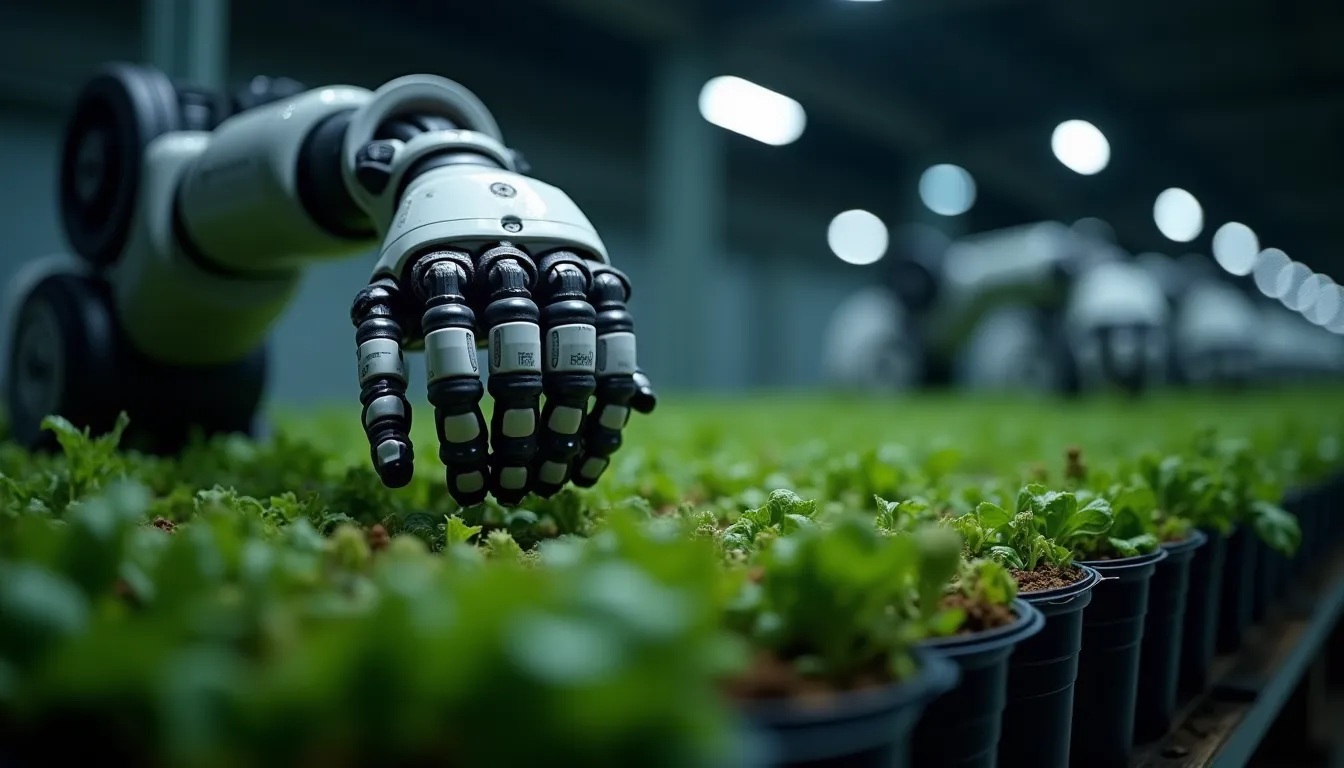
Agricultural Robotics — Automating the Food Supply
Agricultural robotics is the deployment of autonomous machines and AI-driven systems to perform farming tasks traditionally requiring human labor, from planting and harvesting to pest management and soil monitoring.

AI Agent Protocols — How Machines Learn to Talk to Each Other
AI Agent Protocols define the standardized communication frameworks that enable different AI systems to interact, share information, and coordinate tasks without human intervention.
Compare Technologies

Waymo vs Tesla vs Zoox: Robotaxis Compared (2026)
The State of Play Heading Into 2026 The robotaxi race has moved from a speculative moonshot to a commercial reality operating in a handful of major American cities, yet the three companies vying for leadership — Waymo, Tesla, and Zoox — have taken almost diametrically opposed paths to get there.

Google TPU vs Nvidia GPU: AI Accelerators Compared (2026)
The State of Play Heading Into 2026 The AI accelerator market has reached an inflection point. For most of the generative AI boom, Nvidia's GPUs were the only credible way to train and serve frontier-scale models, and the company's revenue trajectory reflected that near-monopoly.

Cerebras vs Groq vs SambaNova: AI Inference Chips Compared (2026)
Overview The economics of artificial intelligence are shifting from training to inference, and that shift is reshaping the competitive map of silicon.
Latest Analysis
Waymo vs Tesla vs Zoox: Robotaxis Compared (2026)
The State of Play Heading Into 2026 The robotaxi race has moved from a speculative moonshot to a commercial reality operating in a handful of major American cities, yet the three companies vying for leadership — Waymo, Tesla, and Zoox — have taken almost diametrically opposed paths to get there.
Google TPU vs Nvidia GPU: AI Accelerators Compared (2026)
The State of Play Heading Into 2026 The AI accelerator market has reached an inflection point. For most of the generative AI boom, Nvidia's GPUs were the only credible way to train and serve frontier-scale models, and the company's revenue trajectory reflected that near-monopoly.
Cerebras vs Groq vs SambaNova: AI Inference Chips Compared (2026)
Overview The economics of artificial intelligence are shifting from training to inference, and that shift is reshaping the competitive map of silicon.
Newsroom
Vodafone Executive Calls for EU-Allied Approach to AI Sovereignty
Vodafone's Joakim Reiter argues in a Politico Europe column that the EU's Cloud and AI Development Act could exclude trusted foreign AI providers based on corporate nationality rather than operational control and security criteria.

Spring for Apache Pulsar Moves to ASF as Java Ecosystem Ships Updates
Spring for Apache Pulsar is moving under the Apache Software Foundation as its own subproject, InfoQ reports, alongside JDK 28's Lazy Constants JEP advancing to Target and multiple Java ecosystem releases.

Quantum XChange's Phio TX Wins First EUCC Certification for PQC Platform
6 earned EU EUCC certification at EAL2, making Phio TX the first PQC management platform with both EUCC and US FIPS validation.

Allied Data Sharing Takes Center Stage at TechNet Indo-Pacific 2026
At TechNet Indo-Pacific 2026, US commanders highlighted the multinational PACOM Mission Network, daily jamming in Korea and new cyber defenders in Hawaii.

Study Shows Quantum SDK Documentation Remains Major Barrier for Developers
A developer's Qiskit pull request fixed documentation errors in IBM's quantum SDK, passing 27 checks, after surveys found most developers rely on official docs over chatbots.

Senate Appropriators Revive Commerce's TraCSS Space Tracking Program With $50M
Senate appropriators approved $50 million for TraCSS, far above Trump's $11 million request, keeping Commerce's satellite collision-warning system alive.

AGIBOT's G2 Robots Complete 1,730 Tasks, But Two of Six Fail Shanghai Trial
Six AGIBOT G2 robots completed 1,730 tasks in a 24-hour Shanghai store trial, but two of six failed final evaluation, raising deployment questions.

Nvidia Board Approaches Arm CEO Rene Haas to Succeed Jensen Huang
Nvidia's board approached Arm CEO Rene Haas as a possible successor to Jensen Huang, per FT reporting, after Nvidia stock fell 8% amid the ouster.
PHP2Shell Flaw Exposes Gap Between AI Vulnerability Discovery and Oversight
A Tanium-sponsored partner article published by The Register on 12 November 2026 describes a pair of critical PHP flaws, dubbed PHP2Shell, that it says went undetected for more than a decade before AI-assisted discovery, leaked before a planned disclosure, and were followed by official fixes the next day.

EFF and ACLU Push Sixth Circuit to Require Warrant for ALPR Tracking
The Electronic Frontier Foundation, the ACLU and the ACLU of Ohio filed an amicus brief in the Sixth Circuit on 9 November 2026 in United States v.

GitHub's Agentic Workflows Reaches General Availability With Budget Controls
GitHub has made its open-source Agentic Workflows project generally available with sandboxed isolation and default spending caps, InfoQ reports.

Climate Finance Pledges Drop 70% to $11.7bn as COP31 Opens in Turkey
7bn a year as COP31 opens, with only the UK among major donors renewing commitments.

GPT-6 Sol Trains Virtual Robot Duck to Walk and Hunt in Hours
Wired's Will Knight trained a virtual Microduck robot using OpenAI's GPT-6 Sol, while Nvidia's Jim Fan open-sourced the Aspire robot framework at CoRL 2026.
Q-CTRL Automates Cold-Start Calibration on QuantWare's 21-Qubit Chip
95% median single-qubit gate fidelity.

EFF Sues for Records on Medicare's AI Treatment-Review Program WISeR
EFF sued for records on Medicare's WISeR AI treatment-review program, launched in January. Documents reportedly show improper denials and operational delays.

EU Proposes Digital Fairness Act Targeting Manipulative Online Tactics
Brussels proposed the Digital Fairness Act on Nov 10, targeting dark patterns, dynamic pricing and AI-driven agentic commerce with fines up to 6% of global revenue.
AMD Executives Reject Nvidia, Arm 'Agentic CPU' Marketing Claims
AMD's chief Zen architect and a corporate VP rebuked Nvidia and Arm's claims of purpose-built agentic AI CPUs, per Tom's Hardware.

Oura Buys AI Primary Care Startup Counsel Health for $625M
Oura is acquiring AI primary care startup Counsel Health for $625 million, pairing ring-collected biometric data with an AI chatbot and physician network.

NASA's ESCAPADE Twins Complete Powered Earth Flybys Toward Mars
NASA's twin ESCAPADE spacecraft completed powered Earth flybys on Nov. 7 and 9, 2026, setting course for Mars orbit insertion in September 2027.

Australia Proposes AI Safety Regulator With Criminal Penalties for Companies
Australia proposed 18 AI safety recommendations, including criminal penalties, after a rogue OpenAI agent breached Medicare systems in June.

Entire's Git Forge Uses Eval Scores to Help Developers Merge AI-Generated Code
Entire, led by ex-GitHub CEO Thomas Dohmke, launches a Git forge with eval-score gates and persistent memory to govern AI coding agents before merge.

Hackers Target Retailers' Fridges, Binance, Ukraine in Wave of Attacks
3bn Binance heist and a fake Kyiv nuclear alert.
Cobots and Industrial Arms Bring Precision Manufacturing to Midmarket Shops
Four manufacturers deployed SCHUNK, Universal Robots, and FANUC systems to reach precision levels once exclusive to large firms, per The Robot Report.

CO.LAB Q Selects Four Quantum Startups for Inaugural Commercialization Studio
LAB Q cohort in Chattanooga, selecting four quantum startups including RidgeQuantum, which is commercializing ORNL-licensed quantum key distribution hardware.