Intelligence Briefings on the Automation Economy
MachineHours Analysis publishes long-form intelligence briefings on the structural forces reshaping the AI and robotics economy. Each briefing is a living document — revised as the underlying data, capital flows, and technology landscape evolve, rather than a one-off article frozen at the moment of publication.
The briefings sit between the daily Newsroom and the reference Encyclopedia: deeper than a headline, more thesis-driven than a definition. Topics span venture capital concentration, hyperscaler capex, semiconductor supply chains, labour market displacement, model capability curves, and the geopolitics of compute. Every briefing connects directly to the live indicators and encyclopedia entries that underpin its argument, so readers can audit the reasoning and follow the chain of evidence rather than take any conclusion on faith.
Briefings are revisited regularly — the latest developments panel on each page tracks recent news flow against the underlying thesis, and the published-versus-reviewed dates make freshness explicit. Use the Analysis pages as the starting point when a topic warrants more than a headline: each briefing connects out to the supporting encyclopedia entries, to the live indicators, and to the broader news coverage that has accumulated since publication.

Waymo vs Tesla vs Zoox: Robotaxis Compared (2026)
The State of Play Heading Into 2026 The robotaxi race has moved from a speculative moonshot to a commercial reality operating in a handful of major American cities, yet the three companies vying for leadership — Waymo, Tesla, and Zoox — have taken almost diametrically opposed paths to get there.
Google TPU vs Nvidia GPU: AI Accelerators Compared (2026)
The State of Play Heading Into 2026 The AI accelerator market has reached an inflection point. For most of the generative AI boom, Nvidia's GPUs were the only credible way to train and serve frontier-scale models, and the company's revenue trajectory reflected that near-monopoly.

Cerebras vs Groq vs SambaNova: AI Inference Chips Compared (2026)
Overview The economics of artificial intelligence are shifting from training to inference, and that shift is reshaping the competitive map of silicon.

IBM vs Google vs Quantinuum: Quantum Computers Compared (2026)
By early 2026, the quantum computing industry has split into clearly differentiated technical camps, and the gap between marketing claims and demonstrable, fault-tolerant performance has become the central question for investors, enterprise buyers, and policymakers alike.
NVIDIA H100 vs Blackwell B200: The Trillion-Dollar GPU Transition
NVIDIA's transition from Hopper H100 to Blackwell B200 represents the most consequential shift in AI infrastructure economics since the release of the A100 in 2020.
Boston Dynamics vs Figure vs Agility Robotics — Humanoid Robots in 2026
Three companies lead commercial humanoid robotics. Boston Dynamics has the most capable hardware. Figure has the most aggressive deployment timeline. Agility Robotics has the most warehouse contracts.
Nuclear vs Solar vs Wind for AI Data Centres — The Energy Trade-Off
AI data centres need reliable, cheap, low-carbon power. Nuclear offers baseload reliability but slow build times. Solar is cheap but intermittent. Wind has geographic constraints. Full comparison for investors and infrastructure planners.
Supervised vs Reinforcement vs Unsupervised Learning — ML Paradigm Comparison
Most commercial AI uses supervised learning. Reinforcement learning produced AlphaGo and trains LLMs via RLHF. Unsupervised learning finds structure without labels. Full comparison of how each works, what it is best suited for, and where each paradigm is heading.
AWS vs Azure vs Google Cloud for AI Workloads in 2026
AWS has the most infrastructure. Azure has the best enterprise integration and OpenAI partnership. Google Cloud has the most advanced TPUs.
NVIDIA vs AMD — AI Training and Inference Chips in 2026
NVIDIA dominates AI training. AMD is closing the gap on inference. This comparison covers performance benchmarks, pricing, software ecosystem maturity, and which chip makes sense for which workload in 2026.
ASML vs Nikon vs Canon — Semiconductor Lithography Equipment
ASML holds a monopoly on EUV lithography — the only way to make leading-edge chips. Nikon and Canon compete on older DUV nodes. This comparison explains the technology gap, why it exists, and what it means for semiconductor supply chain risk and investment.
TSMC vs Samsung vs Intel Foundry — Semiconductor Manufacturing in 2026
TSMC manufactures chips for Apple, NVIDIA and AMD. Samsung competes on advanced nodes. Intel is rebuilding its foundry business. Full comparison of node leadership, yield rates, customer concentration, and geopolitical risk.
PyTorch vs TensorFlow vs JAX — ML Framework Comparison
PyTorch dominates research. TensorFlow dominates production deployment. JAX is the performance-optimised challenger favoured by Google DeepMind. Full comparison of ecosystem maturity, hardware support, learning curve, and which to learn first.

GPT-4o vs Claude 4 vs Gemini 2 — LLM Capabilities in 2026
OpenAI, Anthropic and Google each claim frontier performance. This comparison cuts through marketing to examine benchmark scores, coding ability, reasoning depth, context handling, pricing, and which model fits which professional use case.
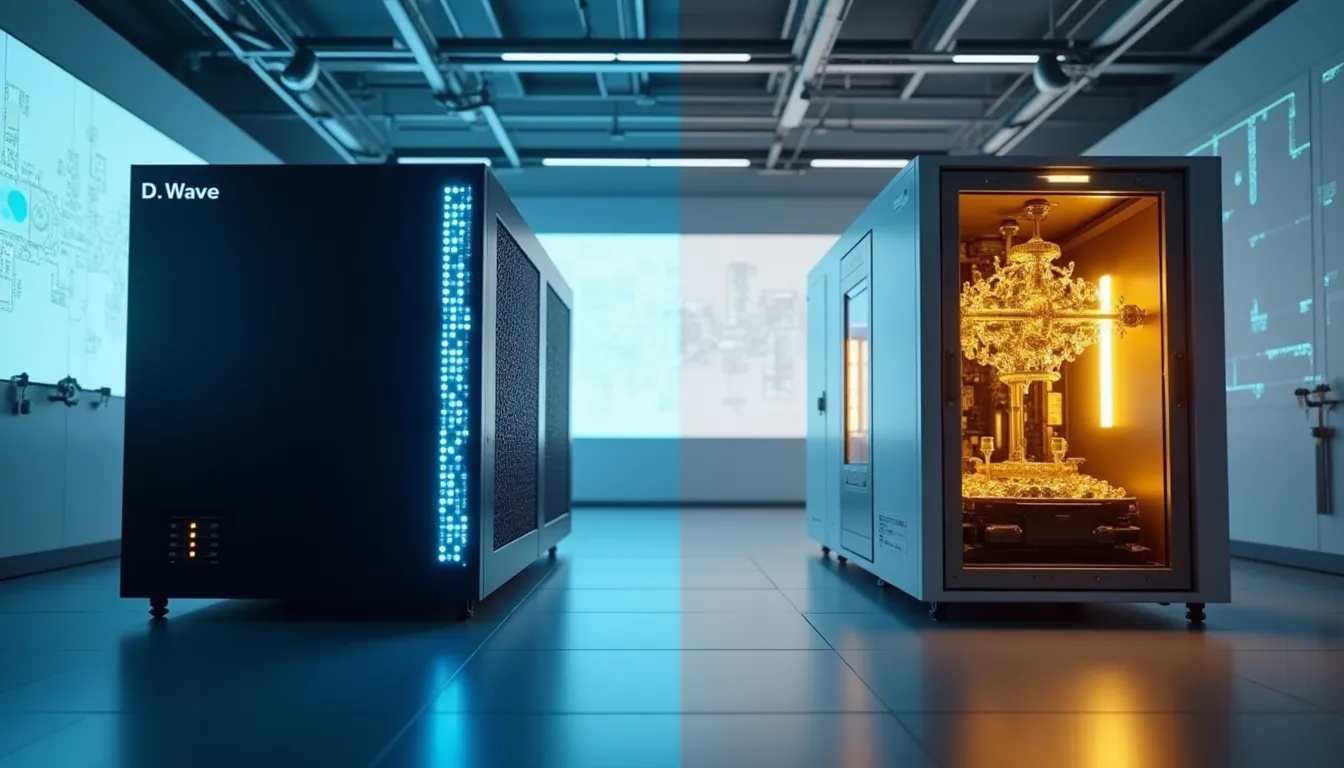
Quantum Annealing vs Gate-Based Quantum Computing — Which Approach Wins?
D-Waves quantum annealing solves optimisation problems today. IBM and Google are building universal gate-based quantum computers. These are fundamentally different technologies solving different problems.
Qubots in 2026: Separating Quantum Robotics Reality from the Hype
The term 'qubots' is being applied to two very different things: QUBO-optimised logistics robots that exist today, and genuinely quantum-enhanced autonomous systems that remain theoretical. This analysis separates the real from the speculative and maps the convergence timeline.
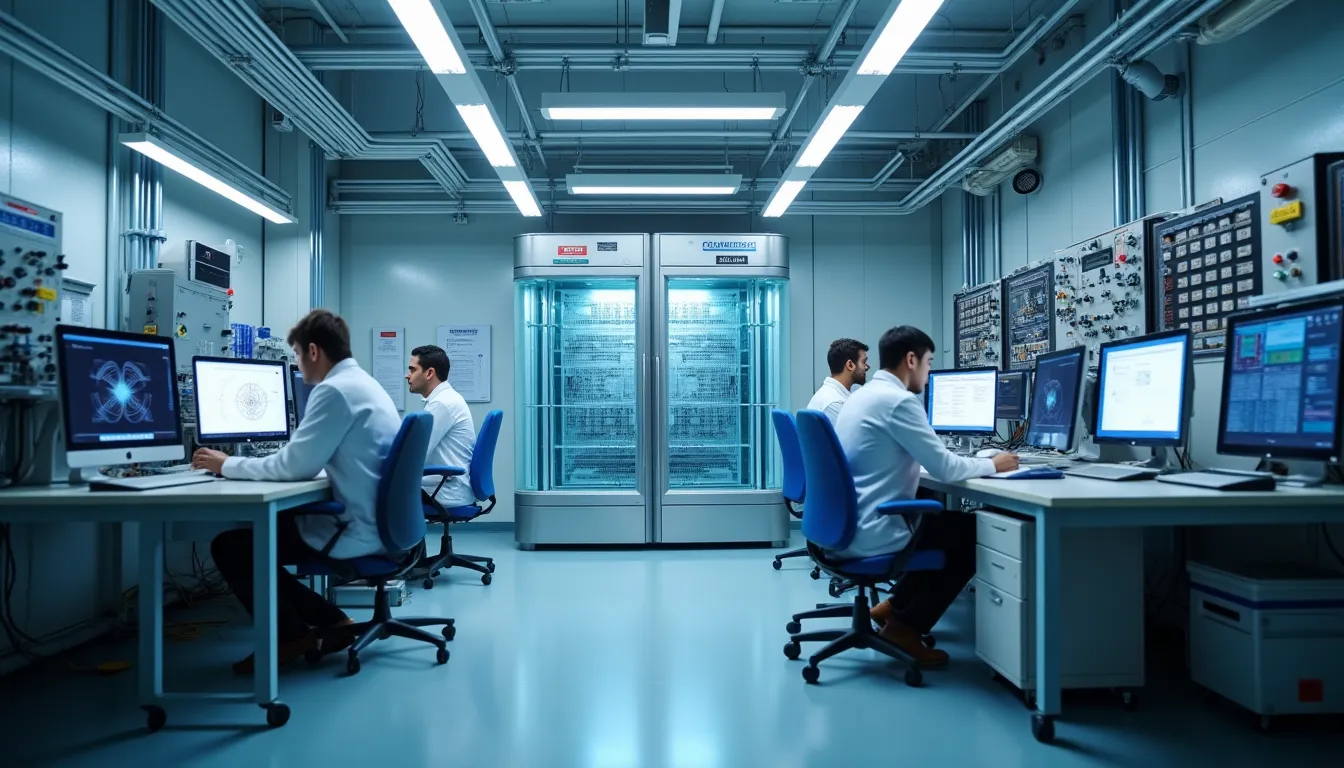
Quantum Computing in 2026: What Is Actually Deployed, By Whom, and For What
Separating quantum computing reality from hype in 2026. Which industries are running quantum systems, what problems they are genuinely solving, and what the honest near-term roadmap looks like beyond benchmark demonstrations and press releases.

When Quantum Computers Can Crack Bitcoin: The Timeline, the Threat, and the Fix
A sufficiently powerful quantum computer running Shor's algorithm could break Bitcoin's elliptic curve cryptography, exposing wallets and threatening the entire network.

How the Doginal Dogs Are Using AI to Build Real-World Businesses
The Doginal Dogs NFT community — the #1 ranked collection across all blockchains by trading volume — has developed a builder culture that goes well beyond digital collectibles.
The MachineHours 2026 AI Investment Framework — A Structured Approach to Technology Allocation
A structured three-layer framework for AI investment allocation: infrastructure as core positions, platforms as satellites, applications as speculative bets. Historical internet parallels suggest infr

The DeepSeek Shock — What Cheap AI Means for the Investment Thesis
DeepSeek R1's $6M training cost breakthrough triggered Nvidia's record $600B single-day loss, challenging AI investment assumptions about competitive moats, hardware requirements, and geopolitical adv

The Rise of AI Agents — Which Enterprise Software Companies Win and Lose
2 trillion per-seat licensing model. Winners include data infrastructure providers like Snowflake and MongoDB, while traditional SaaS companies face r

Generative AI for Creative Industries — Disruption, Opportunity, and the Copyright War
Generative AI tools like Midjourney ($200M revenue, 11 staff) and Runway are disrupting creative industries while facing copyright lawsuits from NYT, Getty Images, and authors. Stock photo revenue dow

The AI Wealth Concentration Problem — Who Captures the Gains?
AI productivity gains are flowing disproportionately to capital owners rather than workers, creating extreme wealth concentration as cognitive work faces automation for the first time in history.