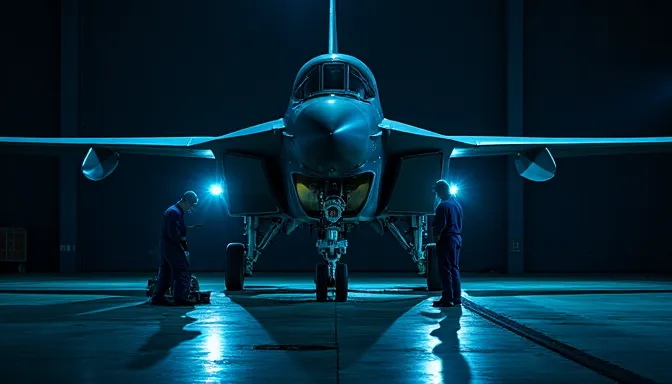
Air Force says its $16.1B propulsion contract award was posted in error. Correction issued Nov. 23, with 58 vendors planned for selection.
Key Takeaways
- Air Force mistakenly announced an award for the $16.1B APAC propulsion contract on Nov. 20, 2026.
- Pentagon corrected the award notice in its Nov. 23 daily contract roundup after Breaking Defense inquiry.
- APAC is an IDIQ vehicle running through 2041; the $16.1B figure is a ceiling, not guaranteed spending.
- 58 vendors, from startups to established engine primes, are planned for selection once the contract is formally awarded.
- Each selected vendor is set to receive $1,000 to support a post-award orientation conference.
The U.S. Air Force confirmed on November 23 that it had mistakenly posted an award notice for a propulsion contract vehicle worth up to $16.1 billion, according to Breaking Defense. The service announced on November 20 that it had selected 58 companies for the Advanced Propulsion Acquisition Contract (APAC), set to run through 2041, but the listing on the Pentagon's daily contract roundup was erroneous. The mistake, corrected three days later, underscores the complexity of managing multi-decade defense acquisition vehicles as the Air Force pursues propulsion capabilities spanning drone wingmen to large mobility aircraft.
What Happened
According to Breaking Defense, the Air Force announced on November 20 that it had selected 58 companies for APAC through the Pentagon's daily contract roundup, the routine disclosure channel the Defense Department uses to publish new awards. An Air Force spokesperson subsequently told Breaking Defense the listing had been posted erroneously. The Pentagon corrected the record in its November 23 contract roundup after Breaking Defense raised the discrepancy.
APAC is structured as an indefinite delivery, indefinite quantity (IDIQ) contract, meaning the $16.1 billion figure represents a ceiling rather than obligated spending. Breaking Defense reported that the Air Force described APAC as intended to function as an enterprise-level contracting vehicle covering propulsion requirements across the full lifecycle: science and technology work, research and development, test and evaluation, production, sustainment, and modernization.
The vendor pool spans established engine primes and startups with different propulsion expertise. Breaking Defense confirmed that 58 vendors are planned for selection and will receive an initial $1,000 disbursement to support participation in a post-award orientation conference once APAC is formally awarded. The Air Force stated that future task orders and delivery orders will be competed among the qualified vendor pool as requirements are validated and funded, with specific platforms, scope, funding, contract type, period of performance, and pricing established at the individual order level rather than upfront.
The vendor selection reflects the Air Force's search for new and more effective ways to power both existing and future platforms. Breaking Defense noted that the propulsion vehicle comes as the service seeks new and more effective ways to power platforms ranging from drone wingmen to large mobility aircraft.
Why It Matters
The scale of the error - a $16.1 billion contract mistakenly disclosed as awarded - reflects the operational pressure defense acquisition offices face when managing massive, multi-decade contracting vehicles. Rather than signaling a problem with the propulsion program itself, the posting error illustrates how complex the process of announcing and managing long-term defense contracts has become. When a single misstep temporarily signals a final decision to 58 vendors and industry observers, the gap between pre-award preparation and actual award execution becomes visible.
APAC's explicit coverage of propulsion across the full product lifecycle - from early science work through sustainment - positions it as a foundational vehicle for both near-term Air Force needs and next-generation autonomous platforms. For companies and investors tracking defense prime positioning, the vendor pool composition matters: established primes gain a pathway to compete for future task orders, while startups gain formal qualification status within a $16.1 billion vehicle. As the Air Force funds individual task orders over the next 15 years, the actual distribution of propulsion work will reflect both technical capability and how effectively vendors use their initial $1,000 conference participation into substantive orders. Defense and space sector equity analysis provides a useful lens on which propulsion suppliers stand to benefit once APAC task orders begin flowing.
Background
APAC's focus on propulsion across autonomous platforms connects to the wider shift toward unmanned flight systems. Drone technology represents the commercialization of autonomous flight systems using advanced sensors and AI navigation, with the market projected to grow from $43.6 billion to $109.8 billion by 2030. The Air Force's inclusion of drone wingmen propulsion requirements in APAC signals how defense modernization and commercial autonomous trends are converging.
What to Watch
Monitor how quickly the Air Force actually issues the first APAC task orders and to which vendors. The $1,000 conference participation fee signals that the service intends to move forward, but the gap between vendor selection and meaningful task order volume will indicate whether APAC functions as originally designed. Watch also for which vendors - primes versus startups - win the highest-value initial orders, as this will reveal how the Air Force balances risk across the qualified pool.
Observe how the initial $1,000 conference participation is used to align vendor capabilities with specific Air Force propulsion requirements, as this will shape which companies are positioned to compete effectively for future orders.
- APAC contract ceiling: up to $16.1 billion, structured as an IDIQ vehicle running through 2041
- 58 vendors are planned for selection; each will receive an initial $1,000 disbursement to support post-award orientation conference participation once the contract is formally awarded
- Air Force confirmed the November 20 award posting was published in error; correction issued in the Pentagon's November 23 contract roundup
- APAC covers propulsion requirements across the full lifecycle: science and technology, research and development, test and evaluation, production, sustainment, and modernization
Further reading and context
- ASML — The $300 Billion Company Nobody Has Heard Of
- Humanoid Robots — The Race to Build Human-Form Machines
Further reading and context
Sources
- Breaking Defense: $16 billion propulsion mega-contract posted in error, Air Force says
- MachineHours: Drone Technology — Autonomous Flight and Its Economic Impact
- MachineHours: How Chips Are Made — Inside the World's Most Complex Manufacturing
- MachineHours: AI & Robotics Acceleration Index
- ASML — The $300 Billion Company Nobody Has Heard Of
- Humanoid Robots — The Race to Build Human-Form Machines
Frequently Asked Questions
What is the Advanced Propulsion Acquisition Contract (APAC)?
APAC is an Air Force indefinite delivery, indefinite quantity contract vehicle meant to cover propulsion work across science and technology, R&D, test, production, sustainment and modernization, running through 2041, according to Breaking Defense.
Why did the Air Force retract its Nov. 20 announcement?
An Air Force spokesperson told Breaking Defense the Nov. 20 posting on the Pentagon's daily contract roundup was published in error, though the service still plans to eventually award the contract.
How much is the APAC contract worth?
Up to $16.1 billion, though as an IDIQ vehicle the Air Force is not obligated to spend the full amount. Actual spending will be set at the individual delivery or task order level.
How many companies are involved in APAC?
The Air Force confirmed 58 vendors are planned for selection, ranging from startups to established engine manufacturers with different propulsion expertise.
What happens next for the selected vendors?
Each selected vendor is set to receive an initial $1,000 disbursement to support a post-award orientation conference once the contract is formally awarded, with future task orders competed among the qualified pool as requirements are validated and funded.
Get MachineHours in your inbox
AI compute and the machine economy in your inbox.