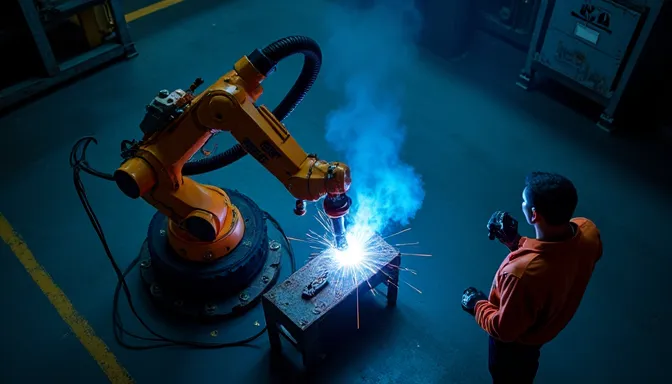
VulcanForms CTO Mike Kenworthy warns manufacturing data gaps threaten physical AI rollout despite $48 billion raised in 2026.
Key Takeaways
- Robotics and physical AI companies raised nearly $48 billion in 2026, per The Robot Report.
- 37% of manufacturers cited data interoperability as a major smart-factory roadblock in 2026, up from 22% in 2025.
- VulcanForms CTO Mike Kenworthy says experienced technicians' knowledge rarely gets captured in a form usable to train robots.
- Kenworthy outlines three priorities: capturing real production data, building a digital thread, and defining human oversight limits.
- Medical device manufacturing is cited as an example where regulatory validation restricts autonomous process changes.
Physical AI and robotics companies have raised nearly $48 billion so far in 2026, according to The Robot Report, yet VulcanForms CTO Mike Kenworthy argues that most manufacturing floors still lack the structured data these systems need to learn safely. Kenworthy's November 21 analysis warns that without a documented link between process decisions and production outcomes, even sophisticated robotic systems will struggle to adapt once they leave controlled environments.
What Happened
According to The Robot Report, Kenworthy uses welding as his central example: for a robot to improve its technique autonomously, it needs to understand how welding angle, travel speed, and workpiece position affect the finished result. Experienced technicians build that understanding over years of hands-on work, but the piece notes that knowledge is rarely captured in a form robotics partners can use to train autonomous systems, and similar gaps exist across other manufacturing processes.
The Robot Report cites the Manufacturing Leadership Council's 2026 Smart Factories and Digital Production Survey, which found that 37% of surveyed manufacturers identified a lack of data interoperability as a major roadblock to their smart factory strategies, up from 22% in 2025. Kenworthy argues that fixing interoperability alone will not solve the problem, since production records also need to be tied to measurable quality outcomes rather than sitting in separate systems that were never designed to talk to each other.
The piece lays out three priorities for manufacturers preparing for physical AI: capturing data that reflects real production conditions, connecting that data across the entire production process into what Kenworthy calls a digital thread, and building feedback loops that define when human oversight is required. On the second point, Kenworthy quotes Lior Susan of Eclipse, who argues that a physical asset that isn't generating real-time operational data is effectively a dead asset. On the third, Kenworthy points to medical device manufacturing as an example where regulatory validation requirements limit how freely AI systems can modify production parameters without engineering review.
Kenworthy writes from direct experience in advanced manufacturing: he previously served as VP of engineering at Relativity Space, where he worked on 3D-printed rockets, and as chief product officer at Seurat Technologies before becoming CTO at VulcanForms.
Why It Matters
MachineHours analysis: Kenworthy's argument reframes physical AI's bottleneck as a labor problem as much as an engineering one. The tacit knowledge he describes, the years of hands-on adjustment that experienced welders and machinists carry in their heads, is precisely the kind of information that has never needed formal documentation because a human was always there to apply it. Converting that expertise into training data does not eliminate the worker's value; it relocates it, from execution toward curation, validation, and the engineering review that Kenworthy says remains mandatory when autonomous systems hit unexpected outcomes in regulated industries like medical device manufacturing.
The MachineHours AI Acceleration Index, calculated November 16, 2026, puts the employment sub-score at just 18 out of 100, the weakest of its five components, trailing compute at 55 and adoption at 52. That gap is consistent with what Kenworthy describes: capital and hardware are scaling faster than the workforce systems needed to feed robots usable data. For investors parsing where that $48 billion in robotics funding actually lands, the equity market implications of robotics deployment may depend less on robot unit counts than on which manufacturers have already built the digital threads Kenworthy describes.
Background
The push to close this data gap sits alongside a broader industry shift toward commercial humanoid and industrial robot deployment, detailed in MachineHours' overview of humanoid robot commercial deployment. Companies including Figure, 1X, and Agility Robotics are moving physical AI from research prototypes into warehouses and factories, a transition that depends on exactly the kind of production data infrastructure Kenworthy says most manufacturers lack. MachineHours has also tracked how humanoid robots entering European manufacturing are being designed to work alongside humans without facility modifications, and how industrial robots have transformed manufacturing since the 1960s by automating tasks once performed entirely by hand.
What to Watch
Watch whether manufacturers begin publishing specifics on digital thread implementations, since Kenworthy's piece frames targeted, application-specific integration as more achievable than overhauling entire production infrastructures at once. The Manufacturing Leadership Council's survey trend, interoperability complaints rising from 22% to 37% in a single year, suggests this problem is getting worse before it gets better, which could slow the pace at which the $48 billion in 2026 robotics funding converts into deployed systems. Also watch how regulated sectors like medical device manufacturing handle validation requirements as autonomous adjustment capabilities expand, since Kenworthy argues a system that can modify parameters but cannot evaluate resulting quality is not ready for independent decisions.
- Robotics and physical AI companies have raised nearly $48 billion so far in 2026, per The Robot Report.
- 37% of manufacturers cited data interoperability as a major smart-factory roadblock in 2026, up from 22% in 2025, per the Manufacturing Leadership Council's Smart Factories and Digital Production Survey.
- Article author Mike Kenworthy is CTO of VulcanForms, previously VP of engineering at Relativity Space and chief product officer at Seurat Technologies.
- Eclipse's Lior Susan is quoted in the piece arguing that a physical asset without real-time operational data is effectively a dead asset.
Further reading and context
Sources
- The Robot Report: The manufacturing data gap holding back physical AI
- MachineHours Encyclopedia: Humanoid Robot Commercial Deployment — The Race to Scale Physical AI
- MachineHours: AI Acceleration Index
- The Picks and Shovels Strategy for AI Investing
- Humanoid Robots Enter European Manufacturing
- Industrial Robots — How Machines Transformed Manufacturing
Frequently Asked Questions
What is the main argument in The Robot Report's manufacturing data gap article?
VulcanForms CTO Mike Kenworthy argues that despite nearly $48 billion raised by robotics and physical AI companies in 2026, most manufacturing floors lack the structured data needed for robots to learn and adapt autonomously on the factory floor.
Why can't robots learn welding techniques the way human technicians do?
According to the article, experienced technicians develop an understanding of how welding angle, travel speed, and workpiece position affect results through years of hands-on experience, but that knowledge is rarely documented in a form robotics systems can use for training.
What does the Manufacturing Leadership Council survey show about data interoperability?
The council's 2026 Smart Factories and Digital Production Survey found 37% of manufacturers cited a lack of data interoperability as a major roadblock to smart factory strategies, up from 22% in 2025.
What three steps does Kenworthy recommend manufacturers take before deploying physical AI?
He recommends capturing data that reflects real production conditions, connecting that data across the entire production process into a digital thread, and building feedback loops that define when human oversight is required.
Who is Mike Kenworthy?
Mike Kenworthy is chief technology officer at VulcanForms. He previously served as VP of engineering at Relativity Space, working on 3D-printed rockets, and as chief product officer at Seurat Technologies.
Get MachineHours in your inbox
AI compute and the machine economy in your inbox.