Latest Developments
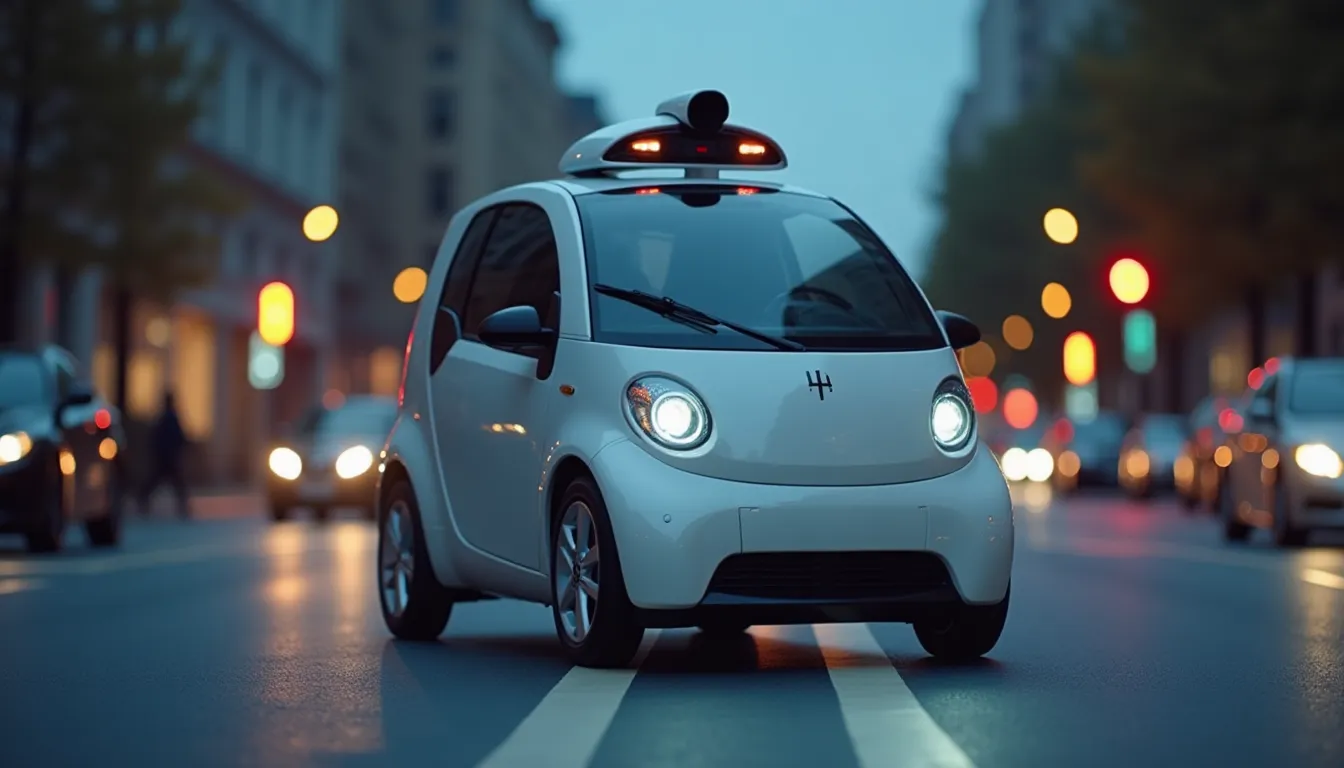
Updated 27 Oct 2026Regulatory and competitive momentum in the robotaxi sector continued this week. On October 24, 2026, the National Highway Traffic Safety Administration proposed an amendment to FMVSS 108 allowing optional cyan marker lights to visually identify driverless vehicles to pedestrians, other drivers, and first responders. NHTSA is separately auditing Tesla's Cybercab design as part of broader oversight of autonomous vehicle development.
On October 22, Tesla said it would allow customers to add their personally owned vehicles to its robotaxi fleet starting in 2026, extending its asset-light expansion strategy. The announcement came as CEO Elon Musk pursues a reported $3.6 trillion combination of Tesla and SpaceX, a deal that could reshape Tesla's capital structure and autonomy ambitions.
Separately, Agility Robotics revealed it had rebuilt its humanoid robot Digit from scratch, reflecting accelerating research across the broader automation and robotics landscape that intersects with autonomous vehicle technology.
Key Takeaways
- Waymo completed over 150,000 paid rides weekly by Q4 2024, representing 400% growth from 25,000 weekly rides the previous year.
- Robotaxi operating costs reach approximately $0.45 per mile compared to $1.50-$2.00 per mile for human-driven ride services.
- Waymo's $45 billion valuation represents roughly 230x current revenue of $195 million annually from ride operations.
- Each Waymo vehicle generates $200-$300 daily revenue with utilization rates approaching 40% during peak hours.
- The U.S. employs 1.5 million ride-hailing drivers earning $30,000-$50,000 annually, creating a $75-$125 billion addressable market.
- Morgan Stanley projects 15% robotaxi market penetration in major cities by 2030, rising to 45% by 2035.
The Economics of Full Automation
The robotaxi market represents the most significant wealth creation opportunity in transportation since the advent of the automobile itself. With Waymo achieving over 150,000 paid trips weekly across three major metropolitan areas by late 2024, and securing a $45 billion valuation in its latest funding round, the economics of autonomous ride-hailing have moved from theoretical to measurable. The core investment thesis rests on a simple but profound cost arbitrage: fully autonomous vehicles can operate at under $0.50 per mile, compared to $1.50–$2.00 per mile for human-driven ride services.
This cost differential, when deployed at scale across the 1.5 million ride-hailing drivers currently operating in the United States, creates a market opportunity worth hundreds of billions in annual revenue displacement. The question for investors is not whether this transition will occur, but which companies will capture the value and over what timeframe.
Waymo's Operational Breakthrough
Waymo's current operational metrics provide the clearest window into robotaxi unit economics at commercial scale. The company reported completing over 150,000 paid rides weekly across San Francisco, Phoenix, and Los Angeles by Q4 2024, representing a 400% increase from the previous year's 25,000 weekly rides. Each vehicle in the Waymo fleet generates approximately $200–$300 in daily revenue during peak deployment periods, with utilization rates approaching 40% during optimal hours.
The cost structure reveals the economic advantage. Waymo's vehicles carry approximately $200,000 in hardware costs per unit, including advanced LiDAR sensors, cameras, and compute systems. With financing costs and depreciation spread over a five-year operational life, the capital cost per mile operates at roughly $0.15. Adding insurance, maintenance, and energy costs brings total operating expenses to approximately $0.45 per mile, excluding the technology development overhead.
"We're seeing consistent unit economics that demonstrate the path to profitability at scale. The key metric is not just cost per mile, but revenue per mile multiplied by utilization rates," noted Dmitri Dolgov, Waymo's co-CEO, during the company's investor presentation in October 2024.
Technology Approaches and Capital Requirements
The autonomous vehicle market has crystallized around two primary technology approaches, each requiring vastly different capital commitments and offering distinct risk profiles for investors.
| Technology Approach | Hardware Cost per Vehicle | R&D Investment | Current Capability | Commercial Timeline |
|---|---|---|---|---|
| Waymo (Sensor Fusion) | $200,000 | $20+ billion | L4 autonomous in geo-fenced areas | Operating commercially |
| Tesla (Vision-First) | $5,000 | $10+ billion | L2+ with driver supervision | 2025-2026 (projected) |
| Cruise (Pre-suspension) | $150,000 | $8 billion | L4 limited deployment | Suspended pending safety review |
| Zoox (Purpose-built) | $250,000 | $3 billion | L4 testing phase | 2025-2026 (projected) |
Waymo's sensor-fusion approach combines LiDAR, cameras, and radar to create redundant perception systems. This methodology requires higher upfront capital costs but delivers immediate commercial capability in defined geographic areas. Tesla's camera-only Full Self-Driving system targets mass-market deployment with significantly lower hardware costs, currently serving over 2 million subscribers at $99 per month, generating approximately $2.4 billion in annual recurring revenue.
Market Structure and Competitive Dynamics
The robotaxi market exhibits characteristics of a natural monopoly within geographic regions, similar to ride-hailing platforms today. Network effects, regulatory moats, and the massive capital requirements for fleet deployment create significant barriers to entry. Waymo currently operates the largest commercial robotaxi fleet with over 700 vehicles, compared to Tesla's theoretical capability to convert any of its 6 million vehicles on the road into robotaxis once full autonomy is achieved.
General Motors' Cruise division, which raised $10 billion before suspending operations in late 2023 following safety incidents, demonstrates the regulatory and operational risks inherent in this market. The suspension eliminated a key competitor but also highlighted the potential for rapid regulatory intervention that could impact valuations.
Amazon's Zoox represents a different strategic approach, developing purpose-built autonomous vehicles designed specifically for ride-hailing rather than adapting traditional passenger cars. The company's $3.2 billion acquisition by Amazon in 2020 provided access to significant capital and logistics expertise, but commercial deployment remains in early testing phases.
"The robotaxi market will likely consolidate to 2-3 major players per geographic region, with the winners determined by a combination of technology capability, capital access, and regulatory relationships," according to analysis from ARK Invest's autonomous vehicle research team published in September 2024.
Labor Market Implications and Timeline
The scale of potential labor displacement represents both the market opportunity and the societal challenge. The United States currently employs approximately 1.5 million drivers across ride-hailing platforms, with an additional 3.5 million traditional taxi and livery drivers. Average annual income for full-time ride-hailing drivers ranges from $30,000 to $50,000 before expenses, creating a addressable market of $75 billion to $125 billion in annual wages.
The displacement timeline varies significantly by geography and regulatory environment. Dense urban areas with favorable weather conditions and supportive local governments will likely see faster adoption. Phoenix and San Francisco represent ideal testing environments, while cities with complex weather patterns, aggressive regulatory stances, or strong labor unions may delay adoption by years.
Morgan Stanley's transportation analysis team projects 15% market penetration for robotaxis in major metropolitan areas by 2030, rising to 45% by 2035. This timeline suggests a gradual displacement rather than immediate disruption, providing time for workforce transition but also limiting near-term revenue realization for investors.
Valuation Framework and Investment Metrics
Waymo's $45 billion valuation in its 2024 funding round implies significant growth expectations. With current weekly rides at 150,000 and average fare revenue of approximately $25 per trip, Waymo generates roughly $195 million in annual gross revenue. The valuation represents roughly 230x current revenue, reflecting investor expectations for rapid geographic and operational scaling.
Tesla's robotaxi valuation component is embedded within its $800 billion market capitalization, making direct comparison challenging. However, CEO Elon Musk's projection of 20 million Tesla robotaxis generating $30,000 annually per vehicle would create a $600 billion revenue opportunity, suggesting Tesla's current valuation already incorporates significant autonomous driving success.
The key valuation drivers include fleet size scaling, geographic expansion rates, utilization improvements, and regulatory approval timelines. Companies that achieve first-mover advantage in major metropolitan areas will likely capture disproportionate market share due to network effects and regulatory moats.
What This Means for Investors
Investment exposure to robotaxi economics currently requires either direct investment in Alphabet (Waymo's parent company) or Tesla, as most pure-play autonomous vehicle companies remain privately held. Alphabet trades at 23x forward earnings with Waymo representing an undetermined portion of its "Other Bets" segment, which reported $388 million in revenue for Q3 2024.
Tesla offers more direct exposure to autonomous driving economics through its existing FSD subscriber base and projected robotaxi deployment, but carries execution risk around full autonomy achievement. The company's $99 monthly FSD subscription already generates $2.4 billion annually, demonstrating market demand for autonomous driving capabilities.
For investors seeking pure-play exposure, Waymo's potential public offering remains speculative but likely within the next 24-36 months given current funding requirements and market maturity. Other private market opportunities include Zoox (through Amazon exposure) or emerging international players in China and Europe.
The robotaxi market represents a classic technology adoption curve with early-stage companies capturing enormous valuations based on projected rather than current cash flows. Investors must balance the significant long-term opportunity against execution risks, regulatory challenges, and the extended timeline for mass market deployment.
The Path Forward
The robotaxi economy will fundamentally reshape transportation, labor markets, and urban planning over the next decade. With proven unit economics at small scale and massive addressable markets, the sector offers compelling long-term growth potential despite near-term execution risks. Winners will likely emerge based on technology capability, capital efficiency, and regulatory execution rather than first-mover advantage alone. For investors, the $45 billion question around Waymo's valuation reflects broader uncertainty about timing, scale, and market structure in an industry where success will create trillion-dollar market opportunities.
Frequently Asked Questions
How much does it cost to operate a Waymo robotaxi per mile?
Waymo robotaxis operate at approximately $0.45 per mile total cost, including $0.15 per mile for capital costs (hardware, financing, depreciation) plus insurance, maintenance, and energy expenses.
What is Waymo's current valuation and revenue?
Waymo secured a $45 billion valuation in 2024 while generating approximately $195 million in annual gross revenue from 150,000 weekly paid rides at $25 average fare per trip.
How many robotaxi rides does Waymo complete per week?
Waymo completed over 150,000 paid rides weekly across San Francisco, Phoenix, and Los Angeles by Q4 2024, representing 400% growth from 25,000 weekly rides the previous year.
What are the hardware costs for different autonomous vehicle approaches?
Waymo's sensor-fusion vehicles cost approximately $200,000 per unit in hardware, while Tesla's camera-only approach costs around $5,000 per vehicle, and Zoox's purpose-built vehicles cost $250,000 per unit.
When will robotaxis achieve significant market penetration?
Morgan Stanley projects 15% robotaxi market penetration in major metropolitan areas by 2030, rising to 45% by 2035, with faster adoption in dense urban areas with favorable conditions.
Recommended Reading


Get MachineHours in your inbox
AI compute and the machine economy in your inbox.