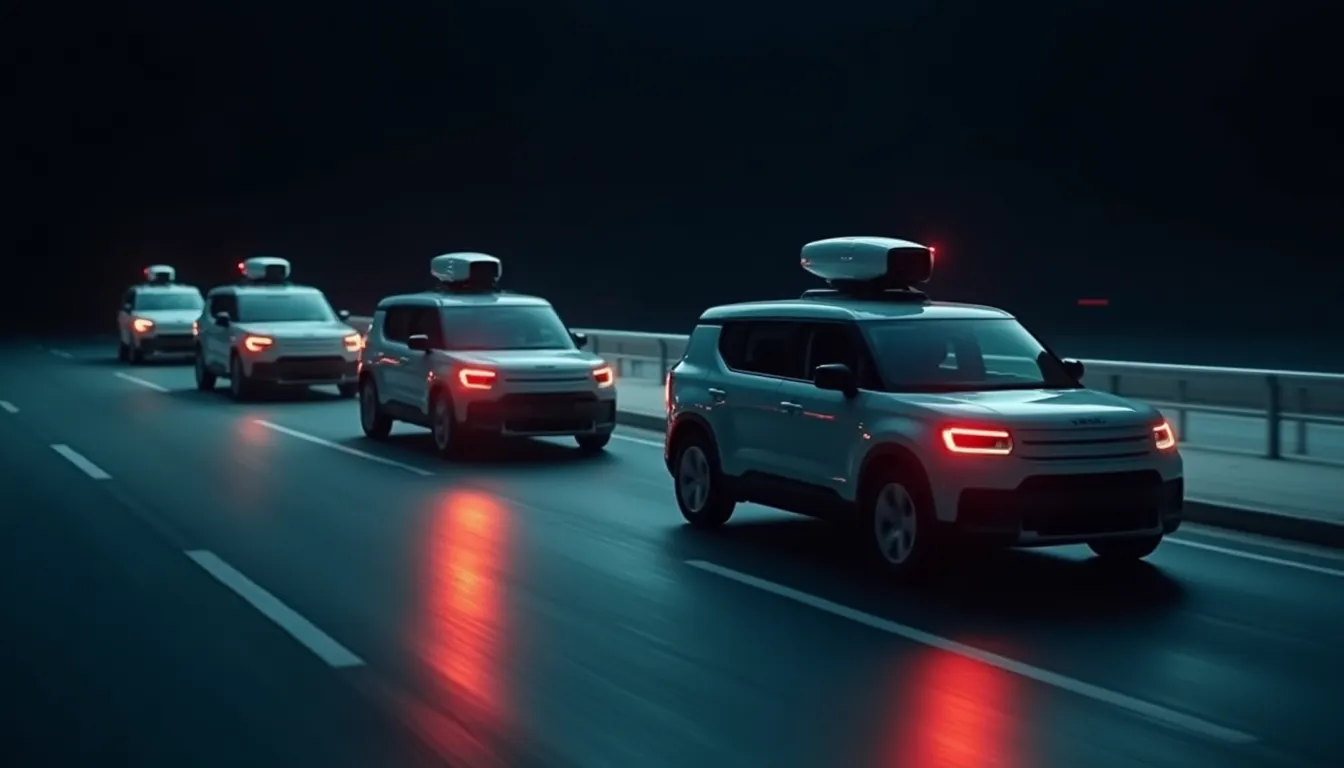
Tesla announced during its Q3 2026 earnings call that it will allow owners to add their vehicles to the company's robotaxi network by Q2 2027, marking a formal deadline for a long-promised feature. However, the company's track record of missed autonomous driving targets raises serious questions about whether this timeline will hold.
Key Takeaways
- Tesla VP Ashok Elluswamy announced Q2 2027 as the target date for customer-owned vehicles to join the robotaxi fleet, marking the first formal deadline for this long-promised capability
- Elon Musk made similar promises in 2019 about a "Tesla Network" and a "million" robotaxis by 2020, neither of which materialized
- Tesla has accumulated 3.3 million autonomous miles of driving data and now operates a few hundred robotaxis in Texas and Florida, some still with human safety monitors
- Major regulatory obstacles remain, including state and local permits, insurance availability, and outright prohibitions on driverless ride-hailing in most jurisdictions
- Older Tesla vehicles lack the hardware required for fully autonomous operation, limiting the customer base eligible for the robotaxi feature
- Tesla's track record of missing autonomous driving deadlines by years creates skepticism about whether Q2 2027 will hold
Tesla announced during its Q3 2026 earnings call that owners will be able to add their own vehicles to the company's robotaxi fleet in the second quarter of 2027, according to remarks by Tesla VP for Autonomous Driving Ashok Elluswamy. This marks the first time the company has publicly committed to a specific deadline for one of its most ambitious customer-facing promises: the ability to generate passive income by allowing Tesla-owned vehicles to operate autonomously as part of a shared robotaxi network.
Elluswamy stated that the software powering Tesla's dedicated Cybercab robotaxis and the Model Y would be substantially identical, with the primary remaining work involving fleet management integration. "Like I mentioned earlier, the software for Cybercabs and Model Y is the same," Elluswamy said during the call, according to The Verge. "And pretty soon we'll be able to release the same software as part of the V15 release to customers. The only additional requirement is to make sure that, for example, the customer Model Y can be part of the geofences and the fleet management that Tesla has for it to be fully autonomous. We suspect somewhere around Q2 next year is when we can turn on some of the first customer vehicles to be part of the robotaxi fleet."
A Long-Standing Promise Finally Gets a Deadline
The ability for Tesla owners to monetize their vehicles through autonomous ride-hailing has been a centerpiece of Elon Musk's vision for the company since at least 2019. Musk appeared on stage at Tesla's first AI Day in 2019 and promised that customer-owned vehicles could be used as part of a "Tesla Network" of robotaxis, earning their owners passive income while driving around autonomously looking for fares, an offering he compared to ride-sharing platforms like Uber or Airbnb.
At the same time, Musk made an even bolder claim: by 2020, a "million" Tesla robotaxis would be on the road. Nearly seven years later, neither promise has materialized. Instead, Tesla has a few hundred Robotaxis in Texas and Florida, some of which still have human safety monitors, and several dozen fully driverless Cybercabs in Austin.
The Q2 2027 deadline matters precisely because it is the first hard target Tesla has given investors and customers for this capability. Yet that specificity makes it equally significant as a marker of whether the company can actually execute on its autonomous driving roadmap, or whether it will repeat a familiar pattern of missed milestones.
A Pattern of Missed Deadlines
When it comes to autonomous driving and robotaxis, Musk has a clear pattern: he sets bold, short-term deadlines that end up slipping by years—or never happening at all. The long-promised goal of "unsupervised" Full Self-Driving remains unfulfilled, despite being a key selling point for years. Tesla has made incremental progress on consumer driver-assistance features, but the gap between marketing claims and actual capability has repeatedly disappointed investors and customers alike.
What Tesla can claim as recent progress is more modest. Full Self-Driving (Supervised) adoption was a bright spot in Tesla's latest earnings, with over 75 percent of new North American buyers selecting the feature this quarter—a jump of almost 20 percentage points compared to the prior quarter. Additionally, Tesla revealed it has driven 3.3 million miles autonomously, up from 380,000 unsupervised miles reported in July. These metrics suggest technical progress, but they measure supervised or limited autonomy rather than the fully unsupervised robotaxi operation Tesla is promising for Q2 2027.
Formidable Regulatory and Technical Obstacles Remain
Even if Tesla achieves the technical milestone of enabling customer vehicles to join its robotaxi fleet by Q2 2027, significant regulatory and legal barriers stand in the way of actual deployment at meaningful scale. Unsupervised autonomous ride-hailing requires specific local and state regulatory permits. Insurance may be difficult to obtain. And in most places, it's still illegal for individuals or outside companies to use their own self-driving cars as driverless taxis or passenger rides.
These are not technical challenges that software alone can solve. They require regulatory agencies across multiple jurisdictions to approve and permit driverless ride-hailing using customer-owned vehicles. While Tesla has made inroads in states like Texas and Florida, the patchwork of state and local transportation regulations means that even a fully functional technology cannot operate everywhere simultaneously.
There is also a fundamental tension between Tesla's installed base of older vehicles and the hardware requirements for driverless operation. Older Model 3 and Y vehicles without the latest full-self-driving hardware suites or AI compute infrastructure are constrained by hardware capability. Dedicated vehicles like the Cybercab are built specifically for driverless passenger service from the ground up, whereas consumer vehicles require additional software layers to guarantee safety without human intervention. This limitation will shrink the addressable customer base for the robotaxi feature compared to Tesla's total fleet.
What's at Stake
Tesla's ability to deliver on the Q2 2027 promise carries implications beyond the company itself. For years, Tesla has marketed full autonomy as an imminent feature that would fundamentally alter vehicle economics and the nature of car ownership. Customers who purchased vehicles and paid for Full Self-Driving or waited for it have done so partly on the basis of these promises. Meeting the Q2 2027 deadline would represent a meaningful shift toward converting aspirational marketing into functional product capability.
Conversely, if this deadline slips—as The Verge notes history suggests it could—it would follow the pattern of prior unmet timelines and strengthen the case that Tesla's robotaxi aspirations, while technically interesting, operate on a much longer developmental timeline than marketing materials suggest. For investors, this matters because it affects how to value Tesla's autonomous driving features relative to its core automotive business. For customers, it determines whether a paid feature will eventually become functional.
Tesla's next earnings calls will reveal whether any customer-owned vehicles actually begin operating in the robotaxi network by the promised date. The Q2 2027 target has been publicly stated with attribution to a named Tesla executive. That specificity transforms it from an aspirational goal into a testable prediction, one that capital markets and Tesla customers will be watching closely.
Sources
- The Verge: Tesla says customers can add their own vehicles to the robotaxi fleet next year
- Financial Times: Rockets, robots and risk: Musk's $3.6tn gamble to merge Tesla and SpaceX
- TechCrunch: An Nvidia insider-turned-VC on why robotics hasn't hit its ChatGPT moment, yet
- MachineHours Encyclopedia: Robotics in Property — Construction Robots, Inspection Drones, and Automated Facilities
Frequently Asked Questions
When will Tesla let customers add vehicles to its robotaxi fleet?
Tesla said during its Q3 2026 earnings call that customer-owned vehicles could join the robotaxi network next year, though The Verge notes similar promises have been delayed before.
What is the $3.6 trillion Tesla-SpaceX plan reported by the Financial Times?
The FT reports Elon Musk is pursuing a structure that would merge Tesla and SpaceX into a single entity valued at $3.6 trillion, betting that robotics and rocketry can be bundled into one investment thesis.
Why does a VC quoted by TechCrunch say robotics hasn't hit its ChatGPT moment?
The former Nvidia executive interviewed by TechCrunch argues robotics still lacks the generalizable training data and reliability that let language models scale quickly, making physical deployment slower than software AI.
Has Tesla delivered on robotaxi fleet promises before?
According to The Verge, Tesla has made comparable pledges about customer-owned vehicles joining its robotaxi network in previous years without them materializing at scale.
Get MachineHours in your inbox
AI compute and the machine economy in your inbox.