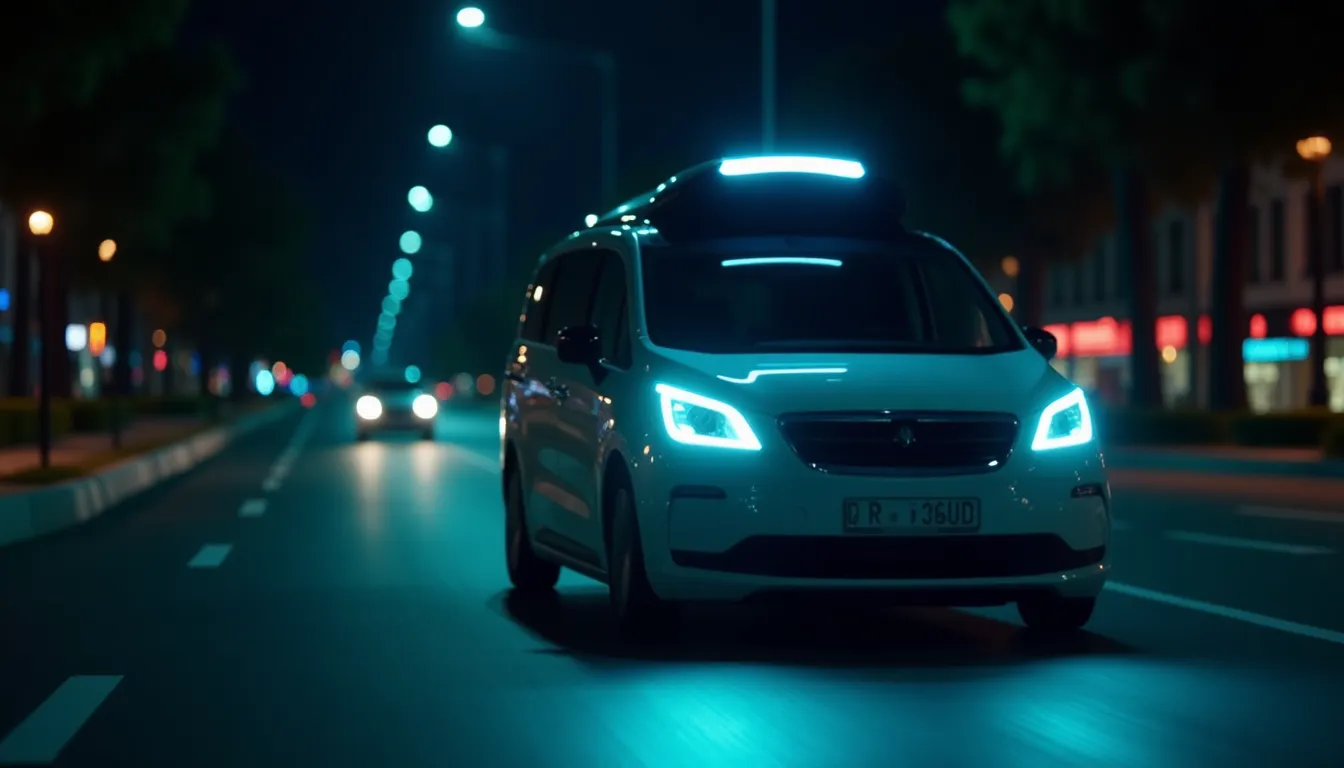
NHTSA proposed optional cyan marker lights under FMVSS 108 so robotaxis can signal driverless operation, while separately auditing Tesla's Cybercab design.
Key Takeaways
- NHTSA proposed adding cyan marker lamps to FMVSS No. 108 to signal when a car is operating in autonomous mode
- The cyan lighting would be optional for manufacturers, not mandatory, under the proposed rule
- Mercedes-Benz previously got state approval for turquoise lights on its now-discontinued Level 3 Drive Pilot system
- NHTSA opened a separate audit query last month into Tesla's Cybercab over missing mirrors, pedals, and steering wheel
- The proposal would also remove outdated lighting requirements like manual beam shifters and physical hazard switches
The National Highway Traffic Safety Administration wants driverless cars to glow a specific blue-green color whenever no human is behind the wheel. According to The Verge, The agency's proposed rewrite of Federal Motor Vehicle Safety Standard No. 108 would set a national standard for how autonomous vehicles signal to law enforcement and other road users that an automated driving system is in control.
What Happened
NHTSA's proposal, reported by The Verge, introduces optional cyan marker lamps specifically meant to signal when an automated driving system, rather than a person, is controlling the vehicle. The agency chose cyan because the existing color palette on American roads, red for brakes, amber for turn signals, white for headlights, and flashing blue or red for emergency vehicles, is already fully claimed. Cyan fills a gap without creating confusion, and there is precedent: Mercedes-Benz previously secured state-level approval for turquoise lighting on its Level 3 Drive Pilot system, even though the automaker has since abandoned that system in favor of a Level 2++ setup.
The rule would not force any manufacturer to adopt the lights. Instead, NHTSA wants to lock in consistent color, brightness, and placement standards so that if companies like Waymo, Nuro, Zoox, GM, or Mercedes do add such lighting, it reads the same way nationwide rather than becoming a patchwork of competing signals. The proposal also strips out lighting requirements that make no sense for cars without human drivers, including physical hazard switches, manual beam shifters, and turn levers, while updating outdated voltage testing standards to accommodate modern LED systems.
The timing is notable. The Verge also noted that NHTSA opened an audit query last month into Tesla's Cybercab, examining the technical basis on which Tesla certified the vehicle given its lack of sideview mirrors, pedals, and a steering wheel, all features normally required under FMVSS. The agency is simultaneously loosening some rules for driverless-by-design vehicles while actively scrutinizing how one manufacturer certified its own driverless-by-design vehicle.
Why It Matters
This proposal signals that federal regulators are trying to get ahead of a wave of robotaxi expansion rather than reacting to it after deployment problems emerge. Standardizing a visual cue for driverless operation addresses a real gap: pedestrians and other drivers currently have no reliable way to know whether a vehicle is self-piloted, which matters for everything from eye contact at crosswalks to how law enforcement approaches a stopped vehicle. The optional nature of the rule, paired with the simultaneous Cybercab audit, shows a regulator trying to balance flexibility for an emerging industry against enforcement of existing safety baselines. As robotics products of every kind, from robotaxis to home companion devices, move into public and private spaces, this kind of policy groundwork will shape investor confidence as much as consumer trust. Companies tracking the equity market implications of robotics deployment will be watching how quickly automakers adopt voluntary standards like this one, since regulatory clarity tends to accelerate capital commitments in autonomous vehicle fleets.
Background
Autonomous vehicles combine sensor arrays, AI decision-making, and mechanical systems into a single robotic platform, as detailed in MachineHours' Autonomous Vehicles: The Long Road to Self-Driving entry. That convergence is precisely why lighting standards matter beyond cosmetics: every external signal, from marker lamps to the absence of a steering wheel, is part of how these systems communicate intent and status to the humans sharing the road with them.
What to Watch
Watch whether Waymo, Zoox, and Nuro move quickly to adopt cyan lighting once the rule finalizes, since early adoption could become a marketing differentiator around safety transparency. The outcome of NHTSA's Cybercab audit query will also matter, as it could set precedent for how much design latitude the agency grants vehicles built without traditional human controls. Broader public comment periods on the FMVSS 108 rewrite will likely surface pushback from safety advocates or competing automakers over whether an optional standard goes far enough.
Sources
Frequently Asked Questions
Why did NHTSA choose cyan for robotaxi lights?
NHTSA selected cyan because existing colors (red, amber, white, flashing blue/red) are already assigned to brakes, turn signals, headlights, and emergency vehicles, leaving cyan as a visually distinct option that avoids confusion.
Will all robotaxis be required to use cyan lights?
No. Under the proposed rule, cyan marker lights would be optional for manufacturers, though any company that adopts them would need to follow standardized color, brightness, and placement rules.
Is this related to the Tesla Cybercab investigation?
It's a separate but related NHTSA action. The agency opened an audit query last month into how Tesla certified the Cybercab's design, which lacks sideview mirrors, pedals, and a steering wheel.
Which companies would be affected by the proposed rule?
Robotaxi operators such as Waymo, Nuro, and Zoox, along with automakers including GM and Mercedes-Benz, could adopt the standardized cyan lighting if the rule is finalized.
Get MachineHours in your inbox
AI compute and the machine economy in your inbox.