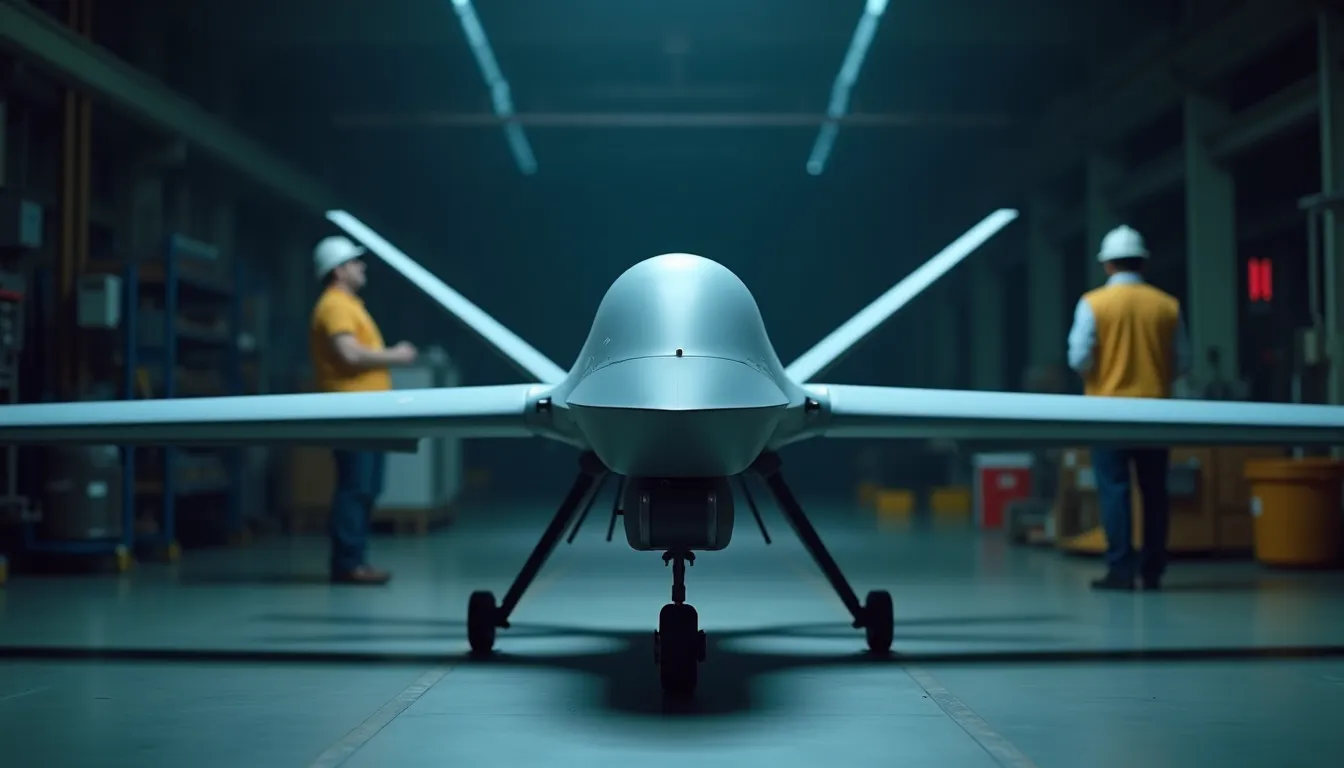
Turkish Aerospace has completed construction of a second production line dedicated to an upgraded variant of its Anka 3 unmanned combat aerial vehicle, scheduled to open in November. The new variant features a larger airframe and increased payload capacity to meet Turkish armed forces requirements for 80 aircraft, with first deliveries expected in 2027.
Key Takeaways
- Turkish Aerospace completed a second production line for the upgraded Anka 3 UCAV, scheduled to open in November 2026
- The upgraded variant features a 1.75-ton payload capacity, up from 1.3 tons on the original platform, to meet increased Turkish military requirements
- Turkish armed forces have ordered 80 Anka 3 UCAVs with first deliveries expected in 2027
- The Anka 3 operates at high-subsonic speeds and altitudes up to 40,000 feet, supporting strike and extended patrol missions
- The production expansion enables Turkish Aerospace to scale manufacturing to meet multi-year procurement commitments
Upgraded Platform Specifications
The upgraded Anka 3 variant features a larger airframe and an expected payload capacity of 1.75 tons, up from approximately 1.3 tons on the original platform. This substantial increase in carrying capacity reflects design changes intended to meet new national requirements and expand the drone's operational flexibility across strike and other mission profiles.
According to Turkish Aerospace officials, the upgraded aircraft will be able to carry more munitions to meet the new national requirements driving the production expansion. The enhanced payload capacity represents a critical advancement for operators requiring greater firepower or sensor suites on extended missions.
Production Timeline and Test Schedule
The first aircraft to be built on the new production line is expected to roll out "soon" and undergo flight testing afterward, according to company officials who shared details of the facility expansion during a recent media tour of Turkish Aerospace's Ankara facility. This compressed timeline suggests the company has already completed significant engineering and manufacturing preparation work to enable rapid transition to serial production.
The production schedule aligns with broader Turkish military procurement timelines and demonstrates confidence in the design maturity of the upgraded variant before first deliveries commence.
Turkish Armed Forces Requirements Drive Expansion
The Turkish armed forces have ordered 80 Anka 3 UCAVs, with first delivery expected in 2027. This substantial order volume justifies the capital investment in a dedicated second production line and establishes a clear baseline for manufacturing capacity planning across the multi-year contract.
The decision to establish separate production lines—one for the original variant and one for the upgraded version—reflects Turkish Aerospace's strategy to maintain flexibility in the manufacturing process while scaling output to meet delivery schedules. By dedicating a discrete production facility to the enhanced variant, the company can optimize tooling, workforce training, and supply chain management for each platform configuration.
Core Platform Capabilities
The Anka 3 is a combat drone designed for strike and other missions that can reach high-subsonic speeds and operate at altitudes of up to 40,000 feet, according to Turkish Aerospace specifications. These performance characteristics position the platform within the middle-tier of tactical UCAVs, offering extended range and altitude capability compared to smaller tactical drones while maintaining operational flexibility.
The high-altitude ceiling and high-subsonic speed envelope enable extended patrol durations over contested areas and provide tactical advantages in environments where air defense systems may be present. The platform's design as a dedicated combat aircraft—rather than a derivative of surveillance platforms—reflects lessons from operational experience with earlier unmanned systems and focuses engineering priorities on payload integration and strike mission support.
Manufacturing and Industrial Context
Turkish Aerospace completed the second production line ahead of schedule, reflecting the company's commitment to meeting Turkish military requirements within accelerated timelines. The Ankara facility, which houses both production lines, represents a consolidation of manufacturing operations that simplifies supply chain management and quality control oversight.
The expansion represents Turkish Aerospace's largest drone production initiative to date and positions the company as a significant player in the regional unmanned systems market. The manufacturing footprint in Ankara—a strategic location within Turkey—ensures continuity of operations and maintains proximity to engineering and testing facilities, reducing logistics overhead for prototype evaluation and production quality verification.
Operational and Strategic Implications
The completion of the second production line and transition to serial manufacturing of the upgraded Anka 3 variant signals Turkish confidence in the platform's operational requirements and long-term fielding plans. The 80-unit procurement by Turkish armed forces establishes a baseline for fleet organization and doctrine development around autonomous strike capabilities within NATO-aligned Turkish forces.
The timing of the production line opening in November 2026 coincides with broader NATO modernization efforts and reflects Turkish military priorities in integrating advanced unmanned systems into operational formations. The emphasis on increased payload capacity suggests Turkish operational doctrine anticipates multi-munition strike profiles or extended sensor suites to support future mission requirements.
Manufacturing expansion also positions Turkish Aerospace to potentially pursue export opportunities beyond the 80-unit domestic order, though no export customers have been confirmed at this stage. International interest in combat drones has expanded significantly in recent years, and the timing of Turkish Aerospace's production expansion may enable rapid response to future export demand should Turkish government policy permit such sales.
Industrial Capacity and Workforce
The dedication of a second production line reflects Turkish Aerospace's confidence in sustainable demand for the Anka 3 platform and represents a substantial capital commitment to manufacturing infrastructure. The facility expansion requires recruitment and training of additional production staff, integration of automated manufacturing processes, and establishment of quality assurance procedures tailored to the upgraded variant's specifications.
The November opening provides a clear milestone for Turkish military planning and enables establishment of delivery schedules aligned with first-unit operational capability timelines. The parallel operation of two production lines—one for the original variant and one for the upgrade—offers manufacturing flexibility if customer requirements or design modifications emerge during initial fielding.
Sources
- Breaking Defense: Turkish Aerospace expands Anka 3 production with new line for upgraded drone
- Breaking Defense: Latvian official warns Russia 'tempted to test' European readiness
- Breaking Defense: Army looks to add third CAML system, Lozano says
- SpaceNews: Oct. 29 Applying AI to the GEOINT Mission
- Breaking Defense: Finding the adversary's hidden signals is the Army's next electromagnetic warfare challenge
- MachineHours Encyclopedia: PropTech and AI — Drones, Virtual Staging, and Automated Property Marketing
Frequently Asked Questions
What is the Anka 3 and why is Turkish Aerospace expanding its production?
The Anka 3 is a jet-powered unmanned combat aerial vehicle made by Turkish Aerospace. The company is opening a new production line for an upgraded version to meet rising demand for autonomous strike platforms, according to Breaking Defense.
What did the Latvian official say about Russia?
A Latvian defence official warned that Russia may be tempted to test European readiness, raising concerns over border security vulnerabilities along NATO's eastern flank.
What is the CAML system the Army is expanding?
Breaking Defense reported the U.S. Army is working to add a third CAML system as part of its counter-drone and launcher capacity, according to Army official Lozano.
What will the Oct. 29 GEOINT event cover?
According to SpaceNews, the event will focus on applying artificial intelligence to the geospatial intelligence mission, including AI-driven satellite imagery analysis.
How does AI factor into the Army's electronic warfare challenge?
Breaking Defense reported the Army is working to detect adversaries' hidden electromagnetic signals, a task increasingly reliant on automated signal detection rather than manual analysis.
Get MachineHours in your inbox
AI compute and the machine economy in your inbox.