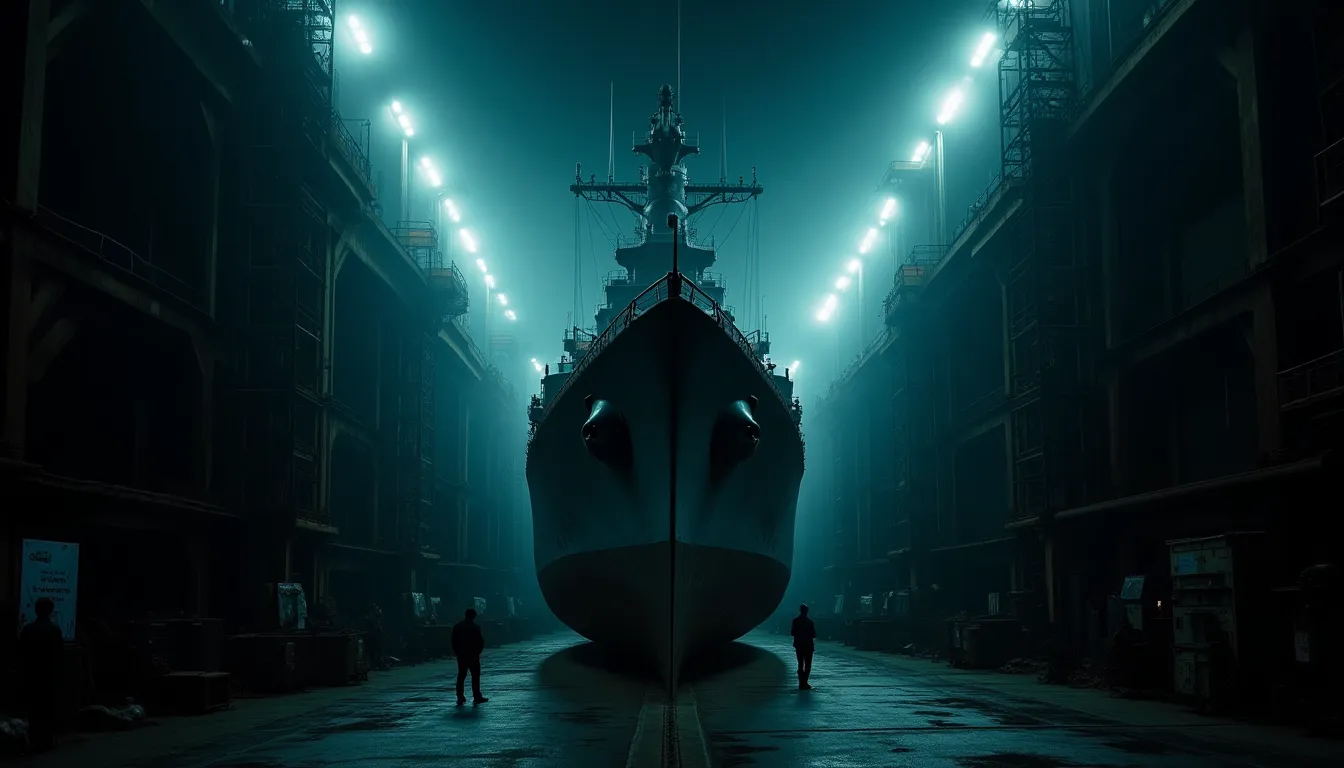
A Government Accountability Office report found the Navy's Shipyard Infrastructure Optimization Program could cost $200 billion and take 50 years—vastly exceeding the initial $21 billion estimate from 2018. Cost growth stems from rising commodity prices, seismic retrofit requirements, and additional projects added since the program's launch.
Key Takeaways
- The Navy's Shipyard Infrastructure Optimization Program cost estimate has ballooned from $21 billion in 2018 to $200 billion, with the timeline extending from 20 years to 50 years, according to a GAO report.
- Rising commodity prices, seismic retrofit requirements at Puget Sound Naval Shipyard, and additional projects added since 2018 are primary drivers of cost growth.
- Dry-dock projects at Portsmouth and Pearl Harbor alone have experienced cost increases exceeding $2.5 billion since original funding requests.
- The cost overrun reflects systemic challenges in defense infrastructure cost estimation, where initial forecasts omit key expenses and regulatory requirements change during execution.
- The SIOP overrun creates budget pressure across naval modernization priorities and will likely trigger congressional scrutiny and requests for program restructuring.
The U.S. Navy's long-planned overhaul of its four public shipyards could cost more than $200 billion and take 50 years to complete, well above earlier estimates, according to a Government Accountability Office review. The finding underscores how cost estimation processes in major defense infrastructure programs struggle to account for the complexity and scale of modernization efforts.
The Cost Explosion
The Shipyard Infrastructure Optimization Program (SIOP), launched in 2018, aims to upgrade the drydocks and standard equipment at the Navy's four public shipyards located in Virginia, Maine, Washington, and Hawaii. These facilities oversee repairs for the Navy's nuclear-powered aircraft carrier and submarine fleet—vessels that form the backbone of U.S. naval power projection.
When SIOP was established, the Navy predicted the modernization effort would take roughly 20 years and cost approximately $21 billion. That initial estimate, however, omitted key costs, according to the GAO. The revised projection of $200 billion represents cost growth of roughly ten times the original estimate, with the timeline now stretching to 50 years rather than 20.
The scale of this overrun raises fundamental questions about how the Navy forecasts infrastructure spending and manages complex, multi-decade programs. The GAO report noted that "developing the plans and cost estimates to rebuild the Navy's four public shipyards has taken the Navy years longer—and will cost much more—than originally anticipated due to multiple challenges and changes involved in the program."
Drivers of Cost Growth
Rising commodity prices and seismic concerns at Puget Sound Naval Shipyard, which require needed retrofits and construction, are driving up costs and adding time to the initiative. The seismic retrofit requirement is particularly significant: Puget Sound Naval Shipyard, located near Seattle in a geologically active region, must meet updated building codes and structural resilience standards that did not exist when the facility was originally constructed.
Beyond these external pressures, the scope of SIOP itself has expanded since 2018. The Navy has added more shipyard construction and repair projects to the program, and has implemented design changes stemming from lessons learned from projects already underway. This incremental scope expansion is typical in large infrastructure programs but can compound cost growth significantly over time.
Specific examples illustrate the magnitude of these increases. The costs for dry-dock projects in Portsmouth and Pearl Harbor grew by more than $2.5 billion since funding was originally requested from Congress. These are not isolated anomalies but representative of systematic underestimation.
Implications for Naval Modernization
The SIOP cost overrun reflects a broader pattern affecting U.S. defense procurement: optimistic early estimates followed by years of cost growth as projects move through planning, design, and execution phases. For the Navy specifically, this creates a cascading constraint on modernization.
Public shipyards are critical infrastructure for maintaining the nuclear carrier and submarine fleets. Unlike commercial shipyards, which can be repurposed or consolidated, these facilities must remain dedicated to classified military work and must operate with the highest security standards. Their modernization cannot be deferred indefinitely; aging equipment and facilities reduce operational readiness and increase maintenance costs across the entire fleet.
Yet as SIOP's costs climb, budget pressure mounts elsewhere. The Navy must simultaneously maintain current operations, fund new platform development, and invest in modernizing shore infrastructure. The $200 billion figure for shipyard modernization does not include investments in new ship construction, new weapons systems, or maintenance of other naval installations—all of which compete for the same budget resources.
Process and Oversight Challenges
The GAO's role is to audit federal spending and program management, and this report represents the kind of independent assessment that often precedes budget reallocation or program restructuring. The findings suggest that the Navy's initial cost estimation process in 2018 lacked mechanisms to capture the full scope of required work, to forecast commodity price escalation, or to account for changing regulatory and seismic safety requirements.
This is not unique to the Navy. Major defense infrastructure programs across all service branches have experienced similar cost overruns. The underlying causes are well documented: programs are often initiated with preliminary estimates before detailed designs are completed, regulatory requirements change during execution, supply chain disruptions occur, and political or operational pressure leads to scope changes.
The fact that Navy officials overseeing SIOP efforts told Breaking Defense last year that earlier estimates were outdated suggests that cost realities on the ground were diverging from official projections months or years before the GAO report. This gap between ground-truth cost assessments and official program estimates is a recurring governance failure in large infrastructure programs.
What Comes Next
The GAO report will likely trigger congressional scrutiny and requests for program restructuring. Possible outcomes include prioritization of certain shipyard upgrades over others, extension of the timeline to spread costs across additional budget years, or requests for supplemental appropriations. The Navy will need to present a revised project plan that accounts for the $200 billion figure and demonstrates how it will be funded without displacing other naval priorities.
For contractors and suppliers to the shipbuilding industry, the SIOP cost overrun signals both opportunity and risk. Opportunity emerges as modernization investments flow; risk emerges from program volatility and the possibility that budget constraints will force deferral of certain work elements. Organizations tracking defense spending will likely view this GAO report as a leading indicator for where budget reallocation will occur in coming fiscal cycles.
The underlying issue—that the Navy's public shipyards require extensive modernization and that modernization is expensive and complex—remains unchanged. The GAO report clarifies the true cost of that modernization and, by extension, the true opportunity cost to other Navy programs and priorities.
Sources
- Breaking Defense: Navy's shipyard revamp could cost more than $200 billion: GAO
- Breaking Defense: Navy launches Phase II for medium robo-ship project, seeks 'innovative solutions'
- Breaking Defense: Building logistics networks that survive contested environments
- Breaking Defense: 'Cyber magazine' can run out 'pretty damn quick' in modern conflict: Admiral
- Breaking Defense: South Korea inducts first locally developed fighter jet into air force
- MachineHours Encyclopedia: PropTech and AI — Drones, Virtual Staging, and Automated Property Marketing
Frequently Asked Questions
How much could the Navy's shipyard overhaul cost?
A GAO review found the modernization of the Navy's public shipyards could cost more than $200 billion, exceeding earlier budget estimates, according to Breaking Defense.
What is the Navy's Phase II robo-ship program?
It is the next stage of the Navy's medium unmanned surface vessel initiative, in which the service is seeking innovative solutions from industry for autonomous ship designs.
What did the Navy admiral say about cyber capacity?
The admiral warned that in modern conflict, cyber capacity can be used up quickly, comparing it to a limited resource similar to ammunition, per Breaking Defense.
What milestone did South Korea reach in fighter jet development?
South Korea inducted its first locally developed fighter jet into active air force service, marking a step toward domestic defence industrial independence.
Get MachineHours in your inbox
AI compute and the machine economy in your inbox.