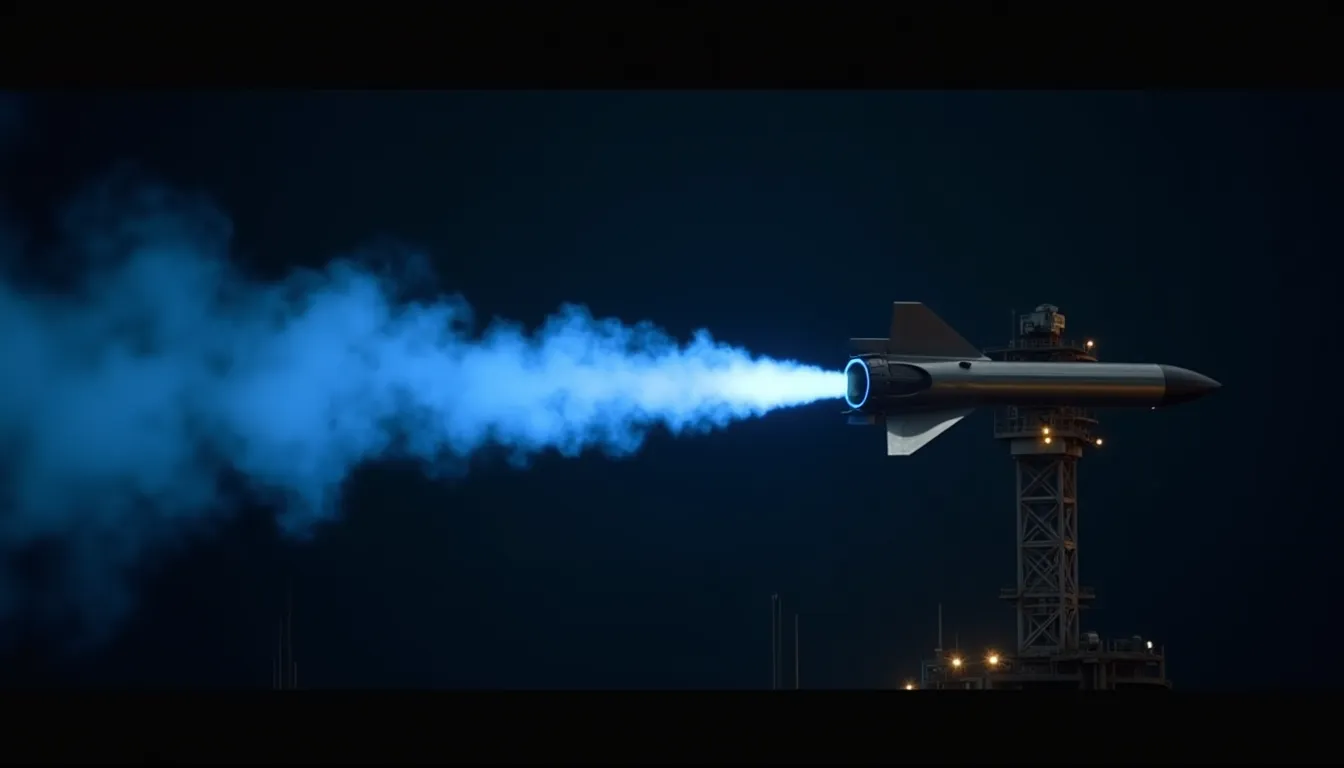
GE Aerospace has secured a performance-based logistics contract worth up to $2.9 billion to supply parts for the F414 engine powering the Navy's F/A-18 Super Hornet and EA-18G Growler, running through August 2031. Concurrently, the company was awarded a hypersonic propulsion test vehicle contract by the Defense Innovation Unit, representing a significant advance in US hypersonic weapons developmen
Key Takeaways
- GE Aerospace won a $2.9 billion performance-based logistics contract to supply F414 engine parts for the Navy's F/A-18 Super Hornet and EA-18G Growler, running through August 2031
- The company is undergoing a production transformation, doubling F404 engine output over five years while maintaining F414 supply to meet demand from the T-7 Red Hawk and other platforms
- A separate hypersonic propulsion test vehicle contract through the Defense Innovation Unit's HyCAT program will include approximately 24 months of flight testing to advance US hypersonic weapons development
- The dual contract awards reflect the Pentagon's strategy of sustaining legacy platforms while accelerating next-generation capability development amid great-power competition
- Performance-based logistics contracting aligns GE's incentives with fleet readiness outcomes rather than transactional volume, a model increasingly used for fighter aircraft sustainment
GE Aerospace Secures $2.9B F/A-18 Engine Contract and Hypersonic Test Award
GE Aerospace has won two significant defense contracts spanning the full lifecycle of fighter engine support: a $2.9 billion performance-based logistics contract to supply parts for the F414 engine that powers the Navy's F/A-18 Super Hornet and EA-18G Growler electronic attack jet, and a separate hypersonic propulsion test vehicle contract through the Defense Innovation Unit's HyCAT program. The F414 contract runs through August 2031 with no option periods, according to a Defense Department announcement posted Tuesday.
F/A-18 Engine Support Contract Details
The F414 contract represents ongoing sustainment of legacy platforms that continue to form the backbone of naval air power. GE Aerospace has powered the U.S. Navy's F/A-18E/F Super Hornet and EA-18G Growler with the F414 engine for more than 20 years, and the performance-based logistics structure means the company will be paid based on outcomes rather than parts supplied individually. This contracting model aligns vendor incentives with fleet readiness rather than transactional volume.
The scope of the contract reflects the enduring operational demands on these aircraft. The Super Hornet and Growler play a vital role in the Navy's fleet, and maintaining engine supply chains ensures these platforms can sustain sustained operations. The five-year runway provides GE Aerospace with production visibility to plan manufacturing schedules and workforce allocation, though the absence of option periods means the Navy will need to compete or renew the contract at the 2031 expiration.
GE's Strategic Production Transformation
GE Aerospace is navigating a significant production transformation, moving from being "414 heavy" to being "404 heavy" over approximately the next five years, according to statements made during a media tour of GE's manufacturing facilities in Lynn, Massachusetts. This shift reflects broader Pentagon priorities: while legacy platforms like the Super Hornet require continued sustainment, newer aircraft entering service—particularly the Air Force's T-7 Red Hawk training jet—rely on the smaller F404 engine.
GE Aerospace expects to essentially double its production output of the F404 over roughly the next five years, a capacity expansion that will require investment in manufacturing floor space, tooling, and skilled labor. The company has not disclosed exact production rates, citing forecasts based on anticipated demand. This dual commitment—sustaining F414 output while ramping F404 production—represents a complex manufacturing challenge that tests GE's ability to operate efficient production lines for two distinct engine architectures simultaneously.
Amy Gowder, president and CEO of GE's defense and systems business unit, said the company is exploring new ways to produce engines like the F404 at a greater scale, indicating that existing production methodologies may be insufficient for the planned ramp-up. The F404's use in multiple platforms—including the T-7 and potentially other Air Force initiatives—justifies the manufacturing expansion, but achieving higher production rates while maintaining quality and cost targets is a notable operational undertaking.
Hypersonic Test Programme and Strategic Significance
Beyond the F414 contract, GE Aerospace secured a hypersonic test vehicle contract through the Defense Innovation Unit's HyCAT program, with the next phase running approximately 24 months and including flight testing. While the value of the DIU hypersonic contract was not disclosed in reporting, the award represents a critical advancement in US hypersonic weapons development at a time of sustained strategic competition with China and Russia.
Hypersonic propulsion remains one of the most challenging engineering problems in modern defense technology. The fundamental difficulty lies in sustaining combustion at velocities exceeding Mach 5—five times the speed of sound—under thermal and mechanical stresses that push materials to their limits. GE Aerospace's involvement connects its commercial aerospace engine expertise to a defense priority that spans the US Army, Navy, and Air Force, positioning the company to translate decades of high-performance propulsion knowledge into weapons system applications.
The Defense Innovation Unit's HyCAT program is explicitly designed to expand flight test options for high-speed vehicles, addressing a critical bottleneck in hypersonic development. Flight test data is the prerequisite for validating any operational system; without it, programs remain trapped in simulation and ground testing phases. The United States has been under sustained pressure to close a perceived technological gap with Chinese and Russian hypersonic programs, and contract awards at the propulsion testing stage indicate the development pipeline is moving forward rather than stalling in concept phases.
Implications for Defense Industrial Capacity
The twin contract awards reveal the Pentagon's dual focus on legacy platform sustainment and next-generation capability development. Sustaining the F/A-18 fleet through the F414 contract ensures these proven platforms remain mission-ready for years to come, while the hypersonic test contract accelerates progress on systems that may define future air warfare. This parallel investment strategy reflects a realistic assessment that legacy platforms will remain operationally relevant for years while next-generation systems reach maturity.
For GE Aerospace, the contracts represent a sustained growth outlook across multiple business lines. The F414 work provides predictable revenue and production continuity, while the hypersonic program offers an entry point into a defense technology domain projected to see significant investment over the coming decade. The production transformation underway at GE's Lynn facility—increasing F404 output while maintaining F414 supply—demonstrates the company's confidence in sustained demand across both engine families and its commitment to resolving the operational and logistical challenges inherent in managing parallel manufacturing initiatives.
The strategic context for these awards centers on sustained great-power competition and the imperatives of military readiness. The Navy's F/A-18 fleet remains a critical pillar of carrier air power and will require engine support for at least another decade; the hypersonic program addresses an area where technological leadership in weapons testing could translate into operational advantages in a potential conflict with a peer competitor. Both contracts signal that the Pentagon and its industrial partners view 2026 through 2031 as a critical period for consolidating existing capabilities while advancing next-generation systems simultaneously.
Sources
- Breaking Defense: GE wins deals for F/A-18 engine parts, hypersonic test
- Breaking Defense: Belgium and India partner on local 70mm rocket assembly, wave of industry agreements
- Breaking Defense: To counter China, America's next CCA needs a different mission
- Breaking Defense: Oshkosh dangles JLTV bridge option for Marine Corps, but the deadline is looming
- Breaking Defense: How Congress is trying to fund the E-7 Wedgetail program
- MachineHours Encyclopedia: PropTech and AI — Drones, Virtual Staging, and Automated Property Marketing
Frequently Asked Questions
What is the GE Aerospace hypersonic test contract for?
GE Aerospace won a contract to conduct a hypersonic propulsion test, contributing to US efforts to develop high-Mach propulsion systems. The specific dollar value was not publicly disclosed in initial reporting.
Why are Belgium and India partnering on 70mm rocket assembly?
The deal aims to build local manufacturing capacity in India, part of a broader trend of NATO-aligned nations distributing defence production to partner countries to reduce supply chain vulnerability.
What is the Collaborative Combat Aircraft programme?
The CCA is a US Air Force programme to develop autonomous aircraft that fly alongside crewed fighters. Analysts are now arguing its mission requirements need to be redesigned for Pacific operations against China.
What is the E-7 Wedgetail meant to replace?
The E-7 Wedgetail is the planned replacement for the ageing E-3 Sentry airborne early warning and control aircraft. Congress is currently working to secure funding for the programme.
What is the JLTV bridge contract Oshkosh is offering the Marine Corps?
Oshkosh Defense has offered a bridge contract that would extend the availability of Joint Light Tactical Vehicles for the Marine Corps while the service works through longer-term vehicle procurement decisions.
Get MachineHours in your inbox
AI compute and the machine economy in your inbox.