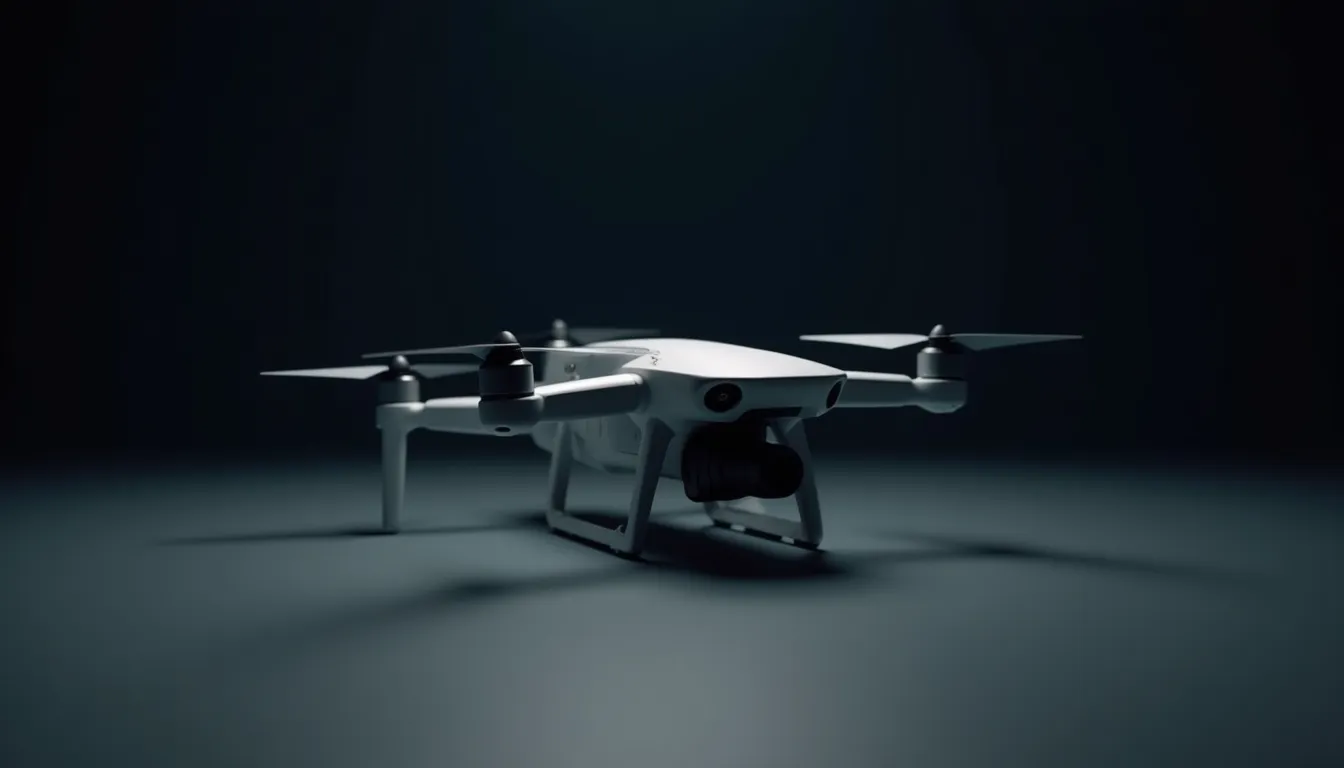
Security vulnerabilities in consumer robots and mixed results from urban drone delivery programs reveal that the robotics industry is transitioning from experimental phase to mainstream deployment, bringing real-world challenges around cybersecurity, regulatory compliance, and economic viability.
Key Takeaways
- Consumer robotics manufacturers are discovering that intentional backdoors for remote troubleshooting create unacceptable security risks, forcing industry-wide reconsideration of cybersecurity practices
- Urban drone delivery faces significant regulatory, operational, and economic hurdles that make widespread metropolitan deployment uncertain despite technological capability
- The robotics industry is entering a maturation phase where practical constraints—security, regulation, economics—now rival technical capability as limiting factors
- Successful robotics adoption will likely concentrate in specific use cases where value propositions clearly justify implementation costs rather than achieving universal deployment
The robotics industry is entering a critical maturation phase, marked not by triumphant technological breakthroughs but by sobering real-world challenges. Recent security vulnerabilities in consumer robotics and the cautious deployment of drone delivery services in major cities reveal an industry grappling with practical realities that were largely absent during the experimental phase: cybersecurity risks, regulatory constraints, and fundamental questions about economic viability.
Security Vulnerabilities in Consumer Robotics Signal Growing Risks
Yarbo, the manufacturer of consumer robot lawn mowers, discovered that its devices contained an intentional remote backdoor that could allow unauthorized access over the internet. The vulnerability highlighted a troubling disconnect between technical capability and security practices. According to Yarbo cofounder Kenneth Kohlmann, the company initially justified maintaining the backdoor by stating it was necessary for remote troubleshooting, with company representatives saying "completely removing remote diagnostic capability would reduce our ability to help customers resolve safety, connectivity, and service issues quickly".
However, pressure from security researchers and public scrutiny forced a reversal. Kohlmann pledged that Yarbo customers would be able to decide whether the remote access feature gets installed in the first place, making it an opt-in capability rather than a default vulnerability. The company also implemented additional security measures, including unique root passwords for each device and firmware updates that have already rolled out to the first 1,000 machines.
The Yarbo case exemplifies a broader pattern in consumer robotics: security practices significantly lag behind those in enterprise systems. As autonomous devices become more connected and operate increasingly in public and private spaces, the attack surface expands. A compromised lawn mower may seem relatively benign compared to hijacked delivery drones or security robots, but the principle is alarming: manufacturers are releasing connected robotic devices with inadequate security frameworks. The intentional nature of Yarbo's backdoor—rather than an accidental oversight—underscores how some companies have normalized security shortcuts as operational conveniences.
Urban Drone Delivery: Promise Meets Reality
While consumer robotics security issues raise concerns about privacy and safety, urban drone delivery programs are confronting a different set of challenges: regulatory complexity, operational costs, and unresolved questions about whether the economics actually work in dense metropolitan environments.
Since early May 2026, delivery drones operated by the British company Skyports have been conducting daily weekday trips across New York City's East River, carrying light cargo for a health care system between Manhattan and Brooklyn. This pilot program represents one of the first sustained attempts to operate commercial drone delivery in one of the world's most congested airspaces.
The challenges of operating in urban airspace are substantial. New York City's airspace is already packed with three international airports, and in Manhattan alone there are three publicly owned heliports, with nearly 9,000 helicopter flights taking place over city land or water in May 2023. The pilot program's start date was pushed back in part because another experimental aviation technology, an electric vertical takeoff and landing (eVTOL) vehicle, was demonstrating its own first-of-its-kind flights from the same heliport.
Regulatory oversight adds further complexity. The pilot was approved by the US Federal Aviation Administration, which requires a certified drone pilot to supervise every flight, and each flight takes place over a fixed route away from residential buildings, with the project needing to obtain weekly NYPD permits to operate. These requirements ensure safety but also increase operational costs and reduce the scheduling flexibility that would be necessary for economically viable commercial service.
Community concerns present another hurdle. Skyports' drones produce approximately 60 to 100 decibels of noise, comparable to a lawnmower, while other delivery drones hover around 50 to 70 decibels—about as loud as a vacuum or traffic. In Texas, residents complained that the "buzzing" of Amazon drones in the area sounded like a constantly running leaf blower and disturbed pet dogs and local wildlife. New York's 311 service has a special web landing page for complaints related to the cargo drone pilot program.
The fundamental question driving the New York experiment remains unanswered. According to Stephan Pezdek, the regional freight planning manager at the Port Authority of New York and New Jersey, operators are asking: "Will there be enough regular flights (1 to 2 per hour) that the client health care system finds true value? Will deliveries make it to their destination faster and within the financial constraints of the current carriers they are using?"
Globally, drone delivery remains in an experimental phase, with most projects focusing on carrying cargo to rural or suburban areas where gaps in road networks and services, plus emptier skies, could make the technology a better fit. The US company Zipline operates delivery services to some 5,000 health facilities across four continents, with its oldest program delivering vaccines and blood products in Rwanda, while companies including Alphabet's Wing and Amazon's Prime Air are working to expand services across the South with a focus on suburban areas surrounding Houston, Austin, and Dallas.
What These Challenges Reveal About Robotics Maturation
The combination of security vulnerabilities in consumer robots and economic uncertainties surrounding drone delivery indicates that robotics is transitioning from a sector defined by technological possibility to one constrained by practical limitations. The industry is discovering that moving robots from controlled laboratory environments into everyday operation exposes challenges that were not apparent during proof-of-concept phases.
Security practices in consumer robotics clearly need fundamental reform. The Yarbo incident demonstrates that manufacturers must prioritize cybersecurity from the design phase rather than treating it as an afterthought, and that regulatory frameworks should require security practices comparable to those in enterprise systems. Traditional IT security approaches designed for stationary computers may prove insufficient for devices that operate in physical spaces with direct environmental impact.
The drone delivery challenges reveal that economic models built on technical capability alone are insufficient. Damon Lercel, an assistant professor specializing in manned and unmanned aviation at Purdue University, notes that medical drone projects have "proven to be beneficial" and that drones "could be especially helpful in a city like New York, where typical ground transportation has its challenges, especially when there's an accident or gridlock," with the potential to save lives by flying critical medical supplies through the sky. Yet this potential does not automatically translate to viable commercial services, particularly when regulatory requirements and operational constraints consume the time and cost advantages that made the technology appealing in theory.
These developments collectively signal that successful robotics adoption will likely follow a more selective path than early industry enthusiasts predicted. Rather than universal deployment across sectors, robotics applications may concentrate in specific niches where value propositions clearly justify implementation costs and complexity, where regulatory environments are supportive, and where security frameworks can be adequately maintained.
Sources
- MachineHours Encyclopedia: PropTech and AI — Drones, Virtual Staging, and Automated Property Marketing
- The Verge: Yarbo says it will remove the intentional backdoor from its robot lawn mower
- Wired: Do City Delivery Drones Make Sense? No One Knows, but They're Flying Over NYC
- Financial Times: Drone start-up Helsing set for $18bn valuation as investors pile into defence
Frequently Asked Questions
What security issues have been found in consumer robotics?
Intentional backdoors have been discovered in robotic lawn mowers, highlighting security vulnerabilities that analysts suggest may become more common as consumer robotics expand into mainstream use.
Why are urban drone delivery programs facing challenges?
Urban drone delivery faces regulatory constraints, high operational costs, and limited use cases that question economic viability except in specific high-value or hard-to-reach scenarios.
How is the robotics industry changing?
Robotics is transitioning from experimental technology to a mature sector where security, regulatory compliance, and economic viability become primary concerns rather than just technical capabilities.
What role does robotics play in property technology?
PropTech applications use AI and robotics for automated property inspections, marketing, and facilities management, reducing operational costs while improving data collection capabilities.
Get MachineHours in your inbox
AI compute and the machine economy in your inbox.