Latest Developments
Updated 27 Oct 2026Recent developments underscore how compute, software, and component innovation continue to shape the robotics supply chain. NVIDIA's release of Nemotron 3.5 Bolt E4B, a compact 4GB-class model optimized for local inference, signals growing demand for edge-capable silicon and software stacks that can run voice and control models directly on robots, as demonstrated on a Jetson-powered Reachy Mini platform. This reinforces NVIDIA's position as a key infrastructure provider in the robotics stack, beyond cloud-based AI.
In parallel, applied research is expanding robotics into new service domains: a MIT-linked team at Purdue is developing a generative AI-driven therapy robot to address physical therapist shortages, illustrating demand-side pull for adaptable robotic hardware and learning systems. Meanwhile, Agility Robotics' ground-up rebuild of its Digit humanoid, alongside broader European industrial divergence in AI strategy, highlights ongoing iteration in actuators, structural design, and control systems—core "picks and shovels" components underpinning next-generation humanoid robotics platforms.
Key Takeaways
- Actuators represent 35-40% of humanoid robot costs, with Harmonic Drive AG controlling 60% market share.
- Harmonic Drive AG reported ¥47.8 billion revenue in fiscal 2023 with operating margins above 15%.
- ATI Industrial Automation dominates force/torque sensing with 70% market share in robotics applications.
- NVIDIA's Jetson platform maintains 80% market share in robotics edge computing applications.
- Current lithium-ion batteries limit humanoid robots to 2-4 hours operation due to weight constraints.
- CATL announced solid-state battery technology targeting 500 Wh/kg energy density by 2027.
The Picks and Shovels of Robotics: Investing in the Supply Chain
While investors fixate on which humanoid robot will first achieve commercial viability—Tesla's Optimus, Boston Dynamics' Atlas, or Honda's ASIMO—the smarter capital allocation strategy may lie deeper in the value chain. The component suppliers building the mechanical muscles, electronic nervous systems, and power sources for these machines present a compelling investment thesis: they benefit regardless of which platform ultimately succeeds, while facing less execution risk than the robot manufacturers themselves.
This picks-and-shovels approach to robotics investment mirrors the gold rush logic that enriched Levi Strauss more reliably than most prospectors. As humanoid robotics advances from laboratory curiosities toward commercial deployment—with Tesla targeting 2025 for limited Optimus production and Figure AI raising $675 million in February 2024—the component layer offers exposure to this technological shift without betting on any single winner.
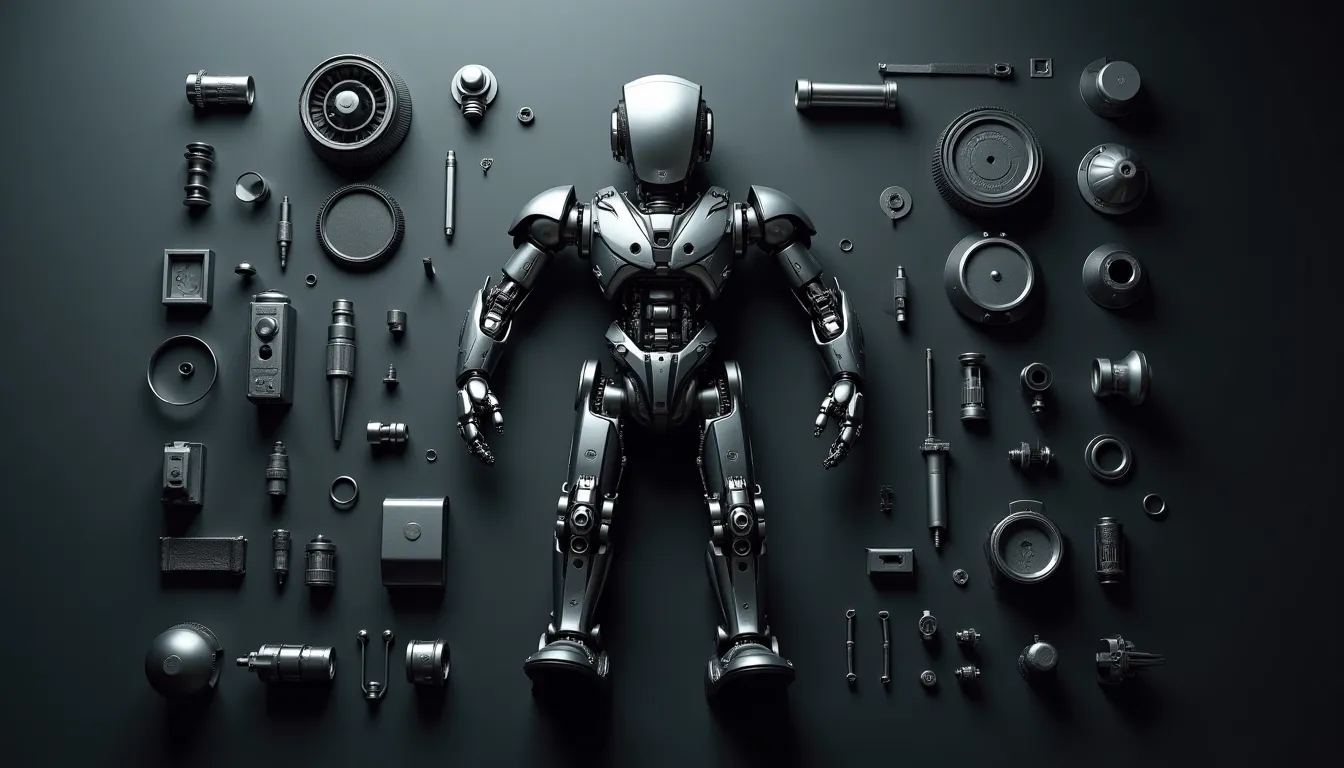
The Anatomy of a Humanoid Robot: Five Critical Systems
Modern humanoid robots integrate five essential subsystems, each representing distinct investment opportunities and supply chain dynamics. Understanding these components reveals where value creation occurs and which suppliers hold competitive advantages.
Actuators represent the largest cost component, typically accounting for 35-40% of a humanoid robot's bill of materials. The precision required for human-like movement demands harmonic drive gearing systems—a specialized technology where Harmonic Drive AG maintains approximately 60% global market share. The Japanese company, listed on the Tokyo Stock Exchange, reported revenues of ¥47.8 billion ($320 million) in fiscal 2023, with operating margins consistently above 15%.
The actuator market's concentration stems from decades of accumulated intellectual property and manufacturing precision requirements. Harmonic drives reduce motor speed while multiplying torque through flexible spline technology, achieving the high reduction ratios essential for robotic joints. Alternative suppliers include Sumitomo Heavy Industries and KOFON Technology, but Harmonic Drive's technical leadership and established relationships with major robot manufacturers create substantial switching costs.
"The actuator bottleneck represents both opportunity and risk for robotics investors. While Harmonic Drive's market dominance offers predictable revenue growth, supply chain concentration could constrain the entire industry's scaling timeline."
Sensing Systems: The Robot's Nervous System
Humanoid robots require sophisticated sensor arrays to interact safely with human environments. Force and torque sensors enable delicate manipulation tasks, while LiDAR and vision systems provide spatial awareness. This sensing layer fragments across multiple specialized suppliers, creating a more diversified investment landscape.
ATI Industrial Automation, acquired by Novanta (NASDAQ: NOVT) in 2018, dominates force/torque sensing with roughly 70% market share in robotics applications. Novanta's precision motion solutions division, which includes ATI, generated $186 million in revenue during Q3 2024, representing 22% year-over-year growth.
LiDAR technology sees more competition, with Velodyne Lidar (recently acquired by Ouster), Luminar Technologies (NASDAQ: LAZR), and MicroVision (NASDAQ: MVIS) competing alongside emerging solid-state providers. The robotics LiDAR market differs from automotive applications, requiring shorter range but higher precision—a distinction that may favor different technical approaches and suppliers.
| Component Category | Key Suppliers | Market Share Leader | Public Investment Access |
|---|---|---|---|
| Harmonic Drives | Harmonic Drive AG, Sumitomo Heavy | Harmonic Drive (~60%) | TSE: 6324 |
| Force/Torque Sensors | ATI (Novanta), Robotiq, Schunk | ATI (~70%) | NASDAQ: NOVT |
| LiDAR Systems | Velodyne, Luminar, MicroVision | Fragmented | Multiple listings |
| Robotic Compute | NVIDIA, Qualcomm, Intel | NVIDIA (~80%) | NASDAQ: NVDA |
| Battery Systems | CATL, BYD, Panasonic | CATL (~35%) | Limited public access |
Computing Power: The Silicon Brain
Robotics computing requirements differ substantially from traditional AI workloads, emphasizing real-time processing and power efficiency over raw computational throughput. NVIDIA's Jetson platform maintains roughly 80% market share in robotics edge computing, but this dominance faces challenges from custom silicon approaches.
Tesla's development of its own robotics chips for Optimus represents a broader trend toward application-specific integrated circuits (ASICs) in robotics. While this vertical integration strategy may optimize performance and cost for high-volume manufacturers, it also creates opportunities for fabless semiconductor companies specializing in robotics workloads.
Qualcomm's (NASDAQ: QCOM) robotics platforms, built on Snapdragon technology, target lower-power applications where NVIDIA's solutions may be over-specified. The company's robotics and drone division generated approximately $1.4 billion in revenue during fiscal 2024, though this figure includes broader IoT applications beyond humanoid robotics.
Power Systems: The Binding Constraint
Battery energy density represents the fundamental constraint limiting humanoid robot deployment. Current lithium-ion technology provides roughly 250-300 Wh/kg at the cell level, but system-level energy density drops to 150-200 Wh/kg after accounting for battery management systems and packaging.
A human-sized robot operating for eight hours requires approximately 15-20 kWh of energy storage, translating to 75-130 kg of battery weight—a substantial portion of the robot's total mass budget. This constraint explains why most current humanoid robots operate for only 2-4 hours on battery power, limiting commercial applications.
"The battery bottleneck in robotics differs from electric vehicles primarily in weight sensitivity. While EVs can accommodate heavier battery packs for extended range, robots must optimize for power-to-weight ratios that enable natural movement patterns."
Contemporary Amperex Technology (CATL), the world's largest battery manufacturer with 35% global market share, has announced solid-state battery technology targeting 500 Wh/kg by 2027. However, CATL's limited public market access—the company trades on the Shenzhen Stock Exchange with restricted foreign ownership—illustrates a broader challenge in accessing Asian battery suppliers through Western capital markets.
Materials and Manufacturing: The Physical Foundation
Humanoid robots demand materials balancing strength, weight, and manufacturing cost. Carbon fiber provides optimal strength-to-weight ratios but remains expensive for mass production. High-strength aluminum alloys offer better cost profiles while maintaining adequate performance for most applications.
Toray Industries, the world's largest carbon fiber producer, supplies aerospace-grade materials increasingly adopted in robotics applications. The company's carbon fiber composite materials division generated ¥987 billion ($6.6 billion) in revenue during fiscal 2023, with robotics representing a small but growing segment.
Alcoa Corporation (NYSE: AA) and Norsk Hydro (OSE: NHY) represent aluminum exposure, though robotics demand remains minimal relative to these companies' automotive and aerospace revenues. The specialized machining and finishing required for robotic components may favor smaller, specialized manufacturers over commodity metal producers.
Supply Chain Concentration Risks
The robotics supply chain exhibits dangerous concentration in several critical components. Harmonic Drive's 60% market share in precision gearing creates potential bottlenecks if demand accelerates faster than manufacturing capacity expansion. Similarly, Taiwan Semiconductor's dominance in advanced chip manufacturing affects all computing-intensive robotics applications.
Geographic concentration compounds these risks, with key suppliers clustered in Japan (Harmonic Drive, Fanuc), South Korea (Samsung, LG Chem), and Taiwan (TSMC, Foxconn). Trade tensions or natural disasters affecting these regions could disrupt global robotics production schedules.
Recent supply chain disruptions in 2020-2022 demonstrated how semiconductor shortages could halt entire industries. Robotics manufacturers, typically smaller and with less purchasing power than automotive companies, would likely face longer delays and higher costs during supply constraints.
Investment Access and Market Liquidity
Accessing robotics component suppliers through public markets presents mixed opportunities. While NVIDIA and Qualcomm offer liquid exposure to robotics computing, their robotics revenues remain small relative to data center and mobile markets. Harmonic Drive AG provides pure-play actuator exposure but trades on the Tokyo Stock Exchange with limited liquidity for international investors.
European investors gain better access through companies like ABB (SIX: ABBN), which manufactures industrial robots and components, or Kuka AG (acquired by Midea Group), though these focus on industrial rather than humanoid applications. American Depositary Receipts (ADRs) for Asian robotics suppliers remain limited, forcing investors toward broader technology ETFs or sector-specific funds.
What This Means for Investors
The robotics component supply chain offers three distinct investment advantages over platform-level bets on specific robot manufacturers. First, component suppliers benefit from multiple customer relationships, reducing dependence on any single robot design succeeding commercially. Second, established suppliers possess switching costs and technical expertise that create competitive moats. Third, component companies typically achieve profitability earlier than system integrators, providing more predictable cash flows during the market development phase.
However, investors must carefully evaluate each supplier's robotics exposure relative to other business segments. Companies like NVIDIA and Qualcomm derive minimal revenue from robotics, making their stock performance largely independent of humanoid robot adoption rates. Conversely, pure-play suppliers like Harmonic Drive AG offer concentrated exposure but carry higher execution risk if robotics demand disappoints.
The optimal approach likely involves a diversified portfolio of component suppliers across different subsystems, weighted toward companies with sustainable competitive advantages and meaningful robotics revenue exposure. This strategy captures the sector's upside potential while mitigating the winner-takes-all risks inherent in platform-level investments.
Future Implications and Scaling Dynamics
As humanoid robotics transitions from research projects to commercial applications, component demand will shift from low-volume, high-specification products toward mass-market solutions. This evolution may advantage suppliers capable of scaling manufacturing while maintaining quality standards—a capability that historically benefits established players with deep operational expertise.
The timeline for this transition remains uncertain, with most industry analysts projecting meaningful commercial deployment between 2027-2030. However, component suppliers are already experiencing increased demand for prototyping and pre-production volumes, creating near-term revenue opportunities even before mass market adoption.
The picks-and-shovels investment strategy in robotics ultimately reflects a fundamental principle: in emerging technology markets, supplying the builders often proves more profitable than building itself. As humanoid robotics advances toward commercial reality, the companies providing the essential components may deliver the most consistent returns to patient investors.
Frequently Asked Questions
What percentage of a humanoid robot's cost comes from actuators?
Actuators represent the largest cost component of humanoid robots, typically accounting for 35-40% of the total bill of materials due to precision requirements for human-like movement.
Which company dominates the harmonic drive market for robotics?
Harmonic Drive AG maintains approximately 60% global market share in harmonic drive gearing systems, reporting ¥47.8 billion in revenue for fiscal 2023 with operating margins above 15%.
Why are humanoid robots limited to short operating times?
Current lithium-ion battery technology limits humanoid robots to 2-4 hours of operation because system-level energy density of 150-200 Wh/kg requires 75-130 kg of battery weight for 8-hour operation.
Who leads the robotics computing market?
NVIDIA's Jetson platform maintains roughly 80% market share in robotics edge computing, though custom silicon approaches from companies like Tesla are emerging as competition.
What are the main investment risks in robotics supply chain?
Supply chain concentration creates bottleneck risks, with Harmonic Drive controlling 60% of precision gearing and geographic concentration in Asian suppliers limiting Western market access.
Recommended Reading


Get MachineHours in your inbox
AI compute and the machine economy in your inbox.