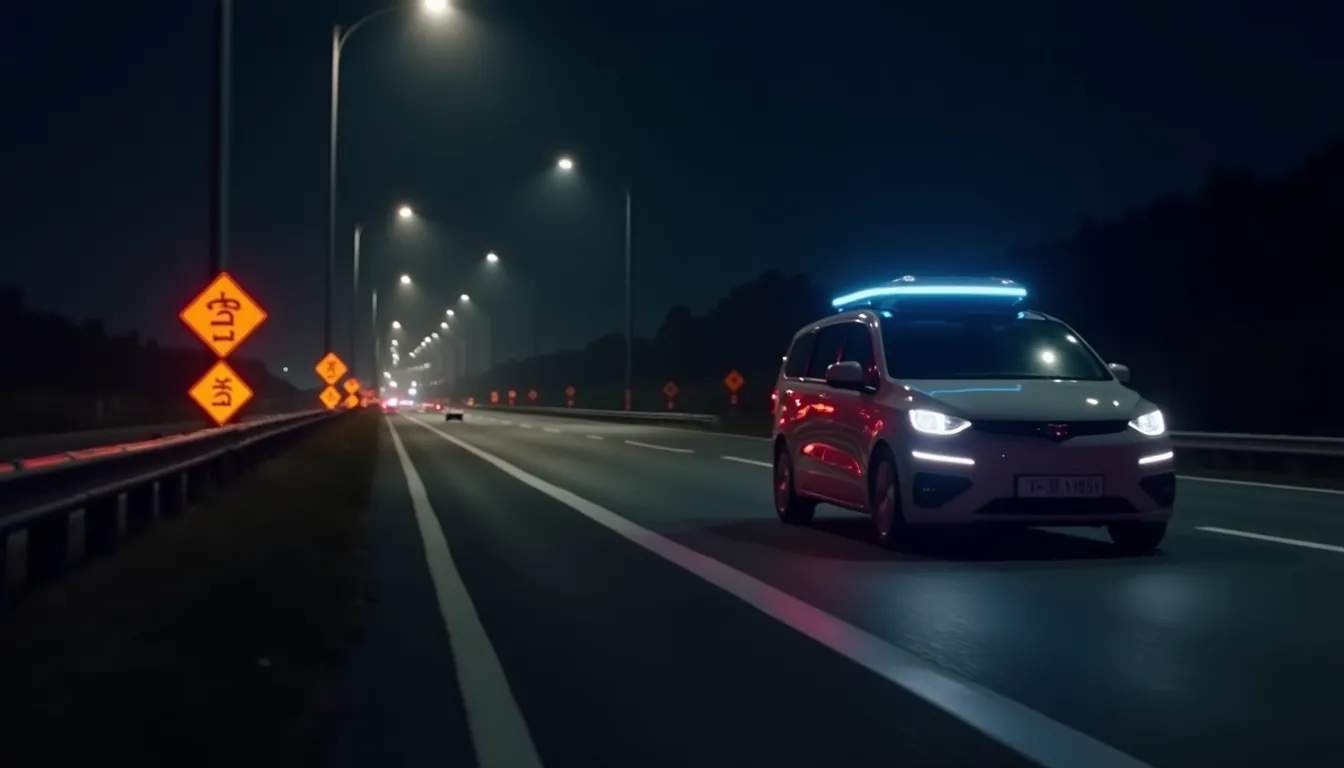
Waymo has issued a recall after its robotaxis were found to risk driving at full speed into freeway construction zones. A self-driving toilet and Prime Day robot vacuum deals round out this week's autonomous machine news.
Key Takeaways
- Waymo issued a recall on June 18, 2026 after a software flaw was found that could cause robotaxis to drive at full speed into freeway construction zones.
- Waymo said a software update has been deployed to address the defect; the number of vehicles affected was not disclosed.
- A Chinese manufacturer launched the Yueban Xiaoban, a self-driving toilet that navigates autonomously to mobility-limited users indoors.
- The Verge compiled robot vacuum deals ahead of Amazon Prime Day 2026, highlighting how consumer floor-cleaning robots are the most commercially mature autonomous home devices.
- Waymo operates paid robotaxi services in San Francisco, Phoenix, and Los Angeles, making it the most commercially advanced autonomous vehicle operator in the U.S.
Waymo has issued a recall of its robotaxi fleet after regulators identified a software defect that could cause vehicles to drive at full speed into freeway construction zones, according to Wired. The recall marks one of the more serious safety disclosures in commercial autonomous vehicle deployment to date, raising fresh questions about how well self-driving systems handle dynamic, real-world hazards.
What Happened
Waymo filed the recall with NHTSA on June 17, 2026; Wired reported on it on June 18, 2026. after engineers identified a flaw in the system's handling of freeway construction zones. The defect could cause a robotaxi to maintain highway speed rather than slowing or stopping when encountering active work zones, a scenario that carries significant risk for both road workers and passengers. The recall affects 3,871 vehicles running Waymo's 5th Generation automated driving system (ADS), per the NHTSA filing. No software fix exists yet. The permanent remedy is under development, and Waymo's interim response is to restrict all vehicles from entering freeways entirely. This recall is notable because Waymo has positioned itself as the furthest-along commercial robotaxi operator in the United States, Waymo previously offered freeway rides in San Francisco, Los Angeles, Phoenix, and Miami..
Elsewhere in autonomous machine news, The Verge covered the Yueban Xiaoban, a self-driving toilet developed by a Chinese manufacturer that navigates autonomously to the user rather than requiring the user to walk to it. The product targets mobility-limited users and is equipped with sensors and wheels allowing it to move through indoor environments. The Xiaoban reflects how low-cost robotics components and autonomous navigation software are reaching consumer product categories far beyond industrial or automotive applications.
The Verge also published a review of the IQUNIX EV63 Ghost in the Shell Edition mechanical keyboard, a consumer product with no direct robotics function but designed around the aesthetic of the iconic anime franchise, which centres on cyborg and robotic themes. The review signals continued mainstream cultural fascination with robotics imagery in consumer hardware.
Rounding out the week's autonomous machine coverage, The Verge compiled the best robot vacuum and mop deals ahead of Amazon Prime Day 2026. The annual discount event consistently drives some of the highest consumer robotics sales volumes of the year, with floor-cleaning robots among the most commercially mature autonomous devices in the home segment.
Why It Matters
The Waymo recall is a significant data point for the commercial deployment of autonomous vehicles. Recalls at this stage of the market are not unusual - software-defined vehicles operate under continuous revision cycles - but a flaw specifically tied to construction zones points to a persistent gap in how autonomous systems read temporary, irregular road conditions. Construction zones involve shifting lane markings, human flaggers, variable speed limits, and irregular signage, all of which present harder classification problems than standard road geometry.
The commercial implications extend beyond Waymo. Competitors including Cruise, Zoox, and international operators will face scrutiny from regulators who track each disclosed defect. The recall also feeds into ongoing policy debates about what safety standards should gate full commercial expansion of robotaxi services. Those tracking the equity market implications of robotics deployment will note that safety incidents tend to compress valuations and delay expansion timelines for autonomous vehicle operators.
The self-driving toilet, meanwhile, illustrates a different dimension of robotics commercialisation: the diffusion of autonomous navigation into everyday consumer products. As sensor costs fall and off-the-shelf navigation stacks mature, the barrier to building a product that moves itself to a user has dropped substantially.
Background
Autonomous robots are increasingly deployed across commercial and consumer contexts, from vehicle fleets to facility management. As covered in the MachineHours encyclopedia entry on Robotics in Property - Construction Robots, Inspection Drones, and Automated Facilities, robotics technology is expanding into building inspection, infrastructure maintenance, and hazardous environment work. Construction zones represent exactly the kind of dynamic, human-occupied environment where autonomous systems face their hardest real-world tests - irregular geometry, unpredictable human movement, and temporary signage that standard mapping data does not capture.
The broader arc of industrial robotics history shows that commercial adoption typically accelerates after a period of high-profile safety disclosures that drive regulatory clarification, rather than being derailed by them. Waymo's recall fits that pattern.
What to Watch
Regulators at the National Highway Traffic Safety Administration will determine whether the Waymo software fix is sufficient or whether additional operational restrictions are required. Watch for any expansion of the recall scope if earlier software builds are implicated. Waymo's timeline for resuming or expanding commercial service in affected markets is the next concrete indicator of how the company and its regulators assess the risk resolution.
On the consumer side, Prime Day 2026 robot vacuum sales data - typically released in the weeks following the event - will offer a concrete measure of how mainstream home robotics adoption is tracking year over year. The self-driving toilet, while niche, is worth monitoring as a signal of how autonomous navigation components are filtering into entirely new product categories.
- Construction robots and autonomous systems reduce worker exposure to hazardous environments by handling dangerous or repetitive site tasks.
- Autonomous navigation in dynamic environments - such as active construction zones - remains one of the harder unsolved problems in commercial robotics deployment.
- Consumer robotics, led by robot vacuums, represent the highest-volume segment of the autonomous device market by units sold.
- Inspection drones and facility robots increasingly use the same sensor and navigation stacks being refined in automotive autonomous systems.
Sources
- Wired: Waymo Recalls Robotaxis Over Risk They'll Drive at Speed Into Freeway Construction Zones
- The Verge: This robotic self-driving toilet comes to you
- The Verge: The best robot vacuum deals available ahead of Prime Day
- The Verge: IQUNIX EV63 Ghost in the Shell Edition keyboard review
- MachineHours Encyclopedia: Robotics in Property — Construction Robots, Inspection Drones, and Automated Facilities
Frequently Asked Questions
Why did Waymo recall its robotaxis?
Waymo recalled its robotaxi fleet after identifying a software defect that could cause vehicles to drive at highway speed into freeway construction zones rather than slowing or stopping. A software update has been issued to fix the flaw.
How many Waymo vehicles were affected by the recall?
Waymo did not disclose the total number of vehicles affected by the recall or the specific software version implicated in the defect.
What is the Yueban Xiaoban self-driving toilet?
The Yueban Xiaoban is a Chinese-made autonomous toilet equipped with wheels and sensors that allow it to navigate indoors and come to the user, targeting people with limited mobility.
Where does Waymo currently operate commercial robotaxi services?
Waymo operates paid robotaxi rides in San Francisco, Phoenix, and Los Angeles, making it the furthest-along commercial autonomous vehicle operator in the United States.
Why are construction zones particularly difficult for autonomous vehicles?
Construction zones feature temporary lane markings, human flaggers, variable speed limits, and irregular signage that standard mapping data does not capture, making them harder for autonomous systems to classify correctly than standard road conditions.
Get MachineHours in your inbox
AI compute and the machine economy in your inbox.