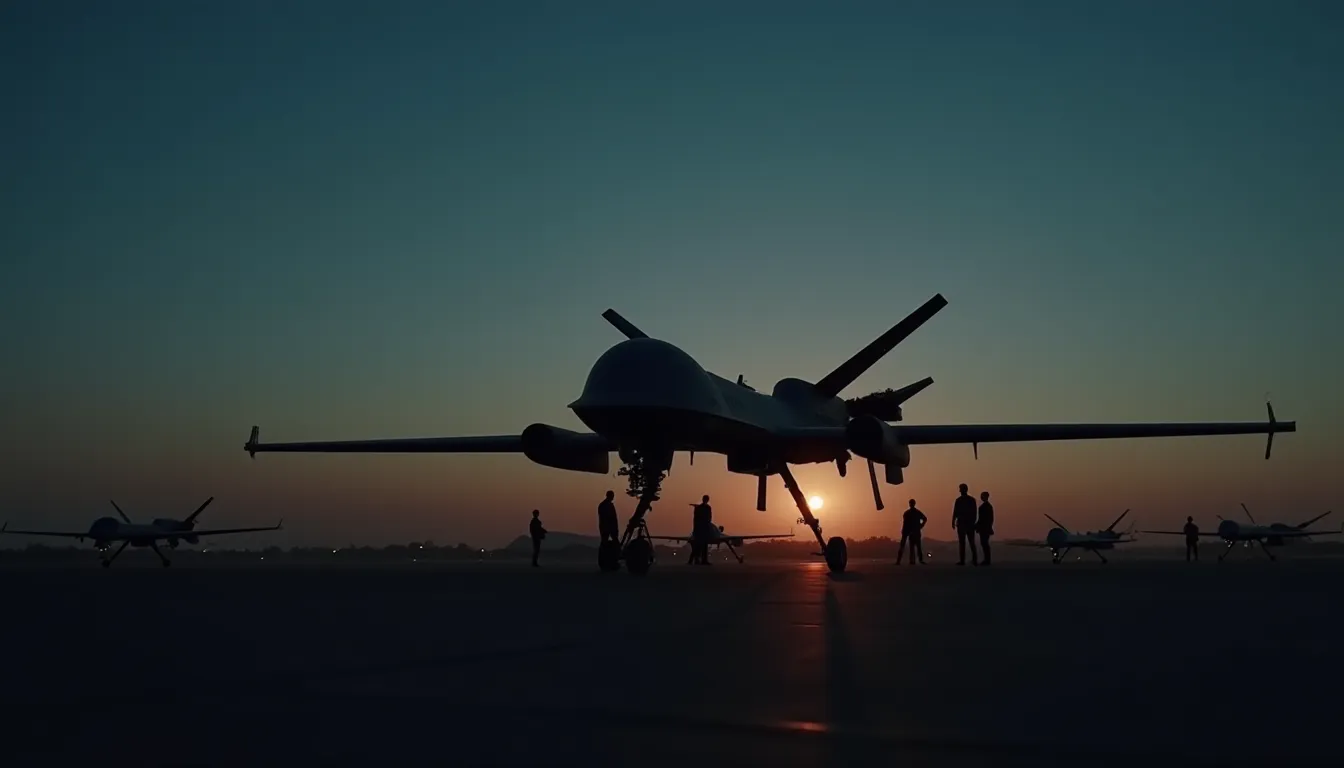
The US Army says it has enough small attack drones to equip every squad but still needs to train soldiers to operate them, especially in contested electromagnetic environments. Separately, the US State Department cleared a potential sale of up to 48 F-35As to Saudi Arabia worth up to $24.3 billion, the Army added $234 million in undefinitized funding toward an initial 16 Black Hawk helicopters, an
Key Takeaways
- The US Army says it has the volume of small attack drones needed to equip every squad, but training soldiers — especially for contested electromagnetic environments — remains an ongoing challenge, and not every squad has received the systems yet.
- The US State Department cleared a potential sale of up to 48 F-35A jets and 49 engines to Saudi Arabia, valued at up to $24.3 billion, with Lockheed Martin as manufacturer; the deal still requires a 30-day congressional review.
- The Army added $234 million in undefinitized contract funding for an initial 16 Black Hawk helicopters built by Sikorsky, bringing that contract's total value to $356 million, with deliveries planned for fiscal 2028.
- Northrop Grumman is pursuing expanded munitions supply chain work across roughly eight weapons programs, while Lockheed Martin is advancing PAC-3 production negotiations with Northrop.
- A revised Pentagon memo from Deputy Secretary Stephen Feinberg eases elements of an earlier accounting oversight directive that had alarmed defense industry contractors, particularly non-traditional firms.
The US Army says it now has enough small, one-way attack drones to outfit every squad, but still needs to get soldiers trained to operate them — particularly in contested electromagnetic environments. According to Breaking Defense, Col. Gregory Merkl, the Army's Drone Dominance director, said the service has the volume to field these systems but still has "some work to do" training qualified pilots down to the squad level.
What Happened
Breaking Defense reported that Merkl credited the Pentagon's Drone Dominance program, launched by Defense Secretary Pete Hegseth in 2025, with helping the Army reach sufficient drone volume ahead of a fiscal 2026 deadline for equipping every squad. A service spokesperson later clarified to Breaking Defense that because these small drones are attritable, the Army will "never actually have 'enough'" of them, and that the systems "have not yet reached every squad across the Army" — though the service is "moving quickly" toward that goal. The Army is now running working groups, including with the Federal Aviation Administration, to help soldiers safely operate in contested spectrum conditions, and has conducted related training during exercises such as Saber Junction in Germany, where a US drone-focused unit worked alongside Ukrainian and NATO counterparts.
Separately, Breaking Defense reported that the US State Department cleared a potential sale to Saudi Arabia of up to 48 F-35A fighter jets and 49 F135 engines, in a deal valued at up to $24.3 billion. The sale, which fulfils a commitment President Trump made as part of a Strategic Defense Agreement, still faces a 30-day congressional review period, and some lawmakers have raised concerns following reports that the transfer could expose sensitive F-35 technology to China. Lockheed Martin, which manufactures the F-35, said the agreement "exemplifies our shared commitment to enduring security, stability, and long-term cooperation."
Also on the Army's rotary-wing side, Breaking Defense reported that the Army awarded Sikorsky, Lockheed Martin's helicopter subsidiary, an additional $234 million in undefinitized contract action (UCA) funding for an initial 16 Black Hawk UH-60 helicopters, bringing the total contract value to $356 million. The aircraft are scheduled for delivery in fiscal 2028, funded by leftover fiscal 2025 and 2026 appropriations, as the current Black Hawk multiyear deal winds down by the end of 2027. Sikorsky executives said a future agreement could grow to as many as 150 aircraft over the next three to four years.
On the industry side, Breaking Defense reported that Northrop Grumman CEO Kathy Warden told investors at a Morgan Stanley conference that the company is in active discussions with various primes on roughly eight weapons programs, aiming to expand its role supplying solid rocket motors and other munitions components. Northrop's PAC-3 solid rocket motor has been fully qualified, and the company is "far along" in contract negotiations with Lockheed Martin to scale up production.
Finally, Breaking Defense reported that Deputy Secretary of Defense Stephen Feinberg signed a new memo, "Fostering One Strong Industrial Base," that encourages replacing government Cost Accounting Standards with commercial-sector GAAP rules "to the maximum extent the law permits." Analysts told Breaking Defense the memo serves as a corrective to an earlier, more aggressive August 18 directive on pricing oversight that had been "received very poorly" by industry and risked driving non-traditional firms out of the defense market.
Why It Matters
The Army's acknowledgment that training lags behind drone volume reflects a recurring pattern in defense acquisition: fielding hardware is often faster than building the doctrine, qualified personnel, and electromagnetic-spectrum proficiency needed to use it effectively in contested conditions.
Together, the potential $24.3 billion Saudi F-35 sale and the $234 million Black Hawk funding addition point to continued high-volume US defense procurement activity, spanning both foreign military sales and domestic rotary-wing investment. The Feinberg memo revision also matters for industry health: accounting-regime uncertainty, particularly for non-traditional and smaller defense firms, can complicate long-term contracting decisions.
Background
The Drone Dominance program was launched in 2025 by Defense Secretary Pete Hegseth to accelerate drone production and fielding across the force, with a mandate that every Army squad be equipped with small, one-way attack drones by the end of fiscal 2026. The broader drone sector's growth is detailed in the MachineHours encyclopedia entry on Drone Technology - Autonomous Flight and Its Economic Impact, which projects the overall market growing from $43.6 billion to $109.8 billion by 2030.
Undefinitized contract actions, like the Black Hawk funding addition, let the Pentagon begin production before final pricing and quantities are settled — a tool used to maintain continuous production even amid congressional appropriations delays.
What to Watch
Watch whether the Army closes the gap between drone volume and squad-level training before its fiscal 2026 deadline, and how spectrum-contested training is scaled beyond exercises like Saber Junction. The Saudi F-35 sale now enters a 30-day congressional review period, where lawmakers concerned about technology transfer risk could seek to block or reshape the deal. On Black Hawk, watch for definitization of the UCA and whether the follow-on agreement grows toward the roughly 150 aircraft Sikorsky has floated. On the industrial base side, expect continued negotiation between the Pentagon's cost office and contractors over how the revised Feinberg memo applies to existing multi-year contracts.
- The Army says it has enough small attack drones to outfit every squad, but some squads have not yet received the systems and qualified operators remain limited.
- The US State Department cleared a potential sale of up to 48 F-35As and 49 F135 engines to Saudi Arabia, valued at up to $24.3 billion, pending a 30-day congressional review.
- The Army added $234 million in undefinitized contract funding for an initial 16 Black Hawk helicopters, bringing that contract's total value to $356 million.
- A revised Pentagon memo from Deputy Secretary Feinberg softens an earlier, more aggressive accounting oversight directive that had worried defense industry figures.
Sources
- Breaking Defense: Army has enough drones for each unit, now it needs to train soldiers to use them
- Breaking Defense: US clears $24B F-35 sale for Saudi Arabia
- Breaking Defense: Army adds $234M in undefinitized contract funding for Black Hawk deal
- Breaking Defense: Northrop eyes munitions supply work, Lockheed eyes funding: CEOs
- Breaking Defense: 'They overreached': Amid industry worry, new Feinberg memo tweaks accounting regime
- MachineHours Encyclopedia: Drone Technology — Autonomous Flight and Its Economic Impact
Frequently Asked Questions
Does the US Army have enough drones for every squad now?
The Army says it has the overall volume of small, one-way attack drones needed to equip every squad, driven by the Pentagon's Drone Dominance program. However, a service spokesperson clarified the systems have not yet reached every squad across the Army, and training enough qualified pilots at the squad level remains a work in progress.
What is the status of the F-35 sale to Saudi Arabia?
The US State Department has cleared a potential sale of up to 48 F-35A jets and 49 F135 engines to Saudi Arabia, valued at up to $24.3 billion. The deal is not final — prices and quantities could change, and it now faces a 30-day congressional review period during which lawmakers could seek to block it.
What is an undefinitized contract action and why did the Army use one for Black Hawk?
An undefinitized contract action (UCA) lets the Pentagon begin production before final pricing and quantities are settled. The Army used a $234 million UCA to fund an initial 16 Black Hawk helicopters from Sikorsky, bringing that contract's value to $356 million, so production could continue without waiting on a fully negotiated deal.
What did the Feinberg memo change for defense contractors?
Deputy Secretary of Defense Stephen Feinberg issued a memo encouraging the Pentagon to accept commercial GAAP accounting standards instead of government Cost Accounting Standards 'to the maximum extent the law permits.' Analysts say it softens an earlier, more aggressive August directive on pricing oversight that had alarmed industry, particularly non-traditional defense firms.
What are Northrop Grumman and Lockheed Martin focused on right now?
Northrop Grumman is seeking to expand its role as a munitions supplier, with active discussions on roughly eight weapons programs, including scaling up PAC-3 solid rocket motor production in negotiations with Lockheed Martin. Lockheed also manufactures the F-35 involved in the proposed Saudi Arabia sale.