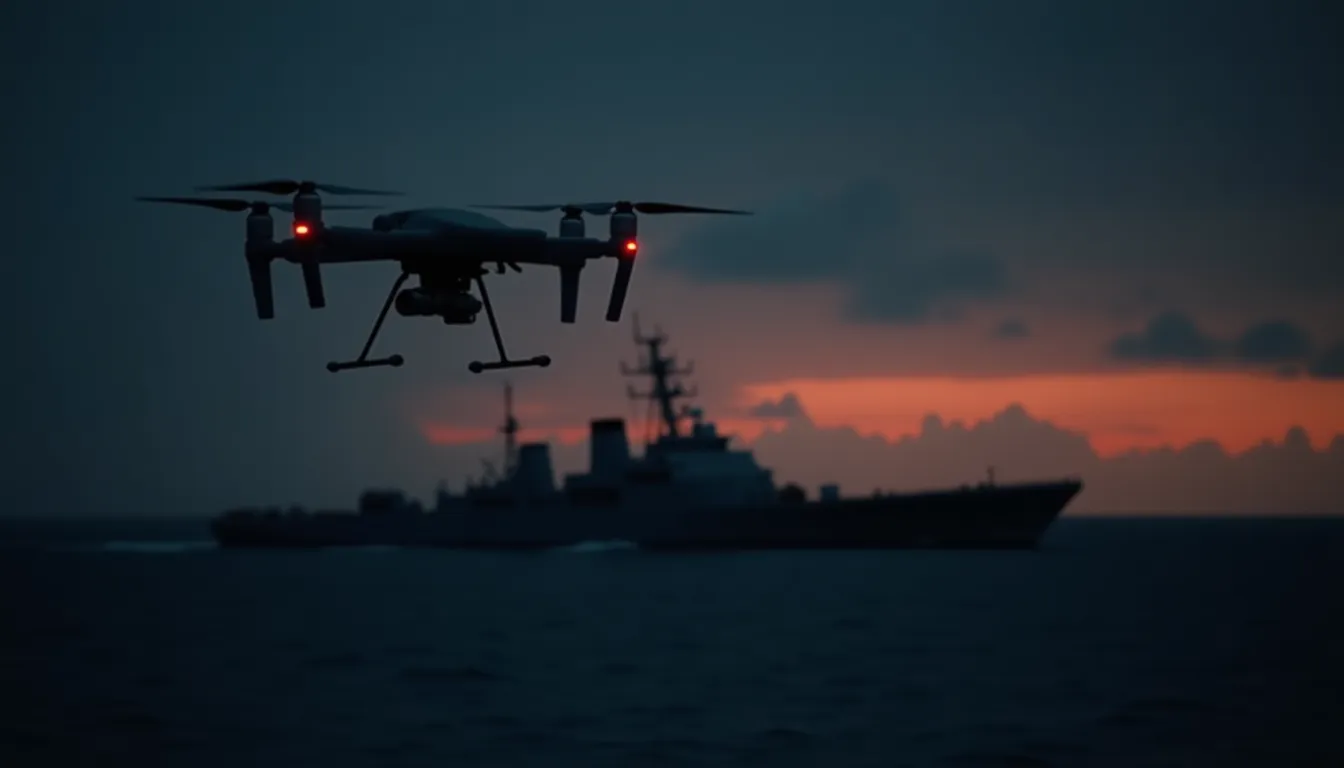
The US Army defended its unmanned aerial vehicle strategy after restructuring a Europe-based drone-focused battalion back into conventional infantry, with Army leadership stating the service is not retreating from drone development and emphasizing that autonomous systems remain a core modernization priority.
Key Takeaways
- The US Army's decision to revert its Europe-based unmanned systems battalion back to conventional infantry does not represent a strategic retreat from drone development, according to Army leadership, but rather an organizational adjustment to embed UAV capabilities across multiple units.
- Army CTO Alex Miller attributed congressional backlash to the service not communicating its long-term strategy clearly, stating the Army never intended to maintain a permanent specialized drone unit but rather to distribute drone knowledge throughout infantry formations.
- Pentagon officials warned that budget uncertainty could undermine hard-won momentum in autonomous systems development, with DAWG facing potential severe cuts if Congressional budget reconciliation fails to pass.
- Current military drone operations suffer from a critical standardization problem, with some Special Forces units operating six to eight different unmanned systems, each requiring distinct training and control interfaces, creating inefficiency and slowing modernization efforts.
- Cost asymmetry in modern warfare—where low-cost drones can threaten multi-billion-dollar assets—creates urgency for the US military to accelerate autonomous systems integration and develop affordable, coordinated drone responses.
The US Army pushed back against perceptions that it is retreating from unmanned aerial vehicles, even after restructuring a dedicated drone unit back into conventional infantry. Army officials made clear that the organizational change does not signal a strategic withdrawal from autonomous systems, though the decision has raised questions about how drone capability will be distributed and commanded within ground forces going forward.
The 3rd Battalion of the 504th Parachute Infantry Regiment, based in Europe as part of the 173rd Airborne Brigade, was officially designated as an "unmanned systems battalion" in January 2026. In that capacity, the unit engaged in various exercises and met with Ukrainian drone operators in NATO territory over several months, drawing on lessons from active conflict operations. However, in August, Acting Chief of Staff of the Army Gen. Christopher LaNeve directed the unit to revert back to a traditional infantry unit after it completed two exercises in Germany.
The reversal prompted swift congressional concern. Lawmakers requested clarification from Army leadership, writing that they had "deep concerns that eliminating this specialized drone unit will limit our ability to learn from allies, particularly the Ukrainian Armed Forces, and hinder our efforts to modernize drone warfare at the speed necessary to compete on the modern battlefield." The legislators pointed to both the Ukraine-Russia War and ongoing Middle East conflicts as evidence that the military requires significant improvements in drone warfare capabilities.
Miller attributed some of the negative reaction to poor communication. He said that backlash was "probably" caused by the Army not "telling the full story fast enough," noting that the service never intended to establish a permanent specialized drone unit. Instead, Army officials framed the restructuring as an organizational adjustment meant to embed unmanned systems knowledge across the infantry rather than concentrate it in a single dedicated battalion.
According to Army statements, the goal was for the battalion to sharpen its knowledge on drone and other autonomous warfare based on lessons learned from the Ukrainian Armed Forces. That knowledge, Army officials suggested, would now be redistributed throughout the conventional infantry structure rather than remaining isolated within a specialized formation.
Strategic Context and Broader Drone Modernization
The Army's UAV restructuring decision occurs within a larger defense-wide debate about how drone capability should be organized and distributed. The question is fundamental: should unmanned systems function as a specialist capability managed by dedicated units, or should they be embedded across all units as standard operational tools? The resolution of this question will shape procurement volumes, training pipelines, and ultimately the scale of the market for autonomous military systems.
The restructuring also reflects ongoing concerns about acquisition momentum and funding stability for drone programs. The director of the Pentagon's Defense Autonomous Working Group (DAWG) warned that a potential funding lapse could derail hard-won progress in autonomous systems development. Lt. Gen. Steven Marks told the NDIA Emerging Technologies Conference that while the Trump administration had requested nearly $54 billion for DAWG in FY27, achieving full funding remained uncertain, and he expressed concern that "if we don't get something, then the momentum that we have created since DAWG has been stood up, over a year ago, will be waning."
The funding situation is precarious: while $53.6 billion of the $54.6 billion request was submitted through budget reconciliation—a process facing significant legislative hurdles—only $1 billion was requested through the normal base budget. If reconciliation fails, DAWG could be left with $1 billion, still four times the $226 million the program received in FY26, but far below the expansive modernization plan.
Marks emphasized the strategic stakes. He noted that while US adversaries cannot yet match American "exquisite capability," they have demonstrated the ability to deploy low-cost drones in asymmetric attack scenarios, stating: "[They] can take a $100,000 drone and conduct an attack against a $2 billion vessel. We are on the losing end of that cost imposition curve." This cost asymmetry underscores the urgency of the drone modernization agenda and the risk that budget constraints could allow adversaries to exploit current gaps in automated response and coordination.
Standardization and Operational Integration Challenges
A particular concern for DAWG leadership is the lack of standardization across unmanned systems within the military. Marks described meeting with the 20th Special Forces Group at Camp Clark in Alabama, where he found that operators were working with "six to eight systems" in a single exercise, each requiring different skill sets and control interfaces. He stressed that identifying and standardizing on one or two systems across formations is "critical to the future of autonomous warfare".
This standardization challenge is directly relevant to the Army's decision to revert the drone battalion to infantry. By distributing autonomous systems training and knowledge across multiple infantry units rather than concentrating it in one specialized formation, the Army may be attempting to accelerate the adoption of drone capabilities as standard infantry tools. However, this approach requires the very standardization that Marks identified as currently lacking—a standardization that cannot occur without sustained funding and clear strategic direction.
Congressional and Strategic Implications
The Army's reaffirmation of its UAV commitment, despite the structural reorganization, reflects a military-wide recognition that autonomous systems are central to future warfare. Yet the gap between strategic statements and resource allocation remains significant. DAWG's budget uncertainty—with the bulk of its funding tied to reconciliation rather than secure base budget authority—represents a structural vulnerability in the modernization effort.
Congressional skepticism about the drone battalion reversal, combined with Pentagon warnings about funding risks, suggests that the coming months will be critical for autonomous systems development. The Army's narrative—that the battalion transition represents evolution rather than retreat—will need to be reinforced by concrete investments and visible progress in embedding drone capabilities across infantry units. Without that follow-through, the perception of retreat may take root regardless of official statements.
Sources
- Breaking Defense: Army 'not walking away' from UAVs despite reverting drone unit back to infantry
- Breaking Defense: 'Truly concerns me': DAWG director warns funding lapse could kill 'momentum'
- Breaking Defense: Netherlands to purchase its own GlobalEye aircraft, on top of NATO's order
- Breaking Defense: How Japan, South Korea are building up naval capabilities for China threat
- Breaking Defense: Ukrainian Armor eyes German industry partnership for newly unveiled land vehicles
- MachineHours Encyclopedia: Drone Technology — Autonomous Flight and Its Economic Impact
Frequently Asked Questions
Why did the US Army revert its drone unit back to infantry?
Army officials described it as an organizational adjustment, not a strategic retreat from UAVs. The Army insists unmanned systems remain a priority but will be distributed differently across ground forces rather than concentrated in a specialist unit.
What is the GlobalEye aircraft and why is the Netherlands buying its own?
The Saab GlobalEye is an airborne early warning and control platform combining radar, signals intelligence, and maritime surveillance. The Netherlands is purchasing one nationally on top of NATO's collective order to secure an independent sovereign surveillance capability.
What is the DAWG funding lapse warning about?
The Defense Acquisition Workforce Group director warned that a potential gap in Congressional appropriations could disrupt contractor pipelines and defense workforce development programs that took years to build, slowing multiple acquisition programs.
How are Japan and South Korea responding to the China threat at sea?
Both nations are investing in expanded destroyer fleets, submarine programs, and long-range strike capabilities, representing one of the most significant naval expansion periods in the Indo-Pacific since the Cold War, according to Breaking Defense.
What is Ukrainian Armor seeking from Germany?
Ukrainian Armor unveiled new land vehicles and is pursuing a German industrial partnership to scale production, aiming to integrate European manufacturing capacity into Ukraine's domestic defense production base.
Get MachineHours in your inbox
AI compute and the machine economy in your inbox.