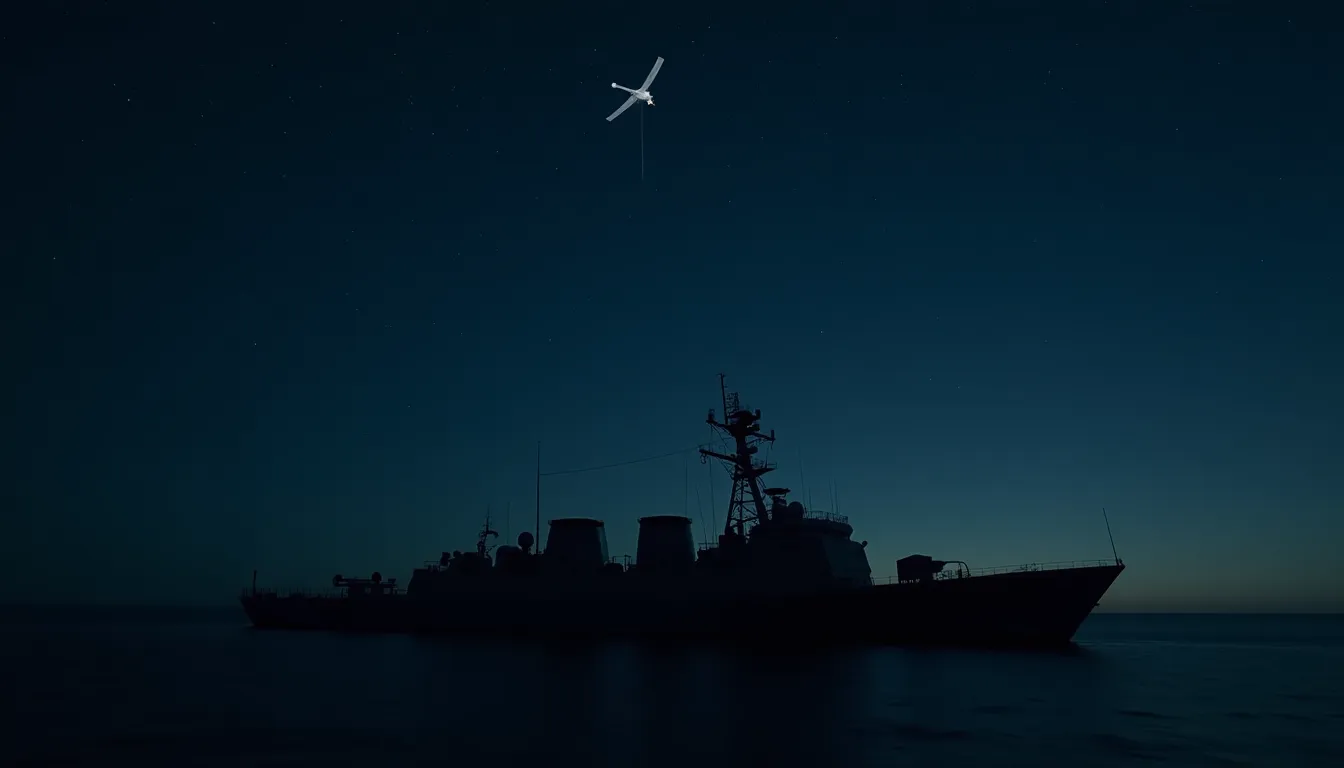
Uncrewed surface vessels performing ISR missions are helping build round-the-clock maritime awareness, Breaking Defense reports, alongside Army drone, F-35, and Elbit news.
Key Takeaways
- Breaking Defense reported uncrewed surface vessels are closing satellite coverage gaps for maritime ISR.
- An Army unit is testing small drones for 'tailored cyber effects' delivery.
- Pentagon and Lockheed Martin agreed to a decade-long F-35 framework deal covering hundreds of jets.
- Air Force told Congress it needs 1,509 combat-ready jets by 2035.
- Elbit Systems acquired a Canadian autonomous underwater systems company.
- Drone technology market is projected to grow from $43.6 billion to $109.8 billion by 2030.
Uncrewed surface vessels carrying intelligence, surveillance and reconnaissance sensors are closing gaps in satellite coverage to build round-the-clock maritime awareness, according to Breaking Defense, one of five defense-technology disclosures the outlet reported this week. The report arrives alongside a cluster of other Pentagon-related announcements spanning drones and fighter procurement.
What Happened
According to Breaking Defense, uncrewed surface vessels performing ISR missions are helping the military build persistent maritime domain awareness, extending coverage beyond what manned patrols or periodic satellite passes can provide on their own. The outlet frames this as a shift toward continuous, layered sensing across ocean areas that have historically been monitored only intermittently.
Breaking Defense also reported that an Army unit is experimenting with small drones to deliver what the service calls 'tailored cyber effects,' at this story signaling interest in using small uncrewed aircraft as delivery platforms for cyber operations rather than purely kinetic or surveillance missions.
Separately, the outlet reported that the Pentagon and Lockheed Martin have agreed to a decade-long framework deal covering hundreds of F-35 jets, a long-term procurement arrangement intended to stabilize production schedules for the fighter program over the next ten years.
The Air Force told Congress it needs 1,509 combat-ready jets by 2035 to meet operational requirements, Breaking Defense reported, a figure underscoring the scale of fleet modernization needed as older aircraft retire from service.
Israel's Elbit Systems also moved to acquire a Canadian company focused on autonomous underwater systems, according to Breaking Defense, expanding its uncrewed maritime portfolio as militaries increasingly invest in undersea autonomy alongside surface and aerial drones.
Why It Matters
Taken together, these disclosures point to a military building a layered, multi-domain sensing and strike network spanning surface, air, and orbital assets. Persistent maritime awareness from uncrewed surface vessels depends heavily on space-based infrastructure: satellite communications relay sensor data back to shore, GPS-dependent positioning keeps unmanned craft on station, and orbital assets still provide the wide-area cueing that tells a USV where to look. As the Pentagon pushes autonomy programs across domains, the space layer becomes less a standalone capability and more the connective backbone that lets AI-driven drones, ships, and jets share a common operating picture in near real time. That dependency raises the stakes for satellite resilience and bandwidth, areas where defense primes and investors are watching closely, a dynamic reflected in defence and space sector equity analysis tracking how procurement decisions ripple through supplier stocks. The F-35 framework deal and the Air Force's 1,509-jet target suggest traditional platform numbers still matter even as autonomy expands around them.
Background
Autonomous maritime and aerial platforms sit within the broader commercialization of drone technology, covered in MachineHours' Drone Technology entry, which tracks how AI navigation and sensor fusion have pushed uncrewed systems from novelty into core logistics, surveillance, and defense roles.
What to Watch
Watch for details on how the Pentagon funds the space-based communications and positioning links that uncrewed surface vessels depend on, since ISR persistence is only as good as the data pipeline carrying it home. The F-35 framework deal's specific jet count and delivery schedule, along with how Elbit integrates its new underwater autonomy acquisition, will clarify whether this week's announcements translate into near-term capability or remain long-horizon commitments tied to the Air Force's 2035 fleet target.
Sources
- Breaking Defense: How uncrewed surface vessels performing ISR help build persistent maritime awareness
- Breaking Defense: Army unit experimenting with small drones for 'tailored cyber effects'
- Breaking Defense: Pentagon, Lockheed agree to decade-long F-35 framework deal for hundreds of jets
- Breaking Defense: Air Force needs 1,509 combat-ready jets by 2035, service tells Congress
- Breaking Defense: Israel's Elbit acquires Canadian company focused on autonomous underwater systems
- MachineHours Encyclopedia: Drone Technology — Autonomous Flight and Its Economic Impact
Frequently Asked Questions
What are uncrewed surface vessels being used for in maritime ISR?
According to Breaking Defense, uncrewed surface vessels carrying ISR sensors are helping build persistent, round-the-clock maritime awareness that fills gaps left by intermittent satellite passes and manned patrols.
What did the Pentagon and Lockheed Martin agree to?
Breaking Defense reported the two sides agreed to a decade-long framework deal covering hundreds of F-35 jets, intended to stabilize long-term production schedules.
How many combat-ready jets does the Air Force say it needs?
The Air Force told Congress it needs 1,509 combat-ready jets by 2035, according to Breaking Defense.
What did Elbit Systems acquire?
Elbit Systems, based in Israel, acquired a Canadian company focused on autonomous underwater systems, expanding its uncrewed maritime technology portfolio.
Why does space-based infrastructure matter for maritime drone ISR?
Persistent maritime awareness from uncrewed surface vessels relies on satellite communications for data relay and GPS for positioning, making space-based infrastructure a key dependency for multi-domain autonomy.