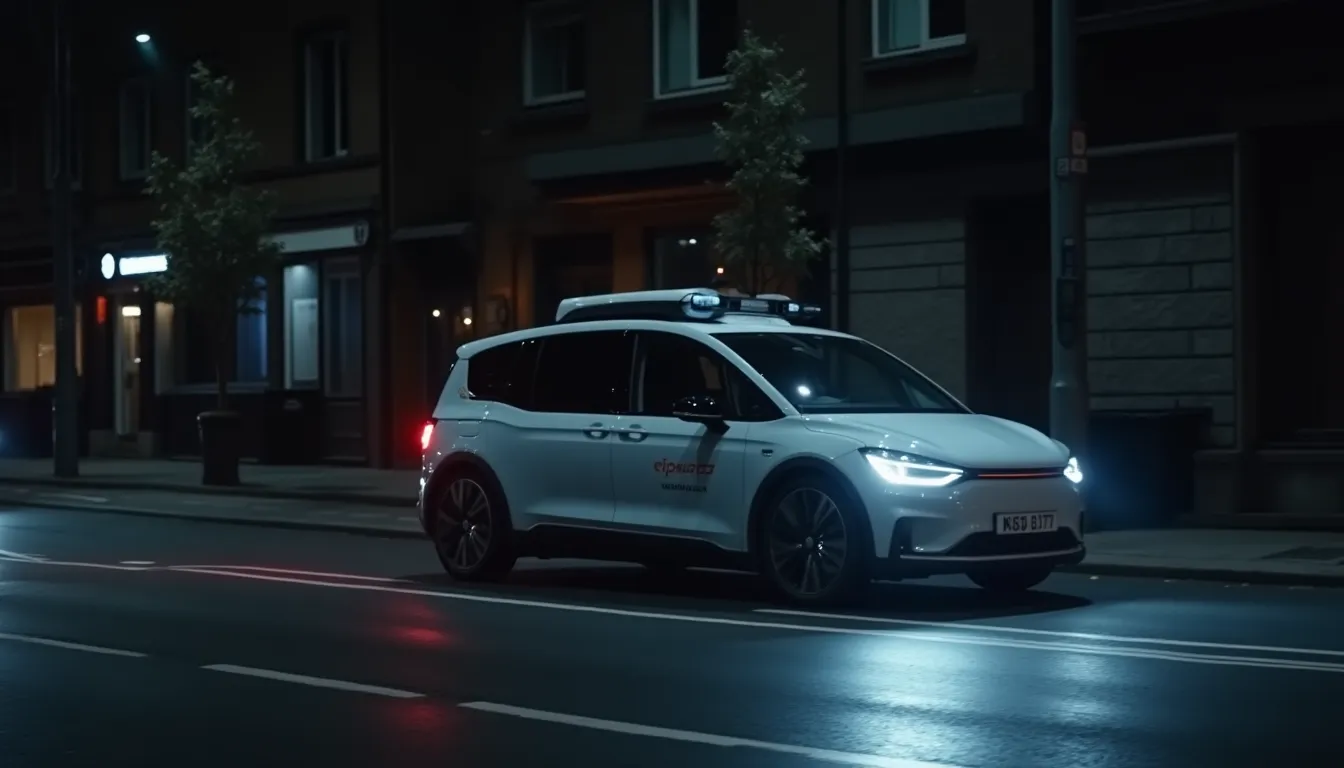
Uber has partnered with British AI company Wayve to launch a robotaxi service in London. The collaboration represents Uber's first major autonomous vehicle deployment in Europe.
Key Takeaways
- Uber partnered with British AI company Wayve to launch robotaxi service in London
- London residents can now sign up for early access to the autonomous vehicle service
- Partnership represents Uber's first major autonomous vehicle deployment in Europe
- Wayve uses end-to-end AI approach rather than rule-based autonomous driving systems
- Launch dates and operational zones have not been disclosed by either company
What Happened
The partnership pairs Uber's ride-hailing platform with Wayve's autonomous driving technology, which uses an end-to-end AI approach rather than the rule-based systems employed by many competitors. The Verge reported that Wayve's technology learns to drive by observing human behavior and adapting to complex urban environments, making it potentially well-suited for London's challenging road conditions.
Uber has launched an interest list allowing London residents to register for early access to the robotaxi service, though while specific operational zones have not been disclosed, both companies indicated the service will launch 'in the coming months'.
The announcement comes as regulatory frameworks for autonomous vehicles in the UK continue to evolve, with the government expressing support for self-driving technology deployment. London's dense urban environment and complex traffic patterns will provide a rigorous testing ground for Wayve's AI-driven approach to autonomous navigation.
Why It Matters
This partnership signals a major shift in the global robotaxi field, extending beyond the US-dominated market that has primarily featured companies like Waymo and Cruise. Wayve's machine learning approach differs from the detailed mapping and sensor-heavy strategies used by American competitors, potentially offering a more adaptable solution for diverse urban environments.
The London deployment also represents a critical test case for autonomous vehicle regulation in Europe. Success in London's complex traffic environment could accelerate adoption across other European cities, while regulatory acceptance could establish precedents for international autonomous vehicle operations.
Background
Autonomous vehicle deployment requires sophisticated robotic systems capable of real-time decision making in unstructured environments. As explored in our guide to robotic manipulation, the challenge extends beyond simple navigation to complex interaction with dynamic surroundings. While robotaxis don't require the fine motor control of manipulation tasks, they must demonstrate similar adaptability when processing sensor data and responding to unpredictable human behavior.
Current autonomous systems still struggle with the kind of intuitive reasoning that humans apply effortlessly to driving situations. The gap between programmed responses and genuine understanding remains a significant challenge for robotics applications across industries.
What to Watch
Key indicators of success will include Wayve's ability to handle London's unique driving challenges, from roundabouts to narrow streets and aggressive taxi drivers. Regulatory approval timelines and public acceptance rates will determine whether this partnership can scale beyond initial trials.
The competitive response from established players like Waymo and Tesla will also be significant, particularly as European markets become increasingly important for autonomous vehicle deployment. How Wayve's AI-first approach performs compared to more traditional mapping-based systems could influence the broader industry's technical direction.
Key Facts: Robotic Capabilities
- Current robots excel at repetitive tasks in structured environments but struggle with unpredictable situations requiring real-time adaptation
- Tactile sensing technology remains limited compared to human touch sensitivity, affecting precise object manipulation
- Most robotic systems rely on pre-programmed responses rather than genuine understanding of their environment
- The gap between human-level dexterity and current robotic capabilities represents one of AI's most challenging frontiers
Sources
Frequently Asked Questions
When will Uber's robotaxis launch in London?
Uber has not announced specific launch dates, but is currently accepting sign-ups from London residents for early access to the service.
How does Wayve's technology differ from other robotaxi companies?
Wayve uses an end-to-end AI approach that learns from human driving behavior, rather than the rule-based systems and detailed mapping used by competitors like Waymo.
Is this Uber's first autonomous vehicle service?
No, but it's Uber's first major autonomous vehicle deployment in Europe. The company previously had a self-driving division before selling it to Aurora in 2020.
What makes London challenging for autonomous vehicles?
London's dense urban environment, complex traffic patterns, narrow streets, and roundabouts create a rigorous testing ground for autonomous driving technology.