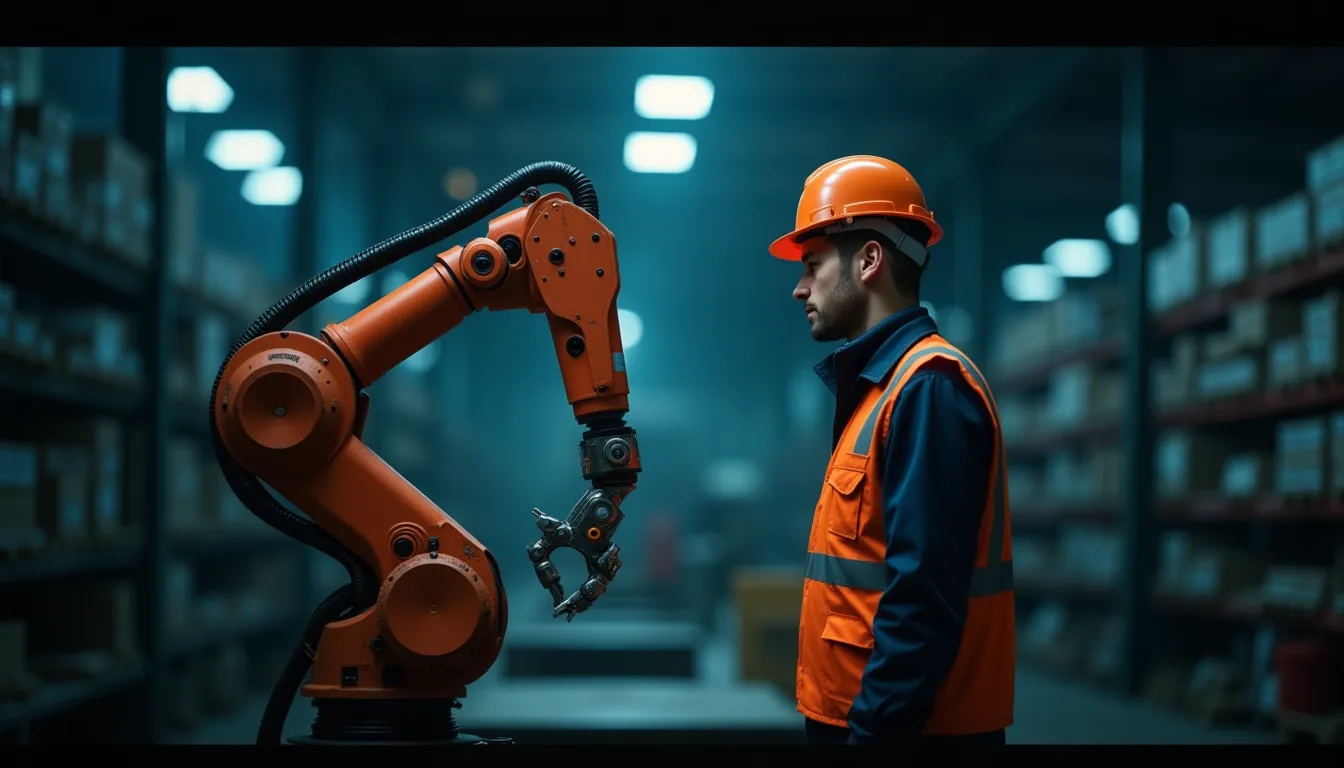
Uber has allied with driver unions to lobby against rapid robotaxi expansion, as Meta pushes warehouse robots into data centers and ICE plans multimillion-dollar Boston Dynamics purchases.
Key Takeaways
- Uber is coordinating with driver unions to lobby for licensing caps and insurance mandates on competing robotaxi operators such as Waymo.
- Meta is testing purpose-built robots inside its data centers for tasks including server rack inspection, cable management, and hardware replacement.
- ICE plans to spend millions of dollars acquiring Boston Dynamics Spot robots for surveillance and enforcement support roles.
- Uber's alliance with unions marks a reversal for a company that spent years resisting driver classification as employees with collective bargaining rights.
- Meta's robotics programme is driven by a need to reduce operational costs as annual AI compute spending scales into the tens of billions of dollars.
Uber has joined forces with driver unions to slow the rollout of competing robotaxi services, according to the Financial Times, in a strategic alliance that pits one of the world's largest gig-economy platforms against the autonomous vehicle industry it once championed - and places the livelihoods of millions of drivers at the centre of a regulatory fight.
What Happened
Uber's decision to align with organised labour marks a striking shift for a company that spent years fighting union recognition for its drivers. According to the Financial Times, Uber is now coordinating with driver unions to lobby regulators and municipal governments to impose restrictions on driverless vehicle operators such as Waymo and its emerging competitors. The alliance reflects a shared interest: Uber's core revenue depends on human drivers, and a rapid robotaxi expansion would erode both the platform's trip volume and the income of the roughly 5 million drivers globally who rely on the app. The strategy involves pushing for stricter licensing requirements, insurance mandates, and caps on the number of autonomous vehicles permitted to operate in specific cities - measures that would buy time for Uber to develop or acquire its own autonomous capability before the market shifts beneath it.
Meanwhile, Ars Technica has published a detailed look inside Meta's programme to deploy physical robots inside its data centers. Meta's effort focuses on automating tasks such as server rack inspections, cable management, and hardware replacements - roles currently performed by trained facilities technicians. The programme is in early deployment phases, with Meta testing purpose-built robotic platforms designed to navigate the dense, high-voltage environments of hyperscale infrastructure. The initiative connects directly to Meta's broader push to reduce operational costs as its AI compute spending scales into the tens of billions of dollars annually. If successful, the programme would reduce headcount requirements in facilities operations, a skilled-trade workforce segment that has so far been relatively insulated from automation pressure.
In a separate development, 404 Media reported that US Immigration and Customs Enforcement is planning to spend millions of dollars acquiring Boston Dynamics Spot robots for deployment in enforcement and surveillance contexts. The procurement signals a growing appetite among federal agencies for quadruped robots capable of operating in unstructured terrain - and raises questions about the pace at which robotic systems are entering roles with direct consequences for human workers in security and law enforcement support functions.
Why It Matters
These three stories, taken together, describe a single underlying dynamic: automation is arriving at different speeds in different labour markets, and the political and economic responses are beginning to form. Uber's union alliance is notable not because it will stop robotaxis, but because it reveals that incumbents with large human workforces now have a financial incentive to act as a brake on the technology. That incentive did not exist when Uber was smaller or when autonomous vehicles seemed further away.
The wage and productivity dimension is stark. Data center technicians, ride-share drivers, and federal facilities workers all sit in categories where automation is now a near-term operational reality rather than a distant risk. The question of who captures the productivity gains from that automation - the platform, the hardware company, the federal agency, or the displaced worker - is exactly the distributional question at the heart of debates about the property market effects of workforce automation and broader wealth concentration. As explored in the MachineHours encyclopedia entry on AI and Wealth Generation, these productivity gains have historically accrued to capital rather than labour in prior automation waves.
Background
The tension between platform companies and their human workforces is not new, but the robotaxi conflict represents an escalation. Uber spent the better part of a decade classifying drivers as independent contractors specifically to avoid the obligations that come with employment - including the collective bargaining rights that unions now bring to this fight. The company's willingness to work with unions now reflects how directly its business model is threatened by full autonomy in the hands of competitors.
Meta's data center robotics programme fits a broader pattern in which hyperscale infrastructure operators treat facilities labour as a cost to be engineered out. As detailed in the AI and Wealth Generation encyclopedia entry, AI infrastructure investment is concentrating economic value in a small number of large technology firms while the operational workforce supporting that infrastructure faces sustained pressure.
What to Watch
The Uber-union alliance will test whether organised labour can translate political coordination with a corporate partner into durable regulatory outcomes. Watch for municipal-level votes on autonomous vehicle licensing in cities with strong union presence, including Chicago, New York, and Los Angeles, where Uber's lobbying capacity and union political networks overlap most directly.
On the Meta front, the key signal will be whether the data center robotics programme moves from pilot to scaled deployment within the next 12 to 18 months - and whether other hyperscalers including Google and Amazon follow with comparable programmes. For the ICE Boston Dynamics procurement, congressional oversight hearings are the most likely venue where the scope and terms of the contract will face scrutiny.
- AI infrastructure investment is concentrating economic value in a small number of large technology firms while displacing operational workers.
- Productivity gains from automation have historically accrued to capital rather than labour across prior waves of industrial change.
- Ride-share platforms employ an estimated 5 million drivers globally whose income is directly exposed to autonomous vehicle competition.
- Data center facilities technicians represent a skilled-trade segment that has so far been relatively insulated from automation pressure but is now a direct target of robotics deployment.
Sources
- Financial Times: Uber allies with driver unions in bid to slow robotaxi rollout
- Ars Technica: Inside Meta's push to put robots to work in data centers
- 404 Media: ICE Plans to Spend Millions on Boston Dynamics Dog Robots
- MachineHours Encyclopedia: AI and Wealth Generation — How Artificial Intelligence is Reshaping Who Gets Rich
Frequently Asked Questions
Why is Uber working with driver unions against robotaxis?
Uber's core revenue depends on human drivers. A rapid robotaxi expansion by competitors such as Waymo would reduce Uber's trip volume and driver income, giving both parties a shared interest in slowing driverless vehicle rollouts through regulation.
What will Meta's robots do inside data centers?
According to Ars Technica, Meta's robots are designed to handle tasks such as server rack inspections, cable management, and hardware replacements - roles currently performed by trained facilities technicians.
What Boston Dynamics robots is ICE planning to buy?
404 Media reported that ICE plans to spend millions on Boston Dynamics Spot quadruped robots, intended for deployment in surveillance and enforcement support contexts.
Which workers are most exposed to automation pressure in these stories?
Ride-share drivers, data center facilities technicians, and federal security support staff are the three workforce segments directly affected by the developments reported across these three stories.
Could the Uber-union alliance actually stop robotaxis?
The alliance is unlikely to halt autonomous vehicles permanently, but it could slow rollouts through municipal licensing caps and insurance mandates, buying time for Uber to develop its own autonomous capability.
Get MachineHours in your inbox
AI compute and the machine economy in your inbox.