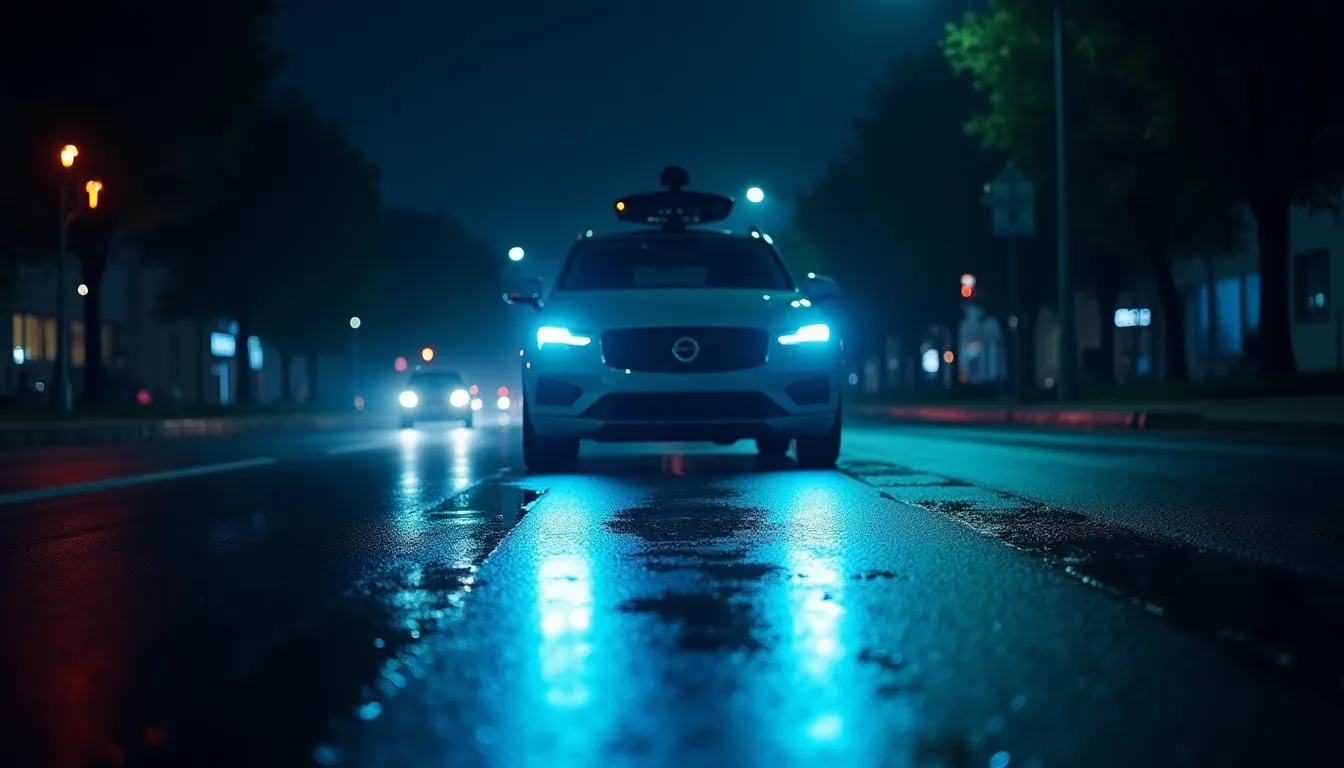
Travis Kalanick's startup Atoms is reportedly exploring a move into the robotaxi business, according to TechCrunch, raising questions about funding strategy and market timing.
Key Takeaways
- TechCrunch reported on September 6, 2026, that Travis Kalanick's startup Atoms is exploring a move into the robotaxi business.
- Atoms has not publicly disclosed a funding figure, vehicle partner, AV technology stack, or target launch city.
- A new robotaxi entrant in 2026 would compete directly against Waymo, Zoox, and expanding Chinese operators including Baidu's Apollo Go.
- Uber sold its AV unit to Aurora in 2020 for $4 billion; Kalanick has not been directly involved in autonomous vehicles since leaving Uber in 2017.
- GM's Cruise sustained estimated losses of over $9 billion before suspending commercial operations, illustrating the capital demands of the sector.
- Atoms' most capital-efficient path may be licensing an existing AV stack rather than developing proprietary technology.
Travis Kalanick, the co-founder and former CEO of Uber, may be steering his new venture Atoms into the robotaxi sector, according to TechCrunch, a development that puts one of Silicon Valley's most polarising figures back at the centre of autonomous ride-hailing - the very industry he helped create and then left under duress in 2017.
What Happened
TechCrunch reported on September 6, 2026, that Atoms - Kalanick's post-Uber startup - is exploring a push into the robotaxi business. The report characterises the move as tentative rather than confirmed, noting that Atoms "might be" entering the space, suggesting the company is in early-stage planning or has begun raising capital toward that goal rather than launching an operational service. The company has not publicly disclosed a funding figure, a launch market, or a vehicle partner as of the report's publication date.
Kalanick has previously described autonomous vehicles as core to his vision for urban transportation, framing his exit from Uber - where he oversaw early investments in self-driving technology and the ill-fated acquisition of Otto - as unfinished business. Atoms itself has operated with limited public disclosure since its founding, making the robotaxi signal one of the clearest indications yet of the startup's intended direction. The company did not confirm a vehicle supplier, an AV technology stack, or a specific city for an initial deployment.
The move, if confirmed, would pit Atoms against Waymo, which currently operates commercial robotaxi services in San Francisco, Los Angeles, and Phoenix, and against Zoox, the Amazon-owned autonomous vehicle company targeting purpose-built ride-hailing pods. Uber itself, the company Kalanick founded, has long since exited direct AV development, selling its Advanced Technologies Group to Aurora in 2020 for $4 billion, and now partners with Waymo and others to integrate autonomous rides into its platform.
Why It Matters
The investment and funding dimension of this story deserves close attention. Entering the robotaxi market in 2026 requires capital at a scale that has humbled far better-resourced competitors. General Motors shut down Cruise's commercial operations in late 2023 following a serious safety incident, absorbing losses estimated at over $9 billion across the programme's lifetime. Ford and Volkswagen dissolved their Argo AI joint venture in 2022 after sinking roughly $3.6 billion into it. The survivors - Waymo, Zoox, and a handful of Chinese operators - have been backed by patient, deep-pocketed corporate parents rather than independent venture funding cycles.
For Atoms to attract institutional capital in this environment, Kalanick will need to articulate a differentiated cost structure or a go-to-market approach that established players have not already tried. His name carries genuine brand recognition among venture investors, but it also carries reputational complexity that could complicate fundraising from LP-sensitive institutional funds. Those tracking the broader financial picture of autonomous vehicle deployment may find relevant context at WealthWatchPro, which covers the equity market implications of robotics deployment across public and private markets.
The timing also matters. Waymo is expanding aggressively, and Chinese operators including Baidu's Apollo Go and Pony.ai are internationalising. A new entrant without a proven AV stack faces not just a capital problem but a data problem - the millions of autonomous miles needed to satisfy regulators and insurers take years to accumulate, not quarters.
Background
The economics of autonomous ride-hailing remain challenging even for incumbents. As detailed in the MachineHours encyclopedia entry Waymo and the Robotaxi Economy, the robotaxi model depends on achieving sufficient fleet density to reduce per-ride costs below those of human-driven alternatives, a threshold that requires both geographic concentration and high vehicle utilisation rates. Waymo, backed by Alphabet, has taken more than a decade and tens of billions of dollars to reach commercial scale in just a handful of US cities.
Kalanick's history with autonomous vehicles at Uber is instructive. Under his leadership, Uber acquired self-driving truck startup Otto in 2016 for a reported $680 million, only to face a damaging trade secret lawsuit from Waymo that was settled in 2018. The episode illustrated how intensely contested IP and talent are in the AV space - a dynamic that has not diminished in the years since.
What to Watch
The first concrete signal to monitor is whether Atoms announces a formal funding round with named investors and a disclosed target amount. A seed or Series A with credible AV-sector backers would confirm the robotaxi direction; silence or a pivot announcement would suggest the TechCrunch report captured a strategic option that was subsequently shelved.
Also worth watching is whether Atoms pursues a technology-licensing model - effectively becoming a fleet operator using hardware and software from an established AV stack provider - rather than developing its own system from scratch. That approach would dramatically reduce capital requirements and time-to-market, though it would also limit differentiation. Regulatory approvals in any target city will be a further gating factor: San Francisco, the most obvious launch market for a Kalanick-linked venture, now requires demonstrated safety records before commercial permits are issued.
Key Facts: Robotaxi Economics
- Waymo operates commercial robotaxi services in San Francisco, Los Angeles, and Phoenix, making it the most operationally mature autonomous ride-hailing service in the United States.
- Achieving commercial viability in robotaxi operations requires high vehicle utilisation rates and geographic fleet density - factors that demand sustained capital commitment over years, not months.
- GM's Cruise programme accumulated estimated losses exceeding $9 billion before its commercial operations were suspended in late 2023 following a safety incident.
- Uber sold its Advanced Technologies Group to Aurora in 2020 for $4 billion, exiting direct AV development and pivoting to partnerships with third-party operators.
Sources
Frequently Asked Questions
What is Atoms and who founded it?
Atoms is a startup founded by Travis Kalanick, the co-founder and former CEO of Uber. It has operated with limited public disclosure since its founding, and the TechCrunch report on its potential robotaxi ambitions is one of the clearest public signals about its intended direction.
Has Atoms confirmed it is entering the robotaxi business?
No. TechCrunch described the move as a possibility rather than a confirmed plan. Atoms has not publicly disclosed a funding round, a vehicle partner, or a launch market as of the report's publication date.
Who are Atoms' likely competitors in the robotaxi space?
Waymo, Zoox (owned by Amazon), and Chinese operators including Baidu's Apollo Go and Pony.ai are the primary competitors. Uber, which Kalanick co-founded, now partners with robotaxi operators rather than running its own AV programme.
Why is the robotaxi market so difficult for new entrants to break into?
The market requires enormous sustained capital investment, millions of autonomous miles to satisfy regulators, and fleet density in specific cities to make unit economics work. Established players have spent billions over many years to reach limited commercial scale.
What was Kalanick's previous involvement with autonomous vehicle technology?
At Uber, Kalanick oversaw the 2016 acquisition of self-driving truck startup Otto for a reported $680 million. The deal led to a trade secret lawsuit from Waymo that was settled in 2018. Kalanick left Uber in 2017.
Get MachineHours in your inbox
AI compute and the machine economy in your inbox.