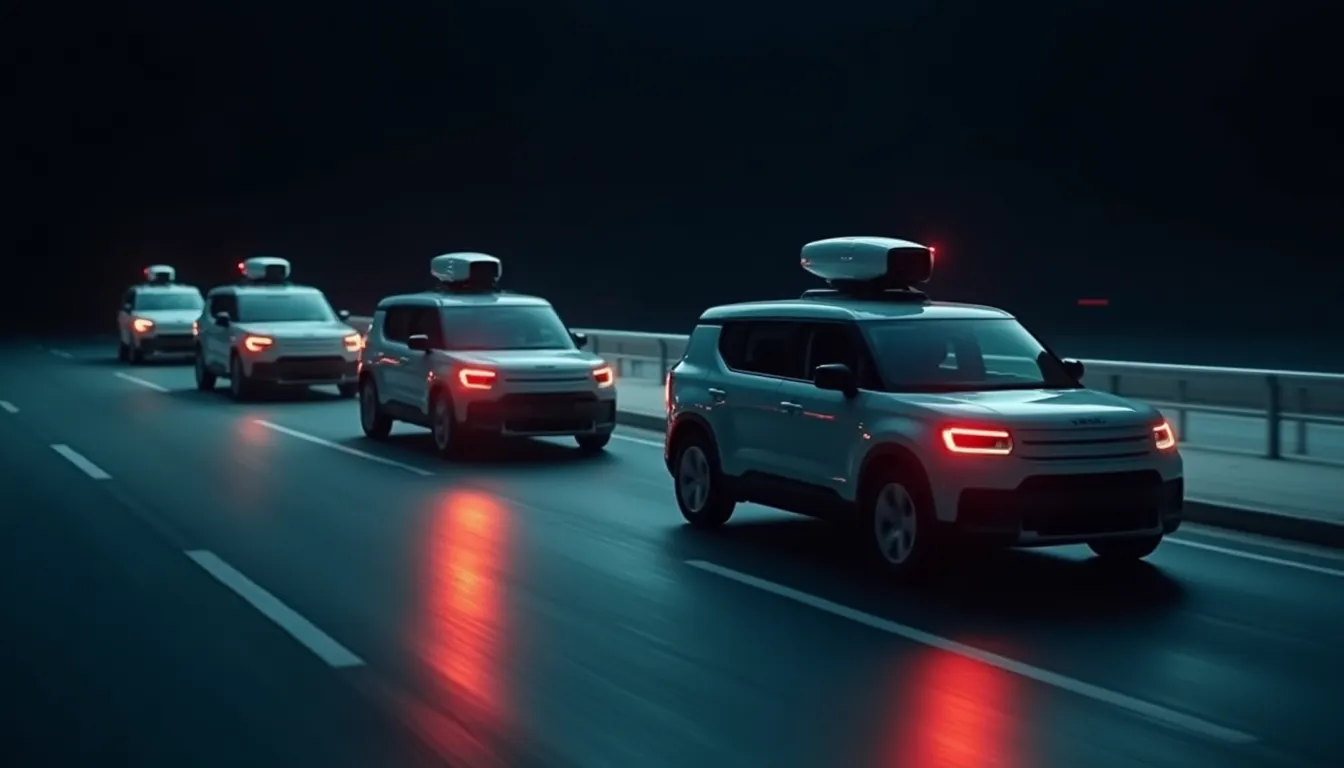
Tesla plans to let customers add their own vehicles to its robotaxi fleet in 2026, even as Musk pursues a reported $3.6tn Tesla-SpaceX combination.
Key Takeaways
- Tesla told investors on its Q3 2026 earnings call that customers can add their own vehicles to the robotaxi fleet starting next year.
- The Verge reports Tesla has made similar robotaxi fleet promises in prior years without full delivery.
- Financial Times reports Musk is pursuing a Tesla-SpaceX merger structure valued at $3.6 trillion.
- A former Nvidia executive turned VC told TechCrunch that robotics has not yet reached its ChatGPT-style inflection point.
- The gap between trillion-dollar robotics valuations and unproven deployment timelines is emerging as a key investor concern.
Tesla has told investors that customers will be able to add their own vehicles to its robotaxi fleet starting next year, according to The Verge. The promise, made during Tesla's Q3 2026 earnings call, lands at the same moment Elon Musk is reportedly pursuing a combination of Tesla and SpaceX valued at $3.6 trillion. Both developments raise the same question for capital markets: how much of that valuation is actually built on robots that work today versus robots that are promised for tomorrow.
What Happened
According to The Verge, Tesla used its Q3 2026 earnings call to repeat a long-standing promise: owners of Tesla vehicles will eventually be able to add their cars to the company's robotaxi network, generating income when the vehicles are not in personal use. The report notes this pledge has been made in prior years without materializing at scale, and The publication raises doubts about whether the Q2 2027 timeline will hold given the company's history of delayed autonomy targets..
Separately, the Financial Times reports that Musk is pushing to merge Tesla and SpaceX into a single entity valued at $3.
Meanwhile, TechCrunch interviewed a former Nvidia executive now working as a venture capitalist, who argues that robotics has not yet reached the kind of inflection point that large language models experienced with ChatGPT. The investor's view, as reported by TechCrunch, is that robotics is still in its 'Lego era,' with foundational building blocks like actuators, robotic hands, software, and safety standards still being developed, unlike software-only AI products., which keeps commercial deployment slower and funding more cautious than headline valuations suggest.
Why It Matters
These three stories describe the same gap from different angles: capital markets are pricing robotics and autonomy at trillion-dollar scale while the underlying products, Tesla's customer-fleet robotaxi network among them, remain unproven commitments rather than shipped capability. The FT's reporting on a $3.6 trillion Tesla-SpaceX structure suggests investors are being asked to underwrite future robotics performance years before TechCrunch's VC source believes the sector will hit its ChatGPT-style inflection. For public market watchers tracking the equity market implications of robotics deployment, the disconnect between promised timelines and delivered hardware is becoming the central valuation risk in the sector, not a side issue.
Background
Robotics deployment patterns outside autonomous vehicles show a similar mix of ambition and delay, as detailed in MachineHours' Robotics in Property entry covering construction robots, inspection drones and automated facility systems. These deployments, like Tesla's robotaxi fleet, promise labor savings and safety gains but face adoption timelines that consistently slip from initial projections, a pattern also visible in humanoid robot rollouts in European manufacturing.
What to Watch
Tesla's next earnings calls will show whether any customer-owned vehicles actually join the robotaxi network by Q2 2027, or whether the pledge slips again as The Verge's reporting suggests prior versions have. Any formal Tesla-SpaceX merger filing will force investors to price robotics execution risk explicitly rather than implicitly, a shift that could ripple through valuations of other robotics-adjacent public companies. Watch also whether more venture investors echo the TechCrunch interview's skepticism about near-term commercial readiness, which could tighten funding for robotics startups chasing Tesla-scale valuations without Tesla-scale deployment.
Sources
- The Verge: Tesla says customers can add their own vehicles to the robotaxi fleet next year
- Financial Times: Rockets, robots and risk: Musk's $3.6tn gamble to merge Tesla and SpaceX
- TechCrunch: An Nvidia insider-turned-VC on why robotics hasn't hit its ChatGPT moment, yet
- MachineHours Encyclopedia: Robotics in Property — Construction Robots, Inspection Drones, and Automated Facilities
Frequently Asked Questions
When will Tesla let customers add vehicles to its robotaxi fleet?
Tesla said during its Q3 2026 earnings call that customer-owned vehicles could join the robotaxi network next year, though The Verge notes similar promises have been delayed before.
What is the $3.6 trillion Tesla-SpaceX plan reported by the Financial Times?
The FT reports Elon Musk is pursuing a structure that would merge Tesla and SpaceX into a single entity valued at $3.6 trillion, betting that robotics and rocketry can be bundled into one investment thesis.
Why does a VC quoted by TechCrunch say robotics hasn't hit its ChatGPT moment?
The former Nvidia executive interviewed by TechCrunch argues robotics still lacks the generalizable training data and reliability that let language models scale quickly, making physical deployment slower than software AI.
Has Tesla delivered on robotaxi fleet promises before?
According to The Verge, Tesla has made comparable pledges about customer-owned vehicles joining its robotaxi network in previous years without them materializing at scale.