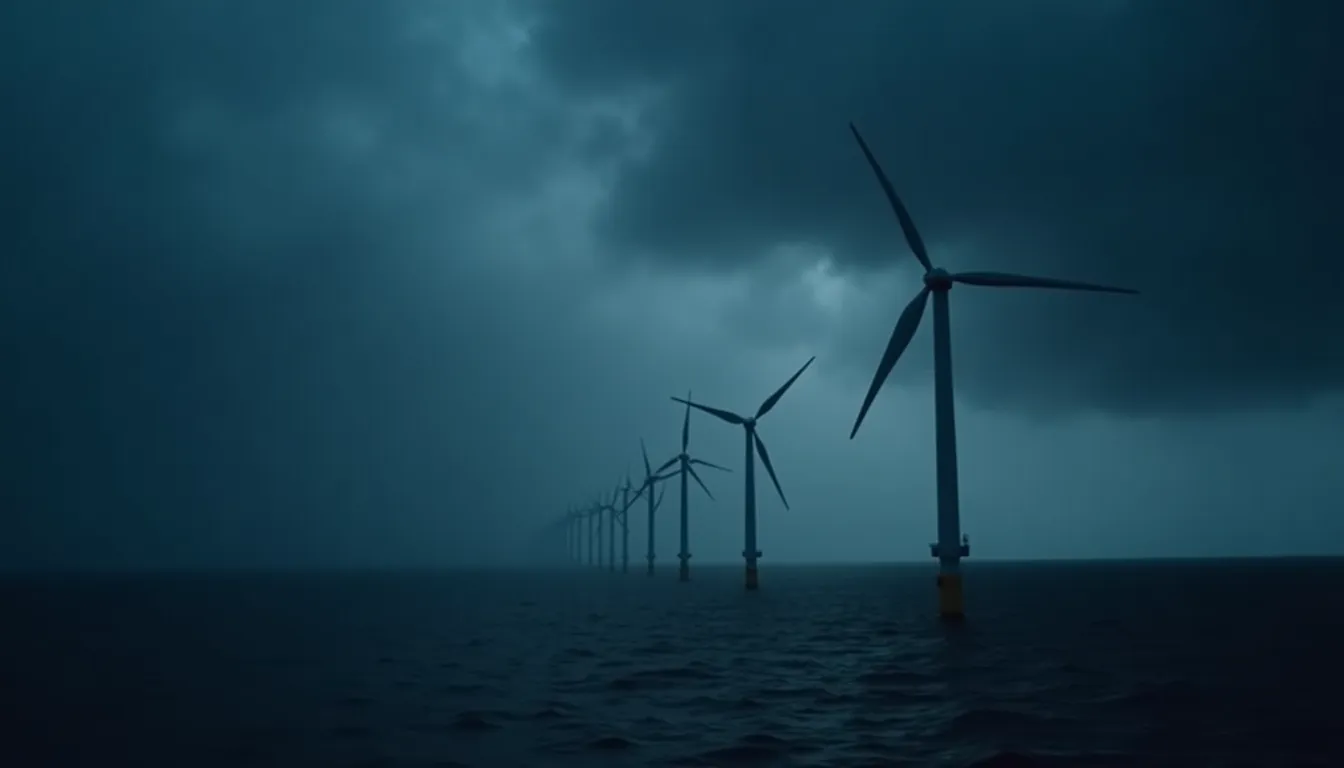
US states are suing the Trump administration over $4B in offshore wind lease terminations. Separately, new research argues steep methane cuts are essential to staying below 2C of warming.
Key Takeaways
- The Trump administration offered roughly $4B in buyouts to terminate offshore wind leases, triggering lawsuits from multiple US states.
- States argue the federal buyouts were executed without proper legal authority and undermine binding state clean energy mandates.
- Carbon Brief analysis concludes methane cuts are essential to staying below 2C, with methane warming potency roughly 80 times that of CO2 over 20 years.
- CMIP7 emissions scenarios - the modelling framework for the next IPCC cycle - have been released, offering updated climate projection pathways.
- A newly formed super PAC is targeting elected officials who oppose clean energy legislation in competitive electoral races.
- The Obama Presidential Center in Chicago is being examined as a potential anchor for community solar adoption in underserved urban neighbourhoods.
Multiple US states have filed legal action against the Trump administration after it offered roughly $4 billion in buyouts to terminate offshore wind leases, according to Canary Media - a move that clean energy advocates say could derail years of coastal wind development and expose taxpayers to significant liability.
What Happened
The Trump administration's $4 billion offshore wind lease buyout program has triggered a legal backlash from state governments that had built permitting pipelines and economic development plans around those projects. Canary Media reports that the states argue the federal buyouts were executed without proper legal authority, and that cancelling the leases causes direct harm to state-level clean energy mandates and jobs. The lawsuit represents one of the most direct legal confrontations yet between state governments and the administration's energy rollback agenda.
On the political front, Canary Media also profiled a super PAC explicitly formed to target elected officials who oppose clean energy legislation. The group is channelling campaign funds into races where anti-clean-energy incumbents are seen as vulnerable, signalling that renewable energy has become a wedge issue with measurable electoral consequences.
On the science side, Carbon Brief published a guest analysis arguing that aggressive methane reductions are not optional for staying within the 2C threshold set by the Paris Agreement. The piece contends that carbon dioxide reductions alone are insufficient, and that methane - which has a warming potency roughly 80 times that of CO2 over a 20-year horizon - must be tackled with the same urgency as fossil fuel phase-outs. The analysis lands as international climate negotiations continue to treat methane targets as secondary commitments.
Also from Carbon Brief, a detailed explainer on the newly released CMIP7 emissions scenarios outlines the modelling frameworks scientists will use to project future climate change through the next major IPCC assessment cycle. CMIP7 introduces updated pathways that reflect current policy trajectories more precisely than its predecessor, giving researchers and policymakers sharper tools for evaluating the gap between pledged and required emissions cuts.
Meanwhile, Canary Media examined whether the Obama Presidential Center under construction in Chicago's South Side could serve as a catalyst for community solar adoption in a city that has historically lagged on distributed renewable deployment. The piece explores whether the centre's energy design could create a replicable model for lower-income urban neighbourhoods that are typically excluded from rooftop solar economics.
Why It Matters
The offshore wind lawsuit crystallises a broader tension in US energy policy: state governments that have made binding clean energy commitments are now legally exposed when federal agencies reverse course on project approvals and leases that those states depended on. The $4 billion buyout figure is not just a policy reversal - it is a balance sheet event for developers who had already deployed capital against those leases.
The methane research from Carbon Brief adds a scientific dimension that cuts across the political dispute. If the modelling holds, the current pace of methane reduction is not compatible with 2C outcomes regardless of how quickly solar and wind scale. That creates pressure on sectors like natural gas distribution, agriculture, and waste management that have largely avoided the intensity of scrutiny applied to coal and oil. Investors tracking the intersection of regulatory risk and energy transition can find relevant context in commodity and energy market analysis as these legal and scientific pressures develop.
The super PAC story is also significant: it reflects a strategic shift in which clean energy is treated not just as a policy goal but as a political constituency worth defending at the ballot box with dedicated campaign infrastructure.
Background
The offshore wind lease disputes sit within a wider contest over how the United States sources and contracts clean electricity. Long-term procurement mechanisms - including the power purchase agreements that hyperscale data centre operators use to secure renewable supply - depend on regulatory stability of the kind now being contested in court. The MachineHours entry on Power Purchase Agreements - How Hyperscalers Source Clean Energy for AI details how companies like Microsoft, Google, and Amazon have used these contracts to drive new renewable capacity construction, a model that assumes durable federal support for offshore and utility-scale projects.
The CMIP7 scenario update is similarly foundational: the scenarios it produces will underpin the next generation of climate risk assessments used by regulators, insurers, and financial institutions worldwide. Changes to those pathways have downstream effects on how stranded asset risk is calculated across energy portfolios.
What to Watch
The state lawsuits against the offshore wind buyouts will move through federal courts over the coming months, and the legal theory - whether states have standing to challenge federal lease terminations - could set precedent for future energy policy reversals. Watch for whether other coastal states join the existing plaintiffs and whether Congress intervenes legislatively.
On methane, the question is whether the next round of international climate negotiations elevates methane reduction to a first-tier commitment with enforceable targets, or whether it remains a voluntary addendum to NDCs. The CMIP7 scenario release will give negotiators updated numbers to work with, and the gap between current trajectories and 2C-compatible pathways is expected to be stark.
The Chicago community solar story is worth monitoring as a municipal-scale test case: if the Obama Presidential Center successfully anchors a community solar programme in an underserved neighbourhood, it could inform similar projects in other cities trying to broaden access to clean energy beyond homeowning demographics.
- Power purchase agreements are the primary mechanism hyperscalers use to secure renewable energy, with contracts typically spanning 10 to 20 years.
- Microsoft, Google, and Amazon have collectively signed PPAs covering tens of gigawatts of renewable capacity globally.
- PPAs drive additionality - they fund new renewable construction rather than purchasing credits from existing capacity.
- Regulatory stability in offshore and utility-scale wind is a prerequisite for PPA markets to function at the scale AI data centre demand requires.
Sources
- Canary Media: Trump's $4B in offshore wind buyouts spur legal blowback from states
- Carbon Brief: Why tough methane cuts are crucial for keeping warming 'well-below' 2C
- Carbon Brief: The CMIP7 emissions scenarios explainer
- Canary Media: Meet the super PAC working to crush clean energy's political foes
- Canary Media: Can the Obama Presidential Center help Chicago embrace community solar?
- MachineHours Encyclopedia: Power Purchase Agreements — How Hyperscalers Source Clean Energy for AI
Frequently Asked Questions
Why are US states suing over the offshore wind buyouts?
States argue the Trump administration lacked legal authority to terminate offshore wind leases and that the $4B buyout program directly harms state clean energy mandates and economic development plans built around those projects.
Why are methane cuts considered essential for the 2C climate target?
New analysis published by Carbon Brief argues CO2 reductions alone are insufficient. Methane has a warming potency roughly 80 times that of CO2 over a 20-year period, making steep methane cuts a necessary condition for staying within 2C.
What is CMIP7 and why does it matter?
CMIP7 is the updated set of emissions scenarios used by scientists to model future climate change. Its pathways will underpin the next IPCC assessment and inform regulatory, insurance, and financial risk frameworks globally.
What is the clean energy super PAC trying to do?
According to Canary Media, the super PAC is directing campaign funds toward races where elected officials who oppose clean energy are seen as electorally vulnerable, treating renewable energy as a political constituency worth defending.
How does the Obama Presidential Center connect to community solar?
Canary Media examined whether the centre's energy design could serve as a model for community solar deployment in Chicago's South Side, potentially creating a replicable template for lower-income urban areas excluded from rooftop solar economics.
Get MachineHours in your inbox
AI compute and the machine economy in your inbox.