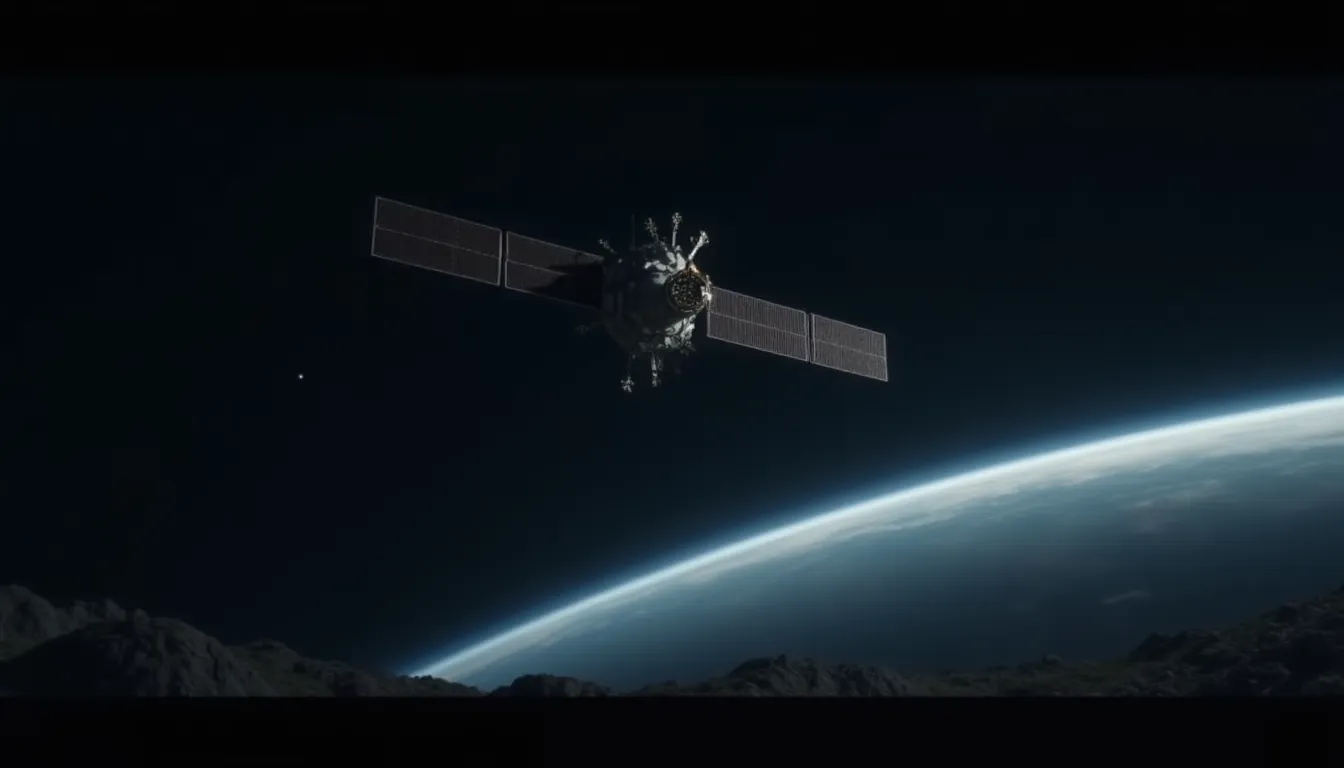
US Space Command Commander Gen. Stephen Whiting publicly stated that the US lacks sufficient capabilities to target adversaries operating in space, warning that current systems fall short of operational needs. Speaking at the Advanced Maui Optical and Space Surveillance Technologies conference, Whiting outlined gaps in targeting, space domain awareness, and battle management capabilities required
Key Takeaways
- Gen. Stephen Whiting publicly acknowledged that US Space Command lacks robust targeting capabilities against adversary space systems, including the absence of 'target folders' comparable to those used in other military domains
- Space domain awareness (SDA) is identified as the foundational requirement for space control operations, requiring integrated data analysis to enable surveillance, protection, prevention and negation functions
- The US military faces critical gaps in positioning, navigation, timing, satellite communications, and even standard formats for discussing positional states in cislunar space
- Space control doctrine represents a shift toward active, proactive warfighting in orbit using kinetic and non-kinetic means, moving beyond traditional passive defense roles
- Expanded operations into cislunar space and beyond require scalable SDA architecture to prevent deep space from remaining unmonitored and vulnerable to adversary exploitation
US Space Command (SPACECOM) Commander Gen. Stephen Whiting publicly acknowledged a critical capability gap in the nation's ability to target adversary space systems, signaling a sharpening US focus on space as a contested warfighting domain. Speaking at the Advanced Maui Optical and Space Surveillance Technologies (AMOS) conference, Whiting stated that the command does not have all the capabilities needed to target adversary space systems in a conflict.
The Capability Gaps
Whiting explained that "to be able to negate threats in space, we must be able to find, fix, track and target those threats," and that while "targeting in the space domain is maturing, it still has a long way to go." More specifically, he stated that "we don't have robust target folders like the Joint Force does in other domains." This represents one of the most direct public acknowledgments from a sitting SPACECOM commander that the United States lacks sufficient tools to hold space-based adversary assets at risk.
Beyond targeting, Whiting emphasized that once a target is engaged, SPACECOM needs "real-time battlespace awareness in order to execute battle management." This multi-layered challenge extends across the entire operational chain, from detection through engagement assessment.
Space Control as Core Defense Strategy
Whiting explained that offensive actions against adversary space systems fall under the concept of "space control," which encompasses "the full spectrum of activities needed to actively contest and control the space domain, with the ultimate goal of achieving space superiority." He emphasized that "this isn't passive defense; it's proactive warfighting that includes active or passive measures, kinetic or non-kinetic fires, and reversible or nonreversible effects."
Space control operations collectively encompass offensive and defensive actions known as counterspace operations, according to Whiting. This represents a doctrinal shift toward active deterrence in orbit, moving beyond traditional space support functions. China and Russia have both invested heavily in counter-space systems including co-orbital kill vehicles, directed energy weapons, and electronic jamming platforms, raising the stakes for any gap in US response capacity.
Space Domain Awareness as Foundation
Whiting stressed that space control is not possible without robust space domain awareness (SDA), stating that "SDA integrates multi-disciplinary insights to turn orbital data into the actionable intelligence that underpins surveillance, protection, prevention and negation." He invoked Sun Tzu's principle: "without it, we're navigating blind in a contested domain where threats can emerge from any orbit or angle."
Whiting concluded that "SDA truly is the bedrock of space control." This foundational requirement underlies all other capability needs, from targeting systems to battle management networks.
Emerging Cislunar and Deep Space Challenges
SPACECOM is increasingly looking to fill gaps in baseline technologies required for operations in cislunar space and beyond, according to Whiting. He noted that objects in space farther from Earth are subject to differing levels of gravity, magnetic interference and solar radiation that affect how spacecraft operate.
Whiting stated that "as we expand our operations into cislunar space and beyond, we must ensure the SDA architecture is scalable—otherwise, we risk leaving deep space unmonitored and vulnerable to exploitation by our opponents." This expansion reflects anticipation of future competition beyond traditional Earth orbit domains.
Critical Technology and Standards Gaps
Whiting identified additional foundational gaps: the US military lacks capabilities for positioning, navigation and timing; satellite communications; and "even a standard format for discussing positional states in cislunar space." These seemingly technical issues have operational consequences for coordinating multi-domain military actions that depend on space-based infrastructure.
Whiting stated that "this represents a concern, and USSPACECOM is focused on addressing it." The acknowledgment of these gaps signals commitment to remediation, though the acquisition timeline for new capabilities remains under pressure from evolving threats.
Strategic and Budgetary Implications
Whiting's public comments carry particular weight because they close a gap between classified assessments and public posture. When a four-star combatant commander states on record that the US cannot adequately target space adversaries, it functions as both a budget argument and a strategic signal to allies and potential adversaries. Space has moved from a support domain to a direct combat zone in planning documents, yet acquisition timelines for space-domain weapons and capabilities have lagged behind the threat environment.
The statement also highlights the maturation status of US Space Force acquisition programs addressing these gaps. Whiting's call for greater targeting capacity comes at a moment when contested satellite communications systems, space domain awareness sensors, and related platforms are still in development phases. Meeting these requirements will demand sustained funding and industrial partnership over multiple budget cycles.
Institutional Context
US Space Command, established as a unified combatant command in 2019, holds responsibility for space operations including satellite communications, missile warning, space domain awareness, and increasingly, space control—the ability to deny, degrade, or destroy adversary space capabilities. The command coordinates with US Space Force, which handles service-level functions including acquisition and personnel management. Space-based infrastructure underpins virtually every modern military operation, from GPS-guided munitions to signals intelligence, making it a high-value target for peer adversaries.
The urgency reflected in Whiting's remarks aligns with broader institutional recognition that passive defense and surveillance are insufficient for contested space environments. Active space control capabilities represent a strategic requirement rather than an optional enhancement to force structure.
Sources
- Breaking Defense: SPACECOM needs more capabilities to target space adversaries: Whiting
- Breaking Defense: Spain's Indra unveils Squall, a new low-cost cruise missile for 'mass attacks'
- Breaking Defense: Hanwha, Magnet Defense to start construction on new MUSV this fall, testing next year
- Breaking Defense: One of the world's most versatile attack planes is taking on the counter-UAS mission
- Breaking Defense: German-Israeli company FTS unveils new light combat vehicle for German Special Forces
- MachineHours Encyclopedia: Von Neumann Architecture — The Blueprint of Every Computer
Frequently Asked Questions
What did SPACECOM's General Whiting say about space targeting capabilities?
General Whiting stated publicly that the US needs more capabilities to target space adversaries, signalling that current tools fall short of what the threat environment demands and pointing to a shift toward active deterrence in orbit.
What is Spain's Indra Squall missile designed to do?
Indra's Squall is a low-cost cruise missile designed for mass-attack scenarios, intended to overwhelm adversary air defences through volume rather than individual precision. It reflects lessons from recent conflicts and Europe's push to diversify offensive strike options.
What is the Hanwha-Magnet Defense MUSV and when will it be tested?
The MUSV is a Medium Unmanned Surface Vessel being jointly developed by South Korea's Hanwha and US firm Magnet Defense. Construction begins fall 2026, with testing planned for 2027.
Why is space being treated as a warfighting domain?
Space underpins modern military operations including GPS-guided munitions, missile warning, and signals intelligence. China and Russia have developed counter-space weapons, prompting the US to pursue active deterrence capabilities rather than passive space awareness alone.
Get MachineHours in your inbox
AI compute and the machine economy in your inbox.