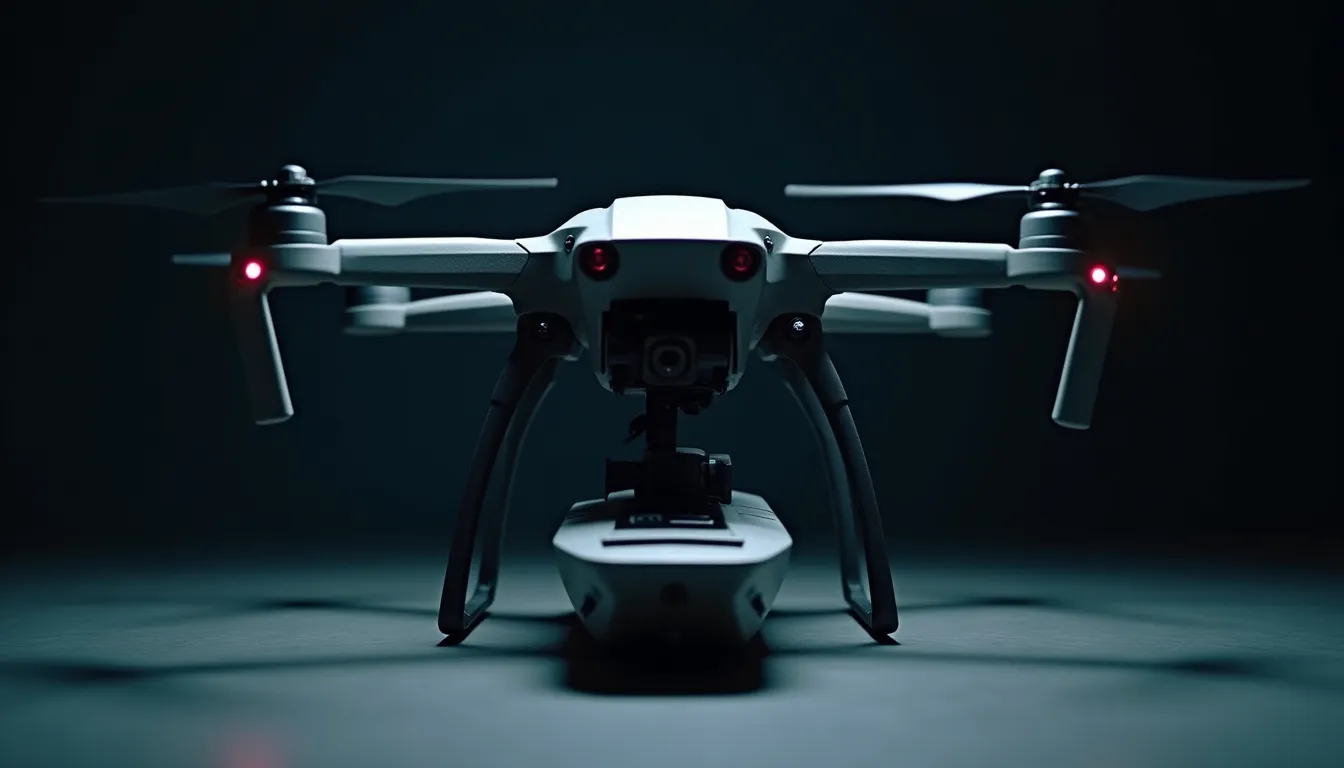
Qatar's state-owned Barzan Holdings displayed over a dozen unmanned systems at Milipol 2026, including FPV drones, VTOL aircraft and maritime vessels, while announcing a joint venture with Ukrainian firm Carmine Sky to develop an integrated air defense architecture combining radar, electronic warfare and hard-kill interceptors.
Key Takeaways
- Qatar's Barzan Holdings displayed over a dozen unmanned systems at Milipol 2026, including FPV reconnaissance drones, VTOL aircraft, and unmanned surface vessels, as part of the 'Made in Qatar' domestic defense initiative
- Barzan announced a strategic joint venture with Ukrainian firm Carmine Sky to develop an integrated 'Full-Cycle Air Defence' system combining radar, RF sensors, electronic warfare tools and hard-kill interceptors to counter FPV drones and jet-powered UAVs
- Qatar's regional security context—including Iranian missile and drone attacks and an Israeli raid in September 2025—directly drives the urgency of expanding domestic air defense and drone capabilities
- The partnership represents a shift in Gulf defense strategy away from piecemeal foreign acquisition toward importing combat-tested Ukrainian air defense expertise developed during Russia's invasion
- No timeline, cost or specific hardware suppliers have been disclosed for the Carmine Sky joint venture, making the next milestone the signing of formal procurement contracts
Qatar's state-owned defense manufacturer Barzan Holdings has unveiled a wave of new unmanned systems at the Milipol 2026 exhibition in Doha, signaling an accelerated push to expand Qatar's domestic defense capabilities. According to Breaking Defense, the company displayed more than a dozen platforms across multiple categories—reconnaissance drones, vertical take-off aircraft, unmanned surface vessels and communications systems—many shown for the first time. The announcement arrived alongside a strategic partnership with Ukrainian firm Carmine Sky to build an integrated, layered air defense system designed to counter threats ranging from small FPV drones to jet-powered unmanned aircraft.
The Hardware Showcase
Barzan's drone lineup spans multiple size classes and mission profiles. The FPV Drone-15 inch, a tactical reconnaissance quadcopter, carries up to 4 kilograms of payload over a 20-kilometer range with 20 minutes of endurance. The smaller FPV Drone-10 inch model reduces the payload to 2.5 kilograms and range to 15 kilometers over 12 minutes at full load, while the rapid-deployment FPV Drone-7 inch variant carries 1.5 kilograms across 15 kilometers with up to 15 minutes of endurance.
For longer-duration surveillance, Barzan unveiled the H Silent ISR Quadcopter, equipped with electro-optical and infrared gimbal, rated for 40 minutes of endurance and a 40-kilometer datalink range, designed for surveillance, border security and critical infrastructure protection. The company's fixed-wing offering, the ISR VTOL-400, combines vertical take-off capability with a 4-kilogram payload, 40-kilometer datalink range, 10,000-foot maximum operating altitude and top speed of 110 kilometers per hour.
On the maritime side, the portfolio expanded to include two distinct platforms. The Rasid USV is an unmanned jet ski-style watercraft capable of performing surveillance missions, while the Barzan Conversion Solution is a coast guard vessel that can operate either manned or unmanned. Supporting the hardware suite, Barzan introduced Secure Comms VPN and Secure Comms CHAT, designed to support secure communications and protect users' privacy on deployed networks.
The Ukraine Air Defense Partnership
The centerpiece announcement—and the element with the broadest strategic implications—was Barzan's joint venture with Ukrainian company Carmine Sky to develop a layered "Full-Cycle Air Defence" capability, aimed at meeting sovereign and national security requirements and protecting critical assets. The joint venture will allow Doha to leverage Ukraine's expertise to deliver an integrated, layered air defense architecture that combines detection, identification and neutralization capabilities.
The system is expected to counter a range of unmanned aerial vehicles—from FPV drones to jet-powered UAVs—and incorporate radar, radio-frequency sensors, electronic warfare systems and hard-kill platforms. The partnership represents a deliberate shift in how Gulf states are approaching air defense modernization. Rather than purchasing individual systems from established Western suppliers or relying on a single technology provider, Qatar is directly tapping into Ukraine's combat-tested experience of operating and defeating modern drone and missile threats in an active conflict zone.
Regional Context and Strategic Drivers
Qatar has faced growing pressure to strengthen its ability to protect critical infrastructure and counter aerial threats following Iranian missile and drone attacks. Like other Gulf states, Qatar was targeted by Iranian missiles and drones, and it was the only Gulf state struck by an Israeli raid in September 2025. These recent events directly inform the urgency behind both Barzan's expanded domestic production capacity and its partnership with Ukraine.
The timing is significant: Qatar has positioned itself as the only Gulf nation to experience Israeli military action in the recent period, making it acutely aware of the drone and air defense challenge. Barzan's statement on the announcements emphasized this context: "This is a significant achievement, particularly as we continue to expand Qatar's domestic defence and security capabilities in a year where we have had to rise to a number of regional challenges."
Industrial Strategy and Manufacturing Scope
The Barzan rollout represents more than a product launch cycle; it reflects a deliberate industrial strategy. The new systems underscore Qatar's push to grow its defense industry under the "Made in Qatar" initiative. By unveiling a complete catalog of FPV reconnaissance drones, endurance surveillance platforms, VTOL aircraft and maritime systems in a single venue, Barzan is signaling that it can supply comprehensive capabilities across multiple mission sets from domestic production rather than requiring piecemeal acquisition from foreign vendors.
This approach has practical and strategic advantages. Domestic production reduces supply chain vulnerabilities, shortens lead times for modification or customization, and creates a foundation for technology transfer and skill development within Qatar's defense industrial base. The range of platforms shown—from small tactical FPV drones to medium-endurance ISR aircraft and unmanned vessels—suggests Barzan intends to serve as a primary provider of unmanned systems across the Qatari defense establishment.
The Ukrainian Partnership and Combat Lessons
The Carmine Sky joint venture carries particular weight because Ukraine has become the world's largest laboratory for drone and air defense integration under contested conditions. Since Russia's 2022 invasion, Ukrainian forces and civilian defenders have operated FPV drones, adapted commercial quadcopters, and improvised air defense systems in a continuous, high-intensity conflict. Carmine Sky's involvement suggests that Barzan is attempting to translate those real-world lessons—how different sensor and interceptor types interact, how operators learn to defeat adversary counter-measures, how layered systems perform under pressure—into a coherent architecture suited to Gulf security requirements.
The partnership structure also implies that Ukraine is gaining a paying customer and potential export opportunity for its air defense expertise at a moment when Ukrainian military-industrial capacity is heavily committed to domestic production. For Qatar, it means access to proven solutions without waiting for Western suppliers to integrate and certify new systems through traditional procurement cycles.
Next Steps and Uncertainty
The Barzan-Carmine Sky venture has not yet disclosed a timeline, cost or specific hardware suppliers. This means the partnership announcement is primarily a statement of intent rather than a finalized technical specification or procurement plan. The immediate question for observers is whether Qatar will move from demonstration and announcement to signed contracts and production orders. Tracking whether a formal contract emerges, what timeline is set for system delivery, and how the partnership allocates roles between Qatari and Ukrainian teams will indicate the seriousness of the initiative and its likely impact on regional air defense capabilities.
Sources
- Breaking Defense: Qatari Barzan unveils aerial drones, unmanned surface vessels at Milipol 2026
- Breaking Defense: GDIT announces Amy Johnson as new president
- Breaking Defense: HD Hyundai, Kiewit unveil plans for new US shipyard
- MachineHours Encyclopedia: Von Neumann Architecture — The Blueprint of Every Computer
Frequently Asked Questions
What did Barzan Holdings unveil at Milipol 2026?
Barzan showed more than a dozen platforms including three sizes of FPV reconnaissance drones, a VTOL ISR aircraft, two unmanned surface vessels, and secure communications tools, according to Breaking Defense.
What is the Barzan-Carmine Sky joint venture?
It is a partnership between Qatar's Barzan Holdings and Ukraine's Carmine Sky to build a layered air defense system combining radar, electronic warfare and hard-kill capabilities to counter FPV drones through jet-powered UAVs.
Why is Qatar expanding its drone and air defense capabilities now?
Qatar was targeted by Iranian missile and drone attacks and was the only Gulf state struck by an Israeli raid in September 2025, prompting a push to strengthen domestic defense manufacturing under its 'Made in Qatar' initiative.
What other defense news happened alongside the Barzan announcement?
On the same day, GDIT named Amy Johnson as its new president effective November 3, and HD Hyundai signed a joint venture with Kiewit Maritime to build a new US shipyard for Navy and commercial vessels.
When will the new HD Hyundai-Kiewit shipyard be operational?
Construction is planned to start in 2027, with full operations expected by 2029, supporting up to 3,000 full-time jobs according to the companies.
Get MachineHours in your inbox
AI compute and the machine economy in your inbox.