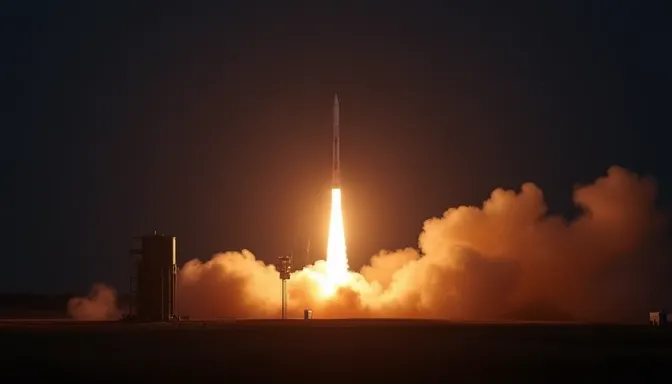
The Defense Department selected Poland to host a new PAC-3 missile maintenance facility, backed by Germany, Netherlands and Sweden.
Key Takeaways
- Pentagon selected Poland to host a new PAC-3 missile maintenance facility, announced October 27, 2026
- Germany, the Netherlands and Sweden will provide supply chain integration support for the facility
- Poland signed a $4.75 billion contract in March 2018 for two Configuration 3+ Patriot batteries
- Poland's first two Patriot batteries reached full operational readiness in December 2025
- Pentagon acquisition chief Michael Duffey said the investment demonstrates allied deterrence commitment
- Facility will handle maintenance and repair only; Pentagon officials have previously indicated they are exploring options for licensing production of Patriot interceptors to Ukraine
The Defense Department has formally selected Poland to host a new regional maintenance facility for Lockheed Martin's Patriot Advanced Capability-3 (PAC-3) interceptors, according to Breaking Defense. The announcement, made during NATO's Conference of National Armaments Directors, positions Poland as the sustainment backbone for PAC-3 stockpiles across NATO's Eastern Front, with Germany, the Netherlands and Sweden contributing supply chain integration. Michael Duffey, undersecretary of defense for acquisition and sustainment, framed the investment as a demonstration of allied unity and deterrence commitment.
What Happened
Pentagon acquisition chief Michael Duffey announced the facility selection in a Pentagon release, describing the investment as demonstrating that "Allies are sending a clear message: the Alliance is united, serious about deterrence, and ready to back our words with action," according to Breaking Defense. The facility will handle maintenance, repair and overhaul work for PAC-3 missiles rather than manufacturing them. The Pentagon stated that the regional hub will "dramatically shorten turnaround times and further secure critical supply lines" while "significantly enhancing operational readiness across Allied air and missile defense forces, ensuring rapid surge capacity during crisis and reinforcing credible collective deterrence along NATO's Eastern Front."
According to Defense News, Polish Prime Minister Donald Tusk said Poland had competed against several ambitious rivals to secure the facility, calling it the result of sustained effort to build these competencies domestically. Tusk stated: "Poland has sought very hard to have these competencies and infrastructure in Poland. We were contending against several ambitious competitors." The outlet reported that critical supply chain integration will be led by Germany, the Netherlands and Sweden, reinforcing the facility's role as a multinational sustainment hub rather than a purely Polish national asset. This multinational structure signals the Pentagon's strategy of distributing industrial responsibility across multiple NATO members to embed broader political commitment to Patriot sustainment infrastructure.
The selection follows a July social media post from Poland's Defense Minister Władysław Kosiniak-Kamysz confirming Poland's role in a European PAC-3 servicing agreement, though the specific site remained undecided at that time, Breaking Defense noted. At the time, Kosiniak-Kamysz had announced that Poland would be part of an agreement to bring a PAC-3 servicing facility to Europe without disclosing the location. Defense News reported that European allies, including Poland and Ukraine, have separately lobbied Washington to allow domestic manufacturing of PAC-3 MSE interceptors, a push distinct from the maintenance facility now confirmed for Poland. According to Breaking Defense, Pentagon officials have previously indicated they are exploring options for licensing production of Patriot interceptors to Ukraine amid its ongoing war with Russia, indicating that production licensing remains a separate and unresolved question.
The announcement builds on a substantial procurement relationship with Poland stretching back years. Defense News reported that Poland signed a contract worth approximately $4.75 billion in March 2018 to acquire two Configuration 3+ Patriot batteries. Poland then launched a second program phase in May 2022, requesting six additional Patriot batteries and related equipment from the United States. The first two batteries reached full operational readiness in December 2025, according to the Polish government's own announcement cited by Defense News. This progression from initial procurement through successive acquisitions to sustainment infrastructure shows how the Pentagon has deepened its military industrial footprint in Poland's air defense architecture over nearly a decade.
The Pentagon's framing emphasizes the facility's role in sustaining "combat power" through recurring maintenance cycles. In its announcement, the Department stated that "fusing Allied investment with world-class American defense technology directly translates transatlantic industrial capacity into combat power - keeping launchers loaded, sustaining critical operations, and ensuring NATO Allies are prepared to fight tonight." This language positions the facility not as a one-time infrastructure project but as a permanent institutional mechanism for maintaining operational PAC-3 capability across Eastern European NATO members.
Why It Matters
This facility award establishes recurring sustainment infrastructure that locks in long-term dependency on Lockheed Martin's supply chain and creates ongoing contracting relationships across four NATO members. Rather than a single arms sale, it represents a durable industrial model where initial weapons purchases evolve into perpetual maintenance contracts. The multinational supply chain structure spanning Poland, Germany, the Netherlands and Sweden suggests the Pentagon is deliberately distributing industrial stakes to secure broader political buy-in for continued Patriot investment across multiple European economies. The facility also addresses a specific operational need: turnaround time compression for PAC-3 interceptor maintenance, which directly affects surge capacity during crisis scenarios. However, it reveals an unresolved tension within allied air defense strategy. While Poland secures servicing infrastructure, the parallel question of licensing Patriot interceptor production for Ukraine and other European manufacturers remains open, meaning this facility solves maintenance capacity without addressing the underlying interceptor shortage driving allied demand for expanded production.
What to Watch
Monitor formal contract terms and funding commitments tied to the Poland facility, which were not detailed in the initial Pentagon announcement. The unresolved question of licensing Patriot interceptor production domestically in Europe, raised by Poland, Germany and Ukraine according to Defense News, will likely surface again as a separate procurement decision. Track whether Sweden, the Netherlands and Germany formalize specific supply chain roles with their own contract announcements, providing visibility into how maintenance logistics will be operationalized. Also worth observing is whether other NATO members, particularly in the Balkans or Central Europe, request similar regional maintenance hubs given the Pentagon's stated goal of reducing turnaround times and enhancing surge capacity across allied air defense forces. Finally, monitor Poland's second-phase Patriot acquisition (the six additional batteries requested in 2022), as their operational timeline will determine maintenance facility utilization rates and may influence when other allied members place new PAC-3 orders.
- Poland selected to host new PAC-3 missile maintenance facility for NATO, announced October 27, 2026 during NATO's Conference of National Armaments Directors
- Germany, the Netherlands and Sweden will support the facility through critical supply chain integration
- Poland signed a $4.75 billion contract in March 2018 for two Configuration 3+ Patriot batteries and launched a second phase in May 2022 requesting six additional batteries
- Poland's first two Patriot batteries reached full operational readiness in December 2025
Sources
Frequently Asked Questions
Where will the new PAC-3 maintenance facility be located?
The Defense Department selected Poland to host the new regional maintenance facility for PAC-3 missiles, announced October 27, 2026 during NATO's Conference of National Armaments Directors.
Which countries are supporting the Poland PAC-3 facility?
Germany, the Netherlands and Sweden will provide critical supply chain integration support for the facility, according to the Pentagon announcement.
Will the Poland facility manufacture new PAC-3 missiles?
No. The facility will provide maintenance, repair and overhaul capabilities only. It will not be responsible for manufacturing PAC-3 missiles.
What is Poland's history with Patriot missile systems?
Poland signed a $4.75 billion contract in March 2018 for two Configuration 3+ Patriot batteries, requested six more batteries in May 2022, and reported its first two batteries reached full operational readiness in December 2025.
Get MachineHours in your inbox
AI compute and the machine economy in your inbox.