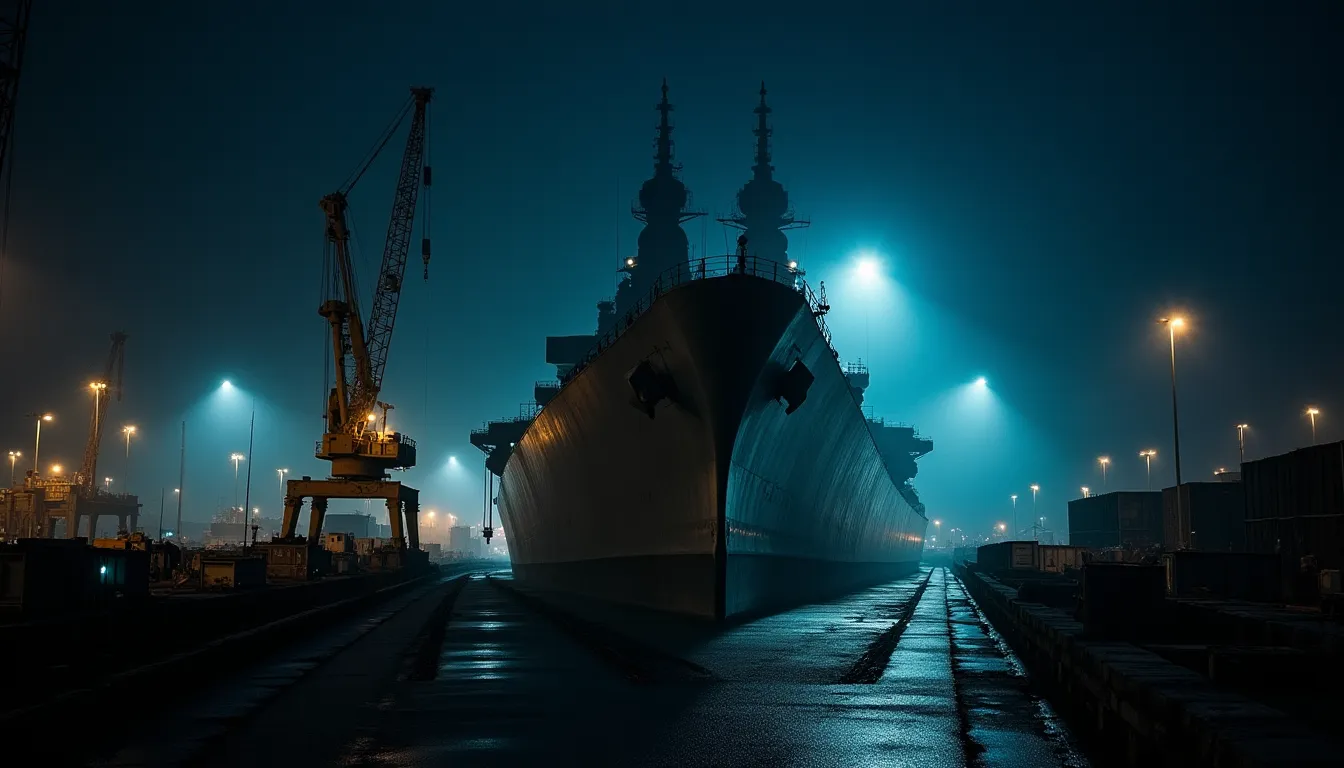
OCCAR awarded a $4.2B DDX destroyer contract to a Fincantieri-Leonardo joint venture as an AIA-Bain report flags private defense funding bottlenecks.
Key Takeaways
- OCCAR awarded a $4.2 billion DDX destroyer contract to a Fincantieri-Leonardo joint venture on September 24, 2026.
- AIA-Bain report found private defense investment rising but funding bottlenecks persist between startups and government acquisition.
- Agile Space Industries expanded its leadership structure to support its next growth phase in propulsion systems.
- Israel's Uvision and Estonia's Lendurai will integrate systems for NATO military use.
- The US Air Force says its China-focused think tank will continue, though its own director called it basically dead.
OCCAR, the European joint armament procurement body, has awarded a $4.2 billion contract for the DDX destroyer program to a joint venture between Fincantieri and Leonardo, according to Breaking Defense.
What Happened
The DDX contract gives the Fincantieri-Leonardo joint venture responsibility for building next-generation destroyers under OCCAR's multinational oversight structure. The source reports that Fincantieri will design and build the DDX destroyers while Leonardo supports combat system development, without characterizing this as a broader consolidation trend or competitive positioning strategy.
That contract arrives alongside a report from the Aerospace Industries Association and Bain & Company, also covered by Breaking Defense, which found that even as private capital flowing into defense has increased, bottlenecks remain in translating that investment into fielded programs. The report identifies a funding gap for defense startups transitioning from R&D to production, noting no 'fit-for-purpose' investment model exists for that stage, and that suppliers cite the Pentagon's demand signal as critical to justifying investment.
Elsewhere in the sector, SpaceNews reported that Agile Space Industries has expanded its leadership structure, a move the company tied to supporting its next phase of growth in propulsion systems as it scales to meet government and commercial demand.
On the systems integration side, Breaking Defense also reported that Israel's Uvision and Estonia's Lendurai plan to integrate their systems for NATO military use, another sign of cross-border defense industrial cooperation feeding into alliance procurement pipelines.
Separately, Breaking Defense reported friction inside the US Air Force over the future of its China-focused think tank, with the organization insisting the effort will continue while its own director described it as basically dead, a dispute that touches on how the Pentagon resources long-term strategic analysis.
Why It Matters
The DDX award and the AIA-Bain findings sit on opposite sides of the same coin. Large state-to-industry contracts like the $4.2 billion destroyer deal show government procurement moving at scale for established primes such as Fincantieri and Leonardo. Meanwhile, the funding bottlenecks AIA-Bain identifies suggest that newer, privately capitalized entrants still struggle to convert investment into government contracts at comparable speed. Agile Space Industries' leadership expansion and the Uvision-Lendurai NATO integration both read as attempts by smaller or mid-sized players to position themselves for exactly the kind of large multinational awards OCCAR just handed out. For investors tracking this sector, that tension between prime-contractor consolidation and startup funding friction is a recurring theme worth following through defence and space sector equity analysis.
Background
Large-scale procurement stories like the DDX award recall a broader pattern in technology adoption: big, expensive systems tend to consolidate around established players before smaller innovations trickle into mass deployment. The Roomba: First Mass-Market Consumer Robot encyclopedia entry traces a related dynamic in consumer robotics, where a single affordable product proved autonomous systems could work in everyday settings before the category expanded. Defense procurement follows a different scale and pace, but the underlying question of how emerging technology moves from prototype to fielded contract is comparable.
What to Watch
Watch whether OCCAR issues follow-on DDX-related awards to smaller subcontractors, which would show whether the funding bottlenecks AIA-Bain flagged are easing at the program level.
Sources
- Breaking Defense: OCCAR awards $4.2B DDX destroyer contract to Fincantieri, Leonardo joint venture
- Breaking Defense: As private investment in defense increases, some bottlenecks in funding: AIA-Bain
- SpaceNews: Agile Space Industries Expands Leadership Structure to Support Next Phase of Growth
- Breaking Defense: Israel's Uvision, Estonia's Lendurai to integrate systems for NATO military
- Breaking Defense: The Air Force says its China think tank will continue. Its director says it's basically dead.
- MachineHours Encyclopedia: Roomba: First Mass-Market Consumer Robot
Frequently Asked Questions
Who won the OCCAR DDX destroyer contract?
A joint venture between Italian firms Fincantieri and Leonardo won the $4.2 billion contract, awarded by OCCAR on September 24, 2026, according to Breaking Defense.
What did the AIA-Bain report say about defense funding?
The report found that while private investment in defense is increasing, bottlenecks remain in converting that capital into fielded government programs.
What is the Uvision-Lendurai deal about?
Israel's Uvision and Estonia's Lendurai plan to integrate their systems for use by NATO military forces, according to Breaking Defense.
Why did Agile Space Industries expand its leadership team?
The company said the expanded leadership structure is meant to support its next phase of growth, according to SpaceNews.
What is happening with the Air Force's China think tank?
The Air Force says the think tank will continue operating, but its own director described it as basically dead, according to Breaking Defense.