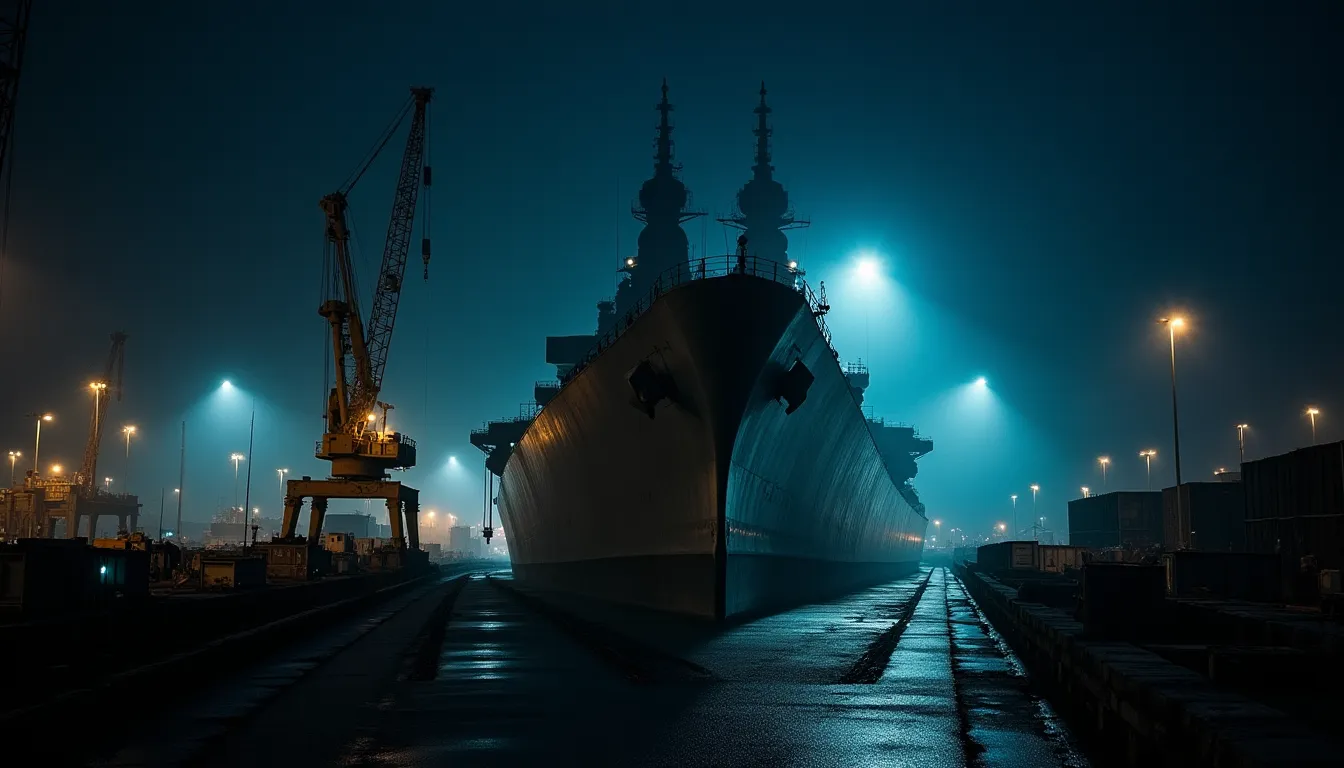
Europe's OCCAR has awarded a €3.7 billion ($4.2 billion) contract to the Orizzonte Sistemi Navali joint venture of Fincantieri and Leonardo to design and build two next-generation DDX destroyers for Italy's Navy, with deliveries planned for 2033 and 2035.
Key Takeaways
- OCCAR awarded €3.7 billion ($4.2 billion) contract to Orizzonte Sistemi Navali joint venture for two Italian Navy DDX destroyers, with Fincantieri handling design and build and Leonardo supporting combat systems development
- Deliveries are planned for 2033 and 2035, representing a three-year delay from Italy's original construction timeline due to operational requirements definition and financial resource challenges
- Sub-supply contracts worth approximately €1.8 billion for Fincantieri and €1.7 billion for Leonardo will be finalized in coming weeks, anchoring European defense industrial capacity through the program duration
- The DDX program represents a generational leap in air and missile defense capabilities compared to the Horizon-class destroyers the new vessels will replace
- The multinational OCCAR procurement structure demonstrates viable pathways for complex, capital-intensive European defense programs involving coordinated industrial and technical decisions
Europe's Organisation for Joint Armament Cooperation (OCCAR) has issued a €3.7 billion ($4.2 billion) contract for the production of two Italian Navy DDX destroyers to the Orizzonte Sistemi Navali (OSN) joint venture, comprised of Italian shipbuilder Fincantieri and defense contractor Leonardo.
Contract Structure and Scope
Under the award, Fincantieri will be responsible for the design and build of the new destroyer, with Leonardo supporting combat system development. The two manufacturers stated in a joint statement that the program will see OSN cement sub-supply contracts with Fincantieri, valued at around €1.8 billion, and Leonardo, worth an estimated €1.7 billion, "in the coming weeks." Roughly €1.3 billion of the entire contract is based on options, meaning those funds are contingent on future milestone achievements or decision points rather than committed immediately.
The DDX destroyers represent a substantial modernization effort for Italy's naval capabilities. The two new vessels are set to replace Horizon-class destroyers and redefine the Italian Navy's capability profile in the field of air and missile defence through a significant generational leap at both a platform and combat systems level.
Delivery Timeline and Project History
Deliveries of the two ships are planned for 2033 and 2035. This timeline represents a significant delay from Rome's earlier plans. When Italy first unveiled new destroyer plans in 2020, it reportedly committed to a 2028 delivery timeline. A construction contract was purportedly penciled in for 2023, dependent on funding, but according to Italian outlet Infodifesa, problems "likely linked" to defining operational requirements and financial resources led to the project suffering a three-year delay.
The extended timeline underscores challenges common in large-scale naval procurement. Defining precise operational requirements for a destroyer designed to serve potentially into the 2050s requires careful coordination across multiple military departments and allied nations. The OCCAR structure itself—as a multinational oversight body—adds layers of decision-making that can extend timelines. Financial constraints, both at the Italian defense ministry level and across broader European defense budgets, have historically slowed major platform development programs.
Significance for European Defense Cooperation
The DDX contract award demonstrates the continued centrality of OCCAR to European multinational defense procurement. OCCAR was established to harmonize armament development and procurement across participating nations, and contracts of this scale validate its mechanism as a viable path for complex, capital-intensive programs. The Fincantieri-Leonardo joint venture structure itself reflects a common European industrial approach: pairing a major shipbuilder with an integrated systems provider to ensure both the platform and its combat systems are developed in concert.
For Italy specifically, the DDX program is critical infrastructure investment. Modern naval air defense capabilities are increasingly essential for NATO operations in contested maritime environments. The Horizon-class destroyers entering replacement now were designed in the 1990s; a new-generation platform will incorporate advances in radar, sensor fusion, and integrated air defense that have matured substantially in the intervening decades.
The involvement of Leonardo in combat systems development is particularly significant. Leonardo has built substantial expertise in naval fire control systems, phased array radar, and combat management systems through earlier NATO programs. By binding Leonardo's systems integration work to Fincantieri's platform design from the outset, the contract structure aims to avoid costly rework and integration delays that have plagued some earlier naval modernization efforts.
Industrial Base Implications
Large contracts like the DDX award anchor European defense industrial capacity in ways that support broader supply chain resilience. Shipbuilding, in particular, requires sustained production rates to maintain worker skills and supplier relationships. The DDX program, spanning from now through 2035 deliveries, provides multi-year visibility for Fincantieri's workforce and its network of subcontractors across Italy and potentially other European suppliers.
The sub-supply contract allocations—€1.8 billion for Fincantieri's internal work and €1.7 billion for Leonardo—indicate a roughly balanced partnership in terms of value capture. This structure is deliberately designed to maintain both firms' capabilities and incentivize full commitment from each party. Neither is subordinate to the other in the joint venture, reducing risk that one party might redirect resources elsewhere if the program faced delays or budget pressure.
What Lies Ahead
The coming months will be critical for the DDX program. The manufacturers stated that sub-supply contracts would be cemented "in the coming weeks," a typical procurement phase following a major award. These secondary contracts will establish which Italian and potentially European suppliers will handle major subsystems—engines, power generation, auxiliary systems, and components requiring specialized expertise or capacity.
The extended delivery timeline provides some buffer against budget overruns, a common risk in naval programs. However, it also extends the period during which technology maturation decisions must be made. For a destroyer class expected to operate through 2055 or beyond, choices made in the next 2-3 years about radar technology, networking standards, and combat system architecture will have operational consequences decades hence. OCCAR's multinational structure means these decisions will require alignment across Italy and other participating nations.
Sources
- Breaking Defense: OCCAR awards $4.2B DDX destroyer contract to Fincantieri, Leonardo joint venture
- Breaking Defense: As private investment in defense increases, some bottlenecks in funding: AIA-Bain
- SpaceNews: Agile Space Industries Expands Leadership Structure to Support Next Phase of Growth
- Breaking Defense: Israel's Uvision, Estonia's Lendurai to integrate systems for NATO military
- Breaking Defense: The Air Force says its China think tank will continue. Its director says it's basically dead.
- MachineHours Encyclopedia: Roomba: First Mass-Market Consumer Robot
Frequently Asked Questions
Who won the OCCAR DDX destroyer contract?
A joint venture between Italian firms Fincantieri and Leonardo won the $4.2 billion contract, awarded by OCCAR on September 24, 2026, according to Breaking Defense.
What did the AIA-Bain report say about defense funding?
The report found that while private investment in defense is increasing, bottlenecks remain in converting that capital into fielded government programs.
What is the Uvision-Lendurai deal about?
Israel's Uvision and Estonia's Lendurai plan to integrate their systems for use by NATO military forces, according to Breaking Defense.
Why did Agile Space Industries expand its leadership team?
The company said the expanded leadership structure is meant to support its next phase of growth, according to SpaceNews.
What is happening with the Air Force's China think tank?
The Air Force says the think tank will continue operating, but its own director described it as basically dead, according to Breaking Defense.
Get MachineHours in your inbox
AI compute and the machine economy in your inbox.