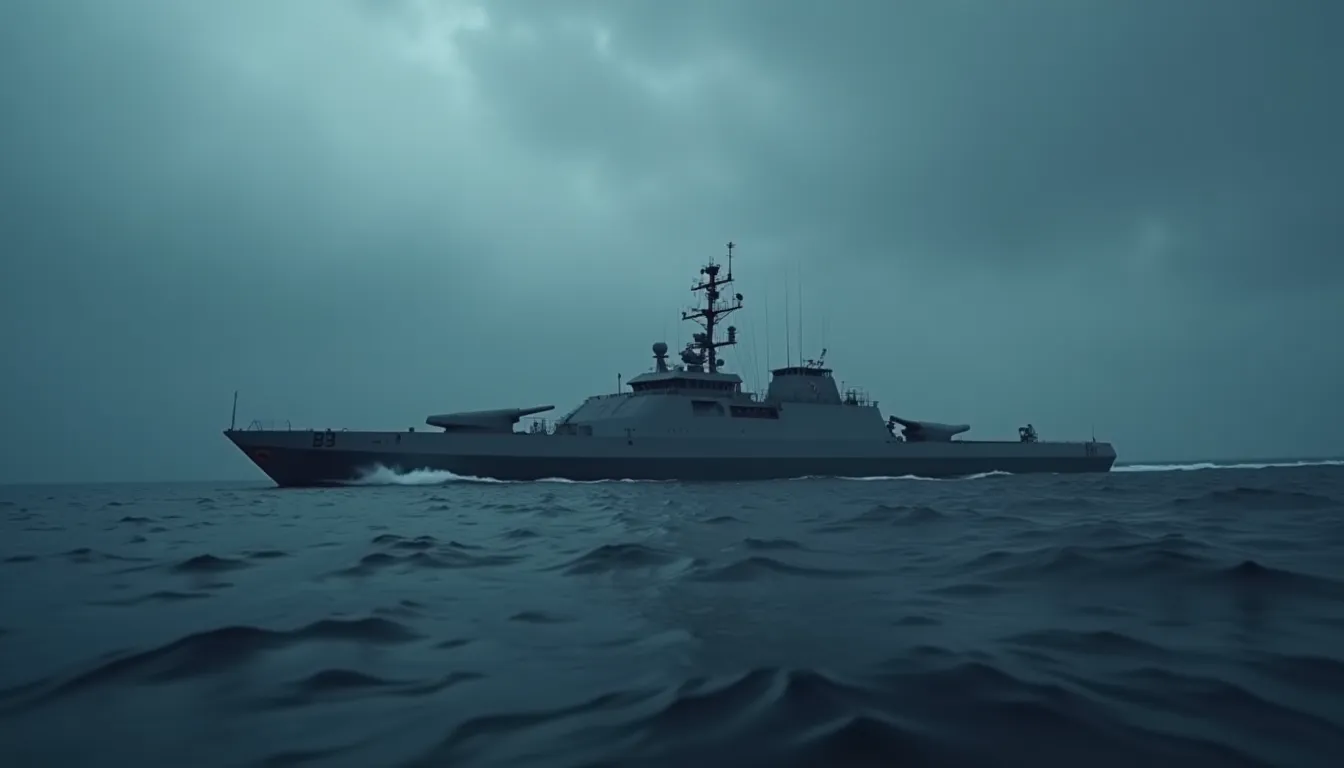
The Navy launched Phase II of its medium robo-ship program seeking autonomous solutions, as separate reports flag $200B+ shipyard costs and contested logistics networks.
Key Takeaways
- The Navy opened Phase II of its medium unmanned surface vessel program seeking autonomous solutions from industry.
- GAO estimates the Navy's shipyard modernization could cost more than $200 billion.
- A senior admiral warned that offensive cyber capacity can deplete quickly in modern conflict.
- South Korea inducted its first locally developed fighter jet into its air force.
- Breaking Defense reported on efforts to build logistics networks resilient to contested environments.
The Navy has opened Phase II of its medium unmanned surface vessel program, formally requesting what officials describe as innovative autonomous solutions from industry, according to Breaking Defense. The move signals the service is moving past early experimentation with robotic vessels and toward a more structured acquisition pipeline for uncrewed ships expected to operate with reduced human oversight.
What Happened
The report does not specify a contract value or timeline for vessel delivery, but frames the phase as a step toward fielding vessels capable of extended, less-supervised operations.
The robo-ship push arrives alongside a separate warning from a senior admiral, reported by Breaking Defense, that offensive cyber capacity, described as 'cyber magazine', can be depleted rapidly in a modern conflict. That caution is relevant to autonomous systems that increasingly rely on networked software and cyber defenses to function safely at sea.
Breaking Defense also reported that the Government Accountability Office estimates the Navy's shipyard modernization effort could exceed $200 billion, a figure that raises questions about how much budget room remains for newer programs like uncrewed vessels as the service simultaneously tries to overhaul its industrial base, per Breaking Defense.
On the logistics front, Breaking Defense examined efforts to build supply networks that can survive contested environments, an area where autonomous or semi-autonomous transport systems are increasingly discussed as a way to reduce risk to personnel, as detailed in Breaking Defense.
Separately, South Korea inducted its first locally developed fighter jet into its air force, a milestone Breaking Defense covered as part of the country's push for domestic defense manufacturing independence, according to Breaking Defense.
Why It Matters
Taken together, these reports show the Navy trying to expand autonomous capability at the exact moment its budget is strained by legacy shipyard costs approaching $200 billion. Phase II of the robo-ship program suggests the service views autonomy not as a side project but as a core requirement for future fleets that must operate with fewer sailors in contested waters. The admiral's warning about cyber capacity depleting quickly underscores a real vulnerability for these autonomous platforms, which depend on secure networks to navigate, communicate, and make decisions without constant human input. Investors tracking defense contractors building these systems can find broader defence and space sector equity analysis useful for gauging how procurement shifts like this one ripple through supplier stocks. The overlapping stories point to a defense establishment balancing ambitious autonomy goals against industrial base costs and cyber fragility.
Background
Autonomous systems in defense draw conceptually from decades of consumer and industrial robotics work. The Roomba, launched in 2002, proved that autonomous navigation could work reliably and affordably in unstructured environments, a template that informed later military interest in low-cost robotic platforms. Modern uncrewed naval vessels rely on far more sophisticated sensing and decision-making than early consumer robots, but the underlying premise, that machines can navigate and act with reduced supervision, traces back to that same lineage.
What to Watch
Watch for which contractors respond to the Navy's Phase II solicitation and what autonomy architectures they propose, since that will indicate how much independent decision-making the service expects these vessels to handle. Also worth tracking is whether the $200 billion shipyard estimate from the GAO report forces tradeoffs against newer autonomous programs in upcoming budget requests. Finally, the admiral's cyber capacity warning raises the question of whether the Navy will pair its autonomous ship investments with parallel investment in cyber resilience, since one without the other could leave new platforms exposed.
Sources
- Breaking Defense: Navy launches Phase II for medium robo-ship project, seeks 'innovative solutions'
- Breaking Defense: Navy's shipyard revamp could cost more than $200 billion: GAO
- Breaking Defense: 'Cyber magazine' can run out 'pretty damn quick' in modern conflict: Admiral
- Breaking Defense: South Korea inducts first locally developed fighter jet into air force
- Breaking Defense: Building logistics networks that survive contested environments
- MachineHours Encyclopedia: Roomba: First Mass-Market Consumer Robot
Frequently Asked Questions
What is the Navy's medium robo-ship program?
It is a Navy initiative, now entering Phase II, seeking autonomous solutions for a mid-sized class of unmanned surface vessels, according to Breaking Defense.
How much could the Navy's shipyard revamp cost?
The Government Accountability Office estimates the effort could exceed $200 billion, per Breaking Defense.
What did the admiral say about cyber capacity?
A senior admiral warned that 'cyber magazine', or offensive cyber capacity, can run out quickly during modern conflict, as reported by Breaking Defense.
What fighter jet did South Korea induct?
South Korea inducted its first locally developed fighter jet into its air force, marking a milestone in domestic defense manufacturing, per Breaking Defense.