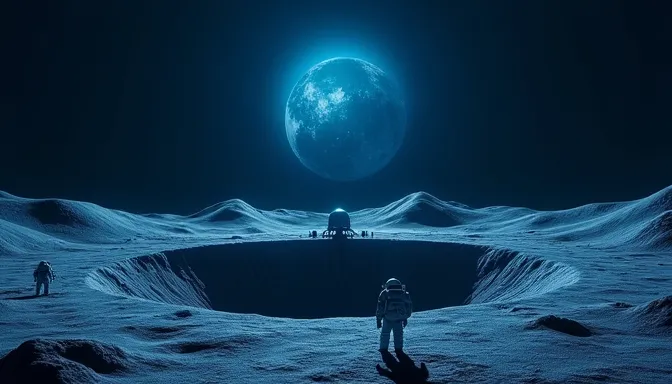
NASA opened a K-12 student contest on Nov. 17 asking entrants to design nuclear-powered lunar base concepts, with submissions due March 1, 2027.
Key Takeaways
- NASA opened its Power to Explore Student Challenge on Nov. 17, 2026, inviting K-12 students to design nuclear-powered lunar bases.
- Entries require a 200-word essay and original illustration describing both radioisotope and fission-based power solutions.
- Submissions are due March 1, 2027, across three grade categories: K-4, 5-8, and 9-12.
- Grand prize winners receive a trip for two to NASA's Glenn Research Center in Cleveland.
- Carl Sandifer, program manager for NASA's Space Reactors Division, stated nuclear power could enable exploration of the Moon's permanently shadowed South Pole regions.
NASA opened its Power to Explore Student Challenge on Tuesday, Nov. 17, inviting kindergarten through 12th grade students across the United States to design nuclear-powered lunar exploration concepts, according to NASA. Submissions are due March 1, 2027, with grand prize winners from three grade brackets earning a trip to NASA's Glenn Research Center in Cleveland. The competition aims to cultivate future engineers at a moment when nuclear power systems are attracting renewed attention both for space exploration and Earth-based applications like data centre power.
What Happened
According to NASA, the Power to Explore Student Challenge asks students to learn about space nuclear power systems and illustrate how these nuclear "batteries" could support a lunar exploration vision of their own design. Entries require a 200-word essay describing a personal "superpower" relevant to the mission, paired with an original illustration showing a nuclear-powered lunar base that uses both radioisotope and fission-based power solutions. The challenge emphasizes students' understanding of the kinds of exploration that nuclear energy can enable on the Moon's surface.
Judges will review entries across three grade-level categories: K-4, 5-8, and 9-12, with one grand prize winner per category receiving a trip for two to NASA's Glenn Research Center. Every student who submits an entry will receive a digital certificate and an invitation to a virtual event with NASA experts to learn about NASA's workforce and missions. NASA anticipates thousands of submissions from across the country, according to the competition announcement.
Carl Sandifer, a program manager for NASA's Space Reactors Division at the agency's headquarters in Washington, outlined the strategic case for nuclear power on the Moon. According to NASA, Sandifer stated that nuclear power could enable exploration in the permanently shadowed regions near the Moon's South Pole, carry strong science payloads over long distances, and keep instruments warm through the lunar night. Sandifer framed the challenge as preparation for the next generation to design a nuclear-powered Moon base of their own, emphasizing that such infrastructure will be necessary as NASA establishes a lunar base where astronauts will live, work, and explore.
The contest structure reflects a deliberate pipeline strategy. NASA and Future Engineers are seeking volunteer judges from U.S. residents older than 18 who can commit approximately three hours to evaluation. Interested volunteers can register at the Future Engineers website, which administers the challenge under a contract with NASA's Center of Excellence for Collaborative Innovation. The Power to Explore Student Challenge is funded by NASA's Science Mission Directorate and operates out of the Radioisotope Power Systems Program under the Research and Technology Mission Directorate.
Why It Matters
The contest reflects NASA's strategy to pipeline talent toward nuclear power systems at a time when compact, standardized nuclear designs are attracting renewed attention on Earth as well as in space. MachineHours tracks a parallel trend: data centre electricity consumption currently stands at approximately 2.5% of global demand according to IEA estimates, intensifying corporate and government interest in small-scale nuclear systems capable of delivering steady power independent of weather or daylight cycles. This parallel development suggests that engineers trained on lunar nuclear concepts may find immediate employment in Earth-based applications. The workforce pipeline dimension underscores a deliberate effort to cultivate designers and engineers who will eventually work on these systems rather than simply publicizing existing technology.The dual emphasis on radioisotope and fission-based systems in the contest suggests NASA is keeping multiple technical paths open rather than committing to a single architecture for a future lunar base, allowing flexibility in power system design as mission requirements solidify.
Background
Radioisotope power systems have supplied electricity to NASA missions operating far from the sun for decades, converting heat from radioactive decay into electricity without moving parts. Fission-based reactors, which the contest also asks students to consider, generate much larger amounts of power by splitting atoms and are seen as necessary for sustaining a crewed lunar base with higher energy demands than any robotic probe. On Earth, a parallel push toward smaller, standardized nuclear designs is unfolding through small modular reactors, which are increasingly pitched as power sources for AI data centres and semiconductor manufacturing facilities. Longer-horizon nuclear ambitions, including nuclear fusion power and the ITER fusion reactor project, remain further from commercial deployment than the fission and radioisotope technologies featured in NASA's challenge.
What to Watch
The March 1, 2027 submission deadline marks the first concrete milestone, after which NASA and Future Engineers will select winners across three grade categories. NASA has not disclosed the total number of expected entries beyond stating that judges anticipate reviewing thousands of submissions from across the country. The contest's emphasis on both radioisotope and fission power suggests NASA is keeping multiple technical paths open rather than committing to a single architecture for a future lunar base.
Key Facts
- NASA's Power to Explore Student Challenge invites K-12 students to design nuclear-powered lunar bases, with submissions due March 1, 2027.
- Grand prize winners from three grade categories (K-4, 5-8, 9-12) receive trips to NASA's Glenn Research Center in Cleveland.
- Entries require a 200-word essay and an original illustration demonstrating understanding of radioisotope and fission-based power solutions for lunar exploration.
- Data centre electricity consumption has reached approximately 2.5% of global demand, creating parallel workforce demand for nuclear power system engineers on Earth.
Further reading and context
Sources
- NASA: NASA Launches Nuclear Power Systems Student Contest
- MachineHours Encyclopedia: Small Modular Reactors — How SMRs Could Power the AI Economy
- MachineHours Encyclopedia: Nuclear Fusion — Economics, Timeline, and the Path to Commercial Power
- MachineHours: AI & Robotics Acceleration Index
- Grid-Scale Battery Storage — Technologies, Costs, and the Energy Transition
- ITER — The International Fusion Reactor, Its Timeline, and What First Plasma Means
Frequently Asked Questions
What is NASA's Power to Explore Student Challenge?
It is a STEM contest for K-12 U.S. students that opened Nov. 17, 2026, asking entrants to write a 200-word essay and create an original illustration describing their vision of a nuclear-powered lunar base using radioisotope and fission-based power solutions.
When are entries due and how are they judged?
Submissions are due March 1, 2027. Judges review entries across three grade categories: K-4, 5-8, and 9-12. One grand prize winner from each category receives a trip for two to NASA's Glenn Research Center in Cleveland.
What benefits does nuclear power offer for lunar exploration?
According to Carl Sandifer of NASA's Space Reactors Division, nuclear power could enable exploration in permanently shadowed regions near the Moon's South Pole, carry strong science payloads over long distances, and keep instruments warm through the lunar night.
How can adults participate in the contest?
U.S. residents older than 18 can register as volunteer judges through the Future Engineers website. Judges commit approximately three hours to review entries anticipated from thousands of students across the country.
Get MachineHours in your inbox
AI compute and the machine economy in your inbox.