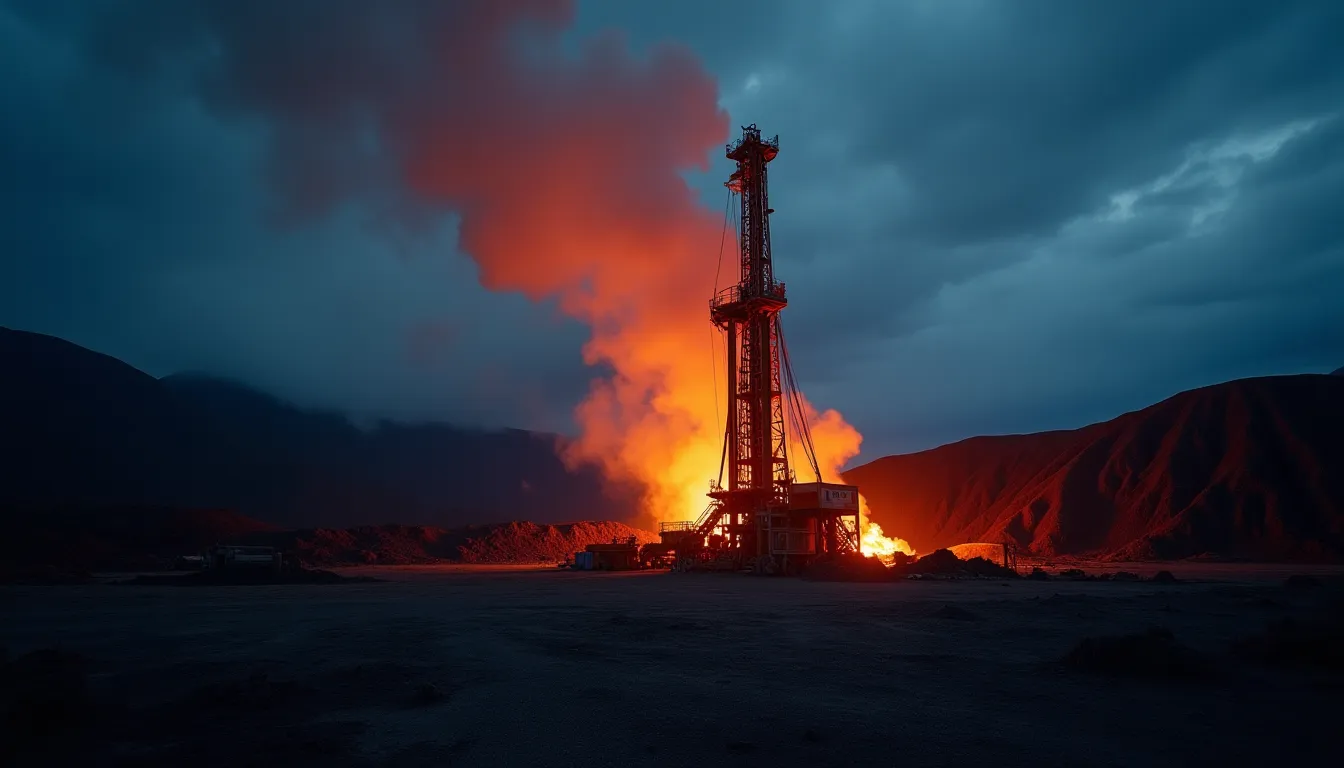
Mazama Energy has closed a $135M funding round to develop superhot geothermal power at an Oregon volcano. Separately, India's power-sector emissions have held flat for two years as clean energy surges.
Key Takeaways
- Mazama Energy raised $135M to develop superhot geothermal power at an Oregon volcanic site, one of the largest early-stage geothermal rounds in North America in 2026.
- India's power-sector emissions held flat for approximately two years as solar and wind capacity absorbed most of the country's rising electricity demand, per Carbon Brief analysis.
- Massachusetts expanded winter energy discounts for heat pump households to close the cost gap with natural gas heating during peak demand months.
- Google backed Swedish green-steel producer Stegra, which uses hydrogen instead of coal in steelmaking, as part of a broader corporate effort to reduce supply-chain emissions.
- Superhot geothermal targets rock temperatures above 374°C and can provide firm baseload power independent of weather, making it strategically valuable for grids absorbing AI data centre loads.
Mazama Energy has closed a $135 million funding round to develop superhot geothermal power beneath an Oregon volcano, according to Canary Media, making it one of the largest early-stage geothermal investments in North America in 2026. The raise signals growing investor appetite for firm, dispatchable clean energy sources that can complement intermittent solar and wind on stressed electricity grids.
What Happened
Mazama Energy is targeting superhot rock geothermal resources at an Oregon volcanic site, where extreme underground temperatures offer the potential for dramatically higher energy output per well compared to conventional geothermal systems. Canary Media reported that the $135 million will fund drilling programs and the development of technology to harness heat at depths and temperatures previously considered impractical for commercial energy extraction. Superhot geothermal, sometimes called advanced geothermal, remains a technically demanding field, but proponents argue it could provide always-on baseload power with a geographic footprint far smaller than coal or gas facilities of equivalent output.
On the demand side, Canary Media also reported that Massachusetts has expanded winter energy discounts for households using heat pumps, a policy move designed to reduce heating costs during peak demand months and to accelerate the state's electrification goals. Heat pumps, which move heat rather than generate it, can operate at efficiencies three to four times higher than resistance heating, but uptake has been slowed by higher winter electricity rates relative to natural gas in some New England markets. The expanded discount program is intended to address that gap directly.
Meanwhile, Canary Media reported that Google has backed Stegra, a Swedish green-steel company working to produce steel using hydrogen rather than coal-fired blast furnaces. Industrial processes like steelmaking account for a substantial share of global emissions, and corporate off-take commitments from technology companies have become a key financing mechanism for early-stage green materials producers. Google's involvement follows a pattern of large technology firms using their purchasing power to create markets for low-carbon industrial goods, partly to meet their own supply-chain emissions targets.
On a country-wide scale, Carbon Brief published analysis showing that India's power-sector emissions have remained flat for approximately two years, an outcome attributed to rapid expansion of solar and wind capacity. India added more than 50 gigawatts of renewable capacity in recent years, and the clean-energy surge has been sufficient to absorb most of the country's rising electricity demand without a proportional increase in coal generation. Carbon Brief noted that this does not mean India's total emissions have peaked, as other sectors continue to grow, but the power sector trend represents a material shift for one of the world's largest energy consumers.
The STAT News report on Jehovah's Witnesses and blood-derived products covers a religious and medical ethics development with no direct connection to energy or climate technology, and is outside the scope of this analysis.
Why It Matters
The Mazama raise is notable because superhot geothermal sits at the intersection of two urgent energy priorities: the need for firm, 24-hour clean power and the need to serve electricity grids that are absorbing large new loads. Data centres housing AI infrastructure are among the fastest-growing electricity consumers in the United States, and the energy cost of AI training and inference is already straining grid operators in several regions. Dispatchable geothermal could provide the kind of always-on clean power that solar and wind cannot reliably supply without expensive battery storage. Investors tracking the intersection of clean energy and AI infrastructure demand can find further context through commodity and energy market analysis covering the structural shifts underway in power markets.
The India data from Carbon Brief reinforces that clean-energy deployment at scale can flatten emissions curves even in high-growth economies, though the pace of renewable buildout will need to accelerate further to achieve absolute reductions. Google's backing of Stegra illustrates how technology companies are moving beyond their own direct operations to address Scope 3 supply-chain emissions, a trend that will shape procurement strategies across the sector through the end of the decade.
Background
Geothermal energy has long been constrained by geography, with conventional resources concentrated near tectonic boundaries and hydrothermal systems. Advances in drilling technology, much of it borrowed from the oil and gas industry, have opened the possibility of accessing heat in a far wider range of locations. The push toward superhot rock geothermal, which targets temperatures above 374 degrees Celsius, is one of several next-generation approaches alongside enhanced geothermal systems that use hydraulic stimulation to create permeability in dry rock formations.
The broader context for these investments is the pressure on electricity grids created by simultaneous electrification of heating, transport, and industrial processes, compounded by the rapid expansion of AI data centre capacity. The energy demands of AI infrastructure have elevated the strategic value of any clean power source that can provide firm baseload output independent of weather conditions.
What to Watch
Mazama Energy's drilling results over the next 12 to 24 months will be closely watched as a proof point for superhot geothermal viability at commercial scale. If early wells confirm the resource quality implied by the site's volcanic geology, the project could attract follow-on capital and influence where other geothermal developers direct their exploration programs.
Massachusetts' heat pump discount program will serve as a policy test case for other northeastern states weighing similar measures. If winter enrollment rates rise materially, other grid operators may adopt comparable rate structures to accelerate electrification without penalizing early adopters of efficient electric heating. On the industrial side, Google's commitment to Stegra will be watched as a signal of whether other large technology buyers are prepared to make similar off-take arrangements with green materials producers, a mechanism that could prove important for sectors where direct electrification is not yet technically or economically feasible.
- Training a single large language model can consume as much electricity as several hundred average US homes use in a year, according to published research on AI energy costs.
- Data centre power demand in the United States is projected to more than double by 2030, driven primarily by AI workload expansion.
- Geothermal energy produces electricity around the clock regardless of weather, giving it a capacity factor typically above 90 percent compared to around 25 percent for utility-scale solar.
- India added more than 50 gigawatts of renewable capacity in recent years, contributing to two consecutive years of flat power-sector emissions despite rising overall electricity demand.
Sources
- Canary Media: Mazama Energy raises $135M for superhot geothermal at Oregon volcano
- Canary Media: Massachusetts ups winter energy discounts for homes with heat pumps
- Canary Media: Google backs Swedish green-steel project to tackle rising emissions
- Carbon Brief: Analysis: India's power-sector emissions flat for two years due to clean-energy surge
- STAT News: Jehovah's Witnesses allow blood-derived products but keep ban on whole-blood transfusions
- MachineHours Encyclopedia: The Energy Cost of AI — Training Runs, Inference, and the Data Centre Power Crisis
Frequently Asked Questions
What is superhot geothermal energy and why is it significant?
Superhot geothermal targets underground rock temperatures above 374°C, which can yield far more energy per well than conventional geothermal. It provides firm, 24-hour clean power regardless of weather, making it useful for grids that need reliable baseload output.
How much did Mazama Energy raise and what will the funding be used for?
Mazama Energy raised $135 million. The funds will support drilling programs and technology development to extract energy from extremely hot rock beneath an Oregon volcanic site.
Why has India's power-sector emissions stayed flat despite rising electricity demand?
Carbon Brief analysis attributes the two-year emissions plateau to rapid renewable capacity expansion, primarily solar and wind, which absorbed most of India's additional electricity demand without requiring proportionally more coal generation.
What is Massachusetts doing to support heat pump adoption?
Massachusetts has increased winter energy discounts for homes using heat pumps, reducing electricity costs during peak heating months to make electric heating more competitive with natural gas on a bill basis.
Why is Google backing a Swedish green-steel company?
Google's investment in Stegra supports hydrogen-based steel production, helping the company address supply-chain emissions beyond its own direct operations. Corporate off-take commitments are a key funding mechanism for early-stage green materials producers.
Get MachineHours in your inbox
AI compute and the machine economy in your inbox.