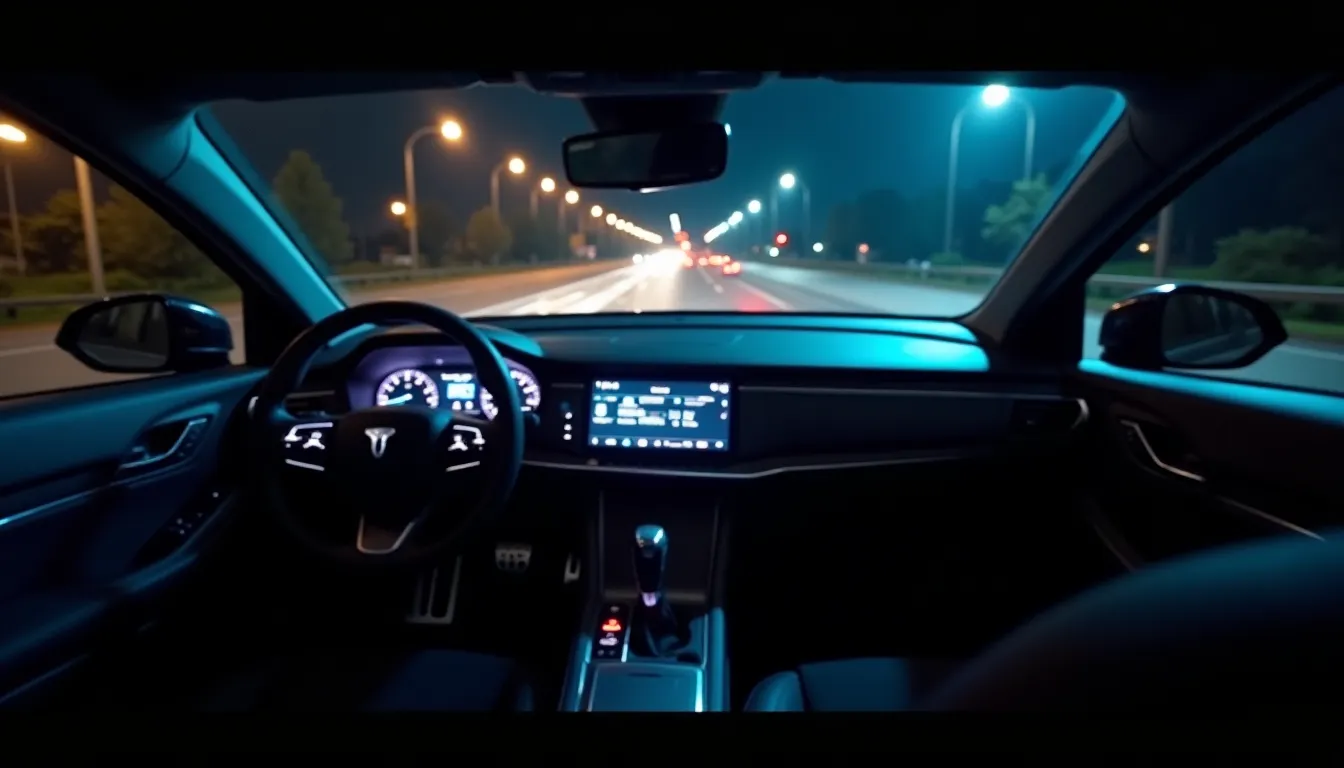
Travis Kalanick has launched a new robotaxi venture, framing it as unresolved work from his Uber era. Meanwhile, robot hardware advances in factories and homes signal widening automation across labour markets.
Key Takeaways
- Travis Kalanick has launched a new robotaxi start-up, calling it 'unfinished business' from his Uber era, per Financial Times reporting on Sept 6, 2026.
- Kalanick has not disclosed funding figures, a company name, or a launch timeline as of the FT report.
- IEEE Spectrum reported on Sept 3, 2026 that reinforced cable carriers and predictive maintenance are lowering the cost of running industrial robots continuously.
- Anker's Mammotion brand unveiled robot lawnmowers with autonomous edge-trimming at IFA 2026, expanding household automation into tasks requiring spatial judgment.
- Waymo, Tesla Cybercab, and Aurora represent the main competitors Kalanick's new venture would face in the autonomous ride-hailing market.
- New roles emerging from these automation shifts concentrate in robotics maintenance, remote monitoring, and systems integration - skills requiring significant retraining.
Travis Kalanick, the founder and former CEO of Uber, has re-entered the autonomous vehicle market with a new robotaxi start-up, describing the venture as unfinished business, according to Financial Times. The return signals renewed ambition in a sector that has already cost tens of billions of dollars in investment and displaced significant numbers of professional drivers.
What Happened
Financial Times reported on September 6, 2026 that Kalanick is building a new autonomous ride-hailing company, framing it as completing work left undone during his turbulent exit from Uber in 2017. The new venture enters a competitive field now dominated by Waymo, which operates commercial robotaxi services in multiple U.S. cities, and Tesla, whose Cybercab has been in limited deployment. Kalanick has not yet disclosed funding figures, the company's name, or a specific launch timeline, though the FT report indicates he has been quietly assembling a team. The labour implications are direct: professional drivers employed by ride-hailing and taxi companies face renewed pressure as a credible industry veteran re-commits capital and attention to fully automated transport. The U.S. Bureau of Labor Statistics counts more than 1.5 million people employed as drivers for hire - a workforce that every successful robotaxi deployment targets for displacement.
On the industrial side, IEEE Spectrum published an in-depth piece on September 3, 2026 examining how manufacturers are solving one of factory automation's persistent engineering problems: protecting the dynamic cable carriers that route power and data through articulated industrial robots. As robots cycle faster and carry heavier payloads, the flexible conduits connecting them face mechanical fatigue far sooner than static installations. Engineers are deploying reinforced polymer carriers, real-time load monitoring systems, and predictive maintenance software to extend service life. The practical effect is that industrial robots become more reliable and cheaper to operate over time, lowering the cost basis for automated manufacturing lines and making human substitution more financially attractive across a wider range of tasks, including precision assembly and materials handling that previously justified human dexterity.
At the consumer end, The Verge covered Anker's Mammotion brand unveiling new robot lawnmowers with integrated edge-trimming capability at IFA 2026 on September 2, 2026. Previous robot mowers required owners to manually trim lawn edges; the new Mammotion units use extended articulating arms and updated computer vision to handle borders autonomously. The devices target a residential market, but the underlying dynamic mirrors the industrial story: incremental hardware improvements expand automation into task categories that previously required human judgment and physical adaptability.
Why It Matters
Kalanick's re-entry matters beyond personal narrative. It signals that private capital still views fully autonomous transport as a near-term commercial opportunity, not a distant research project. Every dollar committed to robotaxi infrastructure is a dollar betting against the long-term viability of professional driving as mass employment. The IEEE Spectrum piece reinforces a quieter but equally consequential trend: reliability engineering is removing the last practical objections to running factories with minimal human staffing. When cable carriers fail less often and predictive maintenance reduces downtime, the economic case for automation firms up across industries from automotive to electronics. Those considering the broader workforce effects of these shifts, including the property market effects of workforce automation in communities built around transport and manufacturing jobs, will find the convergence of these three stories instructive. New roles are emerging, primarily in robotics maintenance, remote monitoring, and systems integration, but these positions require skills that displaced workers do not currently hold.
Background
The autonomous vehicle sector has absorbed enormous capital since roughly 2015, with companies including Waymo, Cruise, Zoox, and Aurora collectively receiving tens of billions in funding. Cruise suspended its robotaxi service in late 2023 following a safety incident, and several early entrants have wound down or restructured. Waymo remains the most operationally mature player, with paid rides available in San Francisco, Los Angeles, and Phoenix. Kalanick's return follows his post-Uber venture CloudKitchens, a ghost kitchen real estate operator he has run since 2018. For deeper context on how algorithmic and automated systems reshape economic structures, the MachineHours entry on AI and Financial Bubbles examines how speculative capital cycles interact with emerging automation sectors.
What to Watch
The key near-term indicators are Kalanick's funding announcement and which city his new company targets for its initial deployment. If he pursues a permit in a state with relatively permissive autonomous vehicle regulation, such as Texas or Arizona, a launch could come faster than the multi-year timelines that defined first-generation robotaxi companies. On the industrial side, watch whether IEEE-covered cable carrier improvements are adopted in automotive and semiconductor manufacturing, sectors where robot density is already high and incremental reliability gains have outsized economic impact. For consumer robotics, Mammotion's edge-trimming launch at IFA suggests that the 2026 to 2027 product cycle will push household automation further into tasks requiring spatial judgment, a capability threshold that previously constrained the category.
- Travis Kalanick co-founded Uber in 2009 and was forced out as CEO in June 2017 following investor pressure over governance failures.
- Waymo, operated by Alphabet, is currently the most commercially active robotaxi operator in the United States, with paid services running in three cities.
- The U.S. ride-hailing and taxi driver workforce numbers more than 1.5 million people according to federal labour data, making it one of the largest segments exposed to autonomous vehicle displacement.
- Industrial robot installations have grown steadily across automotive, electronics, and logistics sectors, with the International Federation of Robotics tracking record unit shipments in recent years.
Sources
- Financial Times: 'Unfinished business' — Kalanick revisits robotaxis with new start-up
- IEEE Spectrum: Protecting Dynamic Industrial Robot Cable Carriers
- The Verge: These new robot lawnmowers trim your edges
- MachineHours Encyclopedia: AI and Financial Bubbles — How Algorithmic Systems Amplify Speculative Cycles
- MachineHours Encyclopedia: Investing in the Quantum Computing Race — Companies, Timelines, and Commercial Reality
Frequently Asked Questions
What is Travis Kalanick's new robotaxi company?
As of the Financial Times report on September 6, 2026, Kalanick has not publicly named his new venture. He is described as quietly assembling a team and framing the project as unfinished work from his Uber years.
How does robotaxi expansion affect professional drivers?
More than 1.5 million people work as drivers for hire in the United States. Every commercially successful robotaxi deployment reduces demand for human drivers in the routes and markets it serves.
What problem did IEEE Spectrum report on regarding industrial robots?
Dynamic cable carriers - the flexible conduits routing power and data through articulated robots - degrade faster as robots run at higher speeds and payloads. Engineers are using reinforced polymers and predictive maintenance to extend service life.
What did Mammotion announce at IFA 2026?
Anker's Mammotion brand showed robot lawnmowers with integrated edge-trimming arms at IFA 2026, allowing the machines to handle lawn borders autonomously without a human following up with a manual trimmer.
Who are Kalanick's main competitors in the robotaxi market?
Waymo currently operates paid robotaxi services in San Francisco, Los Angeles, and Phoenix. Tesla's Cybercab is in limited deployment, and Aurora focuses on autonomous trucking, making all three likely benchmarks for any new entrant.
Get MachineHours in your inbox
AI compute and the machine economy in your inbox.