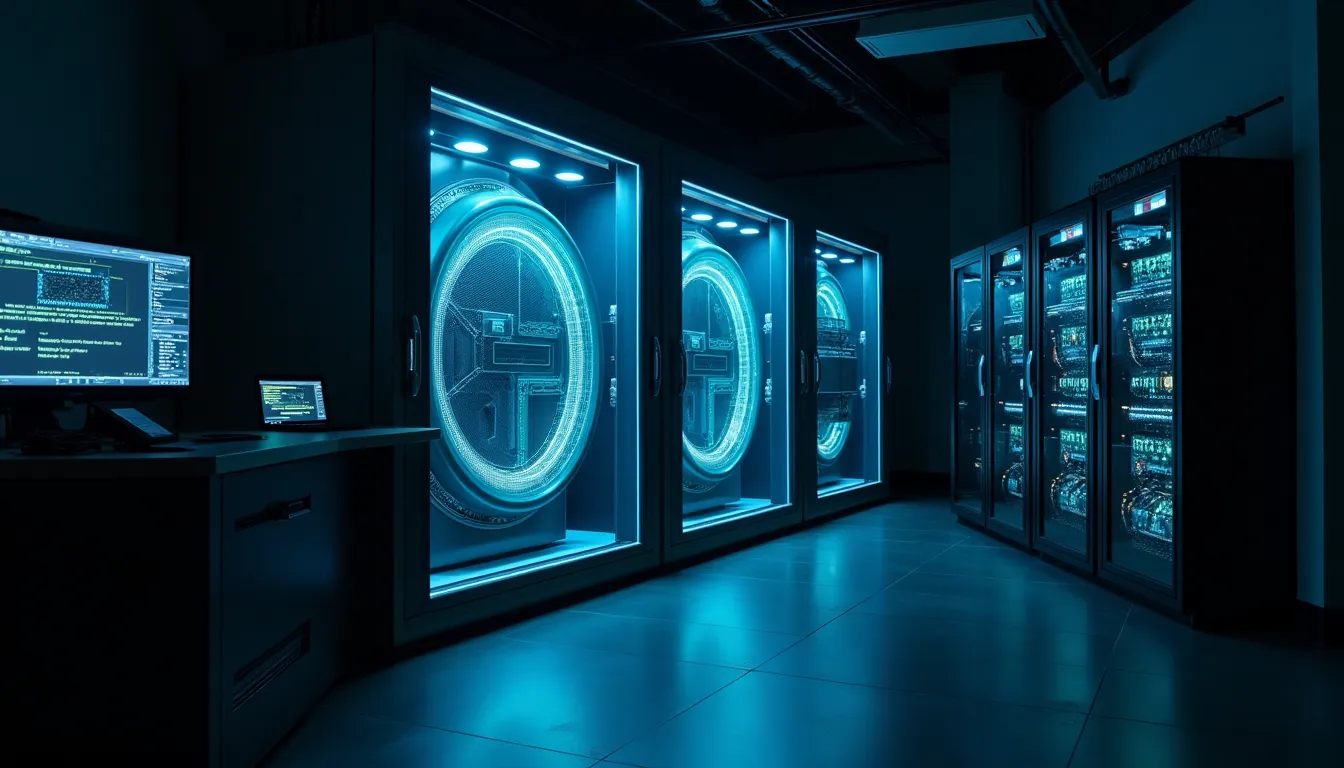
IQM Quantum Computers and NVIDIA demonstrated autonomous bring-up of a 20-qubit superconducting quantum processor using specialized vision-language models, replacing manual calibration work. The companies released QCalEval, an open benchmark of 243 calibration charts, on which NVIDIA's Ising models scored up to 19 points higher than general-purpose models.
Key Takeaways
- IQM and NVIDIA demonstrated autonomous bring-up of a 20-qubit superconducting quantum processor, replacing manual calibration work with agentic AI integrated into IQM's hardware control software
- The system automatically identifies out-of-bounds qubit parameters, adjusts measurement ranges, and generates plain-English audit logs, enabling human verification of calibration decisions
- QCalEval benchmark released with 243 calibration charts across 22 experiment types; NVIDIA's specialized Ising models scored up to 19 points higher than general-purpose vision-language models on the public leaderboard
- Edge deployment on NVIDIA DGX Station allows quantum labs to run calibration locally in cryogenic facilities without sending raw experimental data to external cloud infrastructure
- Autonomous calibration addresses operational bottlenecks as quantum processors scale, but concentrates control logic in NVIDIA software stacks and raises governance questions for defense and surveillance applications
IQM Quantum Computers and NVIDIA have demonstrated autonomous bring-up of a 20-qubit superconducting quantum processor, replacing the time-intensive manual calibration work that has long been a bottleneck in quantum hardware development. The breakthrough integrates specialized vision-language models directly into IQM's proprietary hardware control software, enabling an autonomous AI agent to analyze raw tuning charts, determine parameter adjustments, and execute calibration routines across all physical qubits without direct human intervention.
How the Autonomous Calibration System Works
The agentic AI stack analyzes raw experimental tuning charts, autonomously determines optimal parameter adjustments, and executes dynamic bring-up routines across all 20 physical qubits of an IQM superconducting processor. The system operates with built-in safeguards: it automatically identifies out-of-bounds qubit parameter settings and dynamically adjusts measurement parameter ranges on its own. Crucially, the workflow generates plain-English diagnostic logs explaining each calibration decision, enabling human engineers to audit and verify every step after the fact—a transparency mechanism that addresses operational and security concerns surrounding autonomous control of quantum hardware.
The deployment architecture supports edge execution without dependence on centralized cloud infrastructure. The open-weights Ising models can be compressed for deployment on local edge hardware such as the NVIDIA DGX Station, enabling quantum labs to run the calibration engine inside cryogenic facilities without sending raw experimental data to outside data centers. This design is particularly relevant for research organizations and governments concerned about data sovereignty and intellectual property leakage during quantum hardware development.
QCalEval: Standardizing AI-Driven Quantum Calibration
To establish a standardized benchmark for evaluating AI models in quantum processor bring-up, IQM and NVIDIA co-authored QCalEval, an open benchmark featuring 243 calibration charts across 22 experiment types drawn from real superconducting hardware and simulated neutral-atom systems. Each chart in the dataset presents six standardized diagnostic questions evaluating a model's ability to identify parameter anomalies and select appropriate corrective actions.
The benchmark results reveal a significant performance gap between specialized and general-purpose models. On the public QCalEval leaderboard, NVIDIA's specialized Ising Calibration models scored up to 19 points higher than general-purpose vision-language models. This performance differential reflects the deep domain knowledge required to interpret quantum calibration charts—a specialized chart type that general-purpose models trained on internet-scale image and text data have not encountered at scale during pretraining.
The benchmark release carries practical implications for the quantum computing field. By publishing 243 representative charts and establishing a standardized scoring methodology, the open QCalEval benchmark creates a foundation for other quantum hardware vendors and AI model developers to measure and improve their calibration systems against a common standard. The benchmark is hosted on a public leaderboard, establishing a venue for tracking progress as the field evolves.
Operational Significance and Strategic Implications
Autonomous qubit calibration addresses a genuine operational constraint in quantum hardware scaling. Manual tuning of superconducting qubits requires specialized expertise—calibration engineers must interpret complex charts showing qubit resonance frequencies, coupling strengths, and measurement fidelities, then adjust control parameters iteratively. As quantum processors scale from 20 qubits to hundreds or thousands, this manual bottleneck becomes prohibitively expensive and slow. The deployment of agentic AI calibration eliminates this engineering bottleneck by enabling systems to self-calibrate during bring-up.
However, the shift to autonomous calibration introduces governance questions, particularly for applications in defense, surveillance, and cryptography. Replacing human calibration specialists with an automated agent removes a human checkpoint in the control loop over quantum hardware—even with audit logs included in the system design. This concentration of control in software creates new attack surfaces and decision-making accountability challenges that security teams and compliance officers will need to evaluate.
The technical architecture also reflects broader consolidation trends in quantum-AI infrastructure. IQM's integration of the agentic AI stack directly into its hardware control software means that quantum lab operators must adopt NVIDIA's Ising Calibration models and CUDA-Q platform to achieve autonomous bring-up. This creates operational dependency—quantum hardware vendors working with IQM must run NVIDIA software stacks, and regulatory regimes governing quantum technology may need to assess whether this concentration poses supply chain or sovereignty risks.
Context: NVIDIA's Quantum Strategy
This calibration breakthrough extends NVIDIA's broader expansion from graphics processors into quantum control software infrastructure. The company has built CUDA-Q as a unified programming platform spanning classical and quantum workloads, positioning NVIDIA not just as a GPU supplier but as the default software stack for hybrid AI-quantum systems. By releasing specialized Ising Calibration models and contributing to industry benchmarks like QCalEval, NVIDIA is establishing itself as an authority in quantum software even as it maintains its traditional role as compute accelerator hardware supplier.
The timing of this announcement alongside related NVIDIA integrations in the quantum industry suggests a coordinated industry shift toward GPU-accelerated quantum control. As qubit counts increase, quantum error correction will require real-time, low-latency feedback loops between quantum processors and classical GPUs. Systems capable of meeting these performance requirements—sub-microsecond latencies and high throughput—are becoming essential infrastructure, and NVIDIA's position as the dominant GPU supplier places it at the center of this evolving stack.
Industry Adoption and Competitive Outlook
The release of QCalEval as an open benchmark creates an opportunity for other AI model developers and quantum hardware vendors to compete on calibration performance. However, NVIDIA's 19-point performance advantage on the leaderboard reflects the value of models specifically designed for quantum calibration charts, suggesting that vendors seeking to match NVIDIA's capabilities will need to invest in specialized model development rather than relying on general-purpose foundation models.
Watch whether other quantum hardware makers adopt NVIDIA's Ising models or develop competing calibration AI systems. The fragmentation or consolidation of this layer will likely determine interoperability as superconducting QPUs scale past hundreds of qubits. A unified calibration standard would simplify deployment across different hardware platforms, but vendor incentives often diverge from standardization goals. The QCalEval public leaderboard will serve as a visible indicator of this competitive and collaborative dynamic.
Sources
- Quantum Computing Report: IQM and NVIDIA Automate 20-Qubit Chip Calibration via NVIDIA Ising Vision-Language Models and QCalEval Benchmark
- Quantum Computing Report: Quandela Demonstrates Live Hybrid Photonic GPU-QPU Architecture via NVIDIA NVQLink at GTC Berlin
- Quantum Computing Report: Qblox Achieves Sub-4 Microsecond Latency Integrating NVIDIA DGX Spark and RTX PRO 6000 Blackwell via NVQLink
- MachineHours Encyclopedia: The GPU Revolution — From Graphics to Artificial Intelligence
- MachineHours Encyclopedia: AI in Real Estate — How Artificial Intelligence is Transforming Property Markets
Frequently Asked Questions
What did IQM and NVIDIA announce?
They demonstrated agentic AI calibration of a 20-qubit IQM superconducting quantum processor using NVIDIA's Ising vision-language models, which autonomously analyzed tuning charts and executed bring-up routines across all 20 qubits.
What is QCalEval?
QCalEval is an open benchmark co-authored by IQM and NVIDIA featuring 243 calibration charts across 22 experiment types, used to score how well AI models diagnose quantum hardware parameter anomalies.
How does this relate to Quandela and Qblox?
Both companies separately showcased integrations with NVIDIA's NVQLink interconnect, with Quandela demonstrating a hybrid photonic GPU-QPU workflow and Qblox achieving sub-4 microsecond control latency with Blackwell GPUs.
Why does this matter for defence and surveillance applications?
Autonomous calibration reduces reliance on human specialists for quantum hardware operation, a factor relevant to secure communications, sensing, or cryptanalysis programs, while concentrating control software within NVIDIA's stack raises sovereignty and dependency questions.
Get MachineHours in your inbox
AI compute and the machine economy in your inbox.