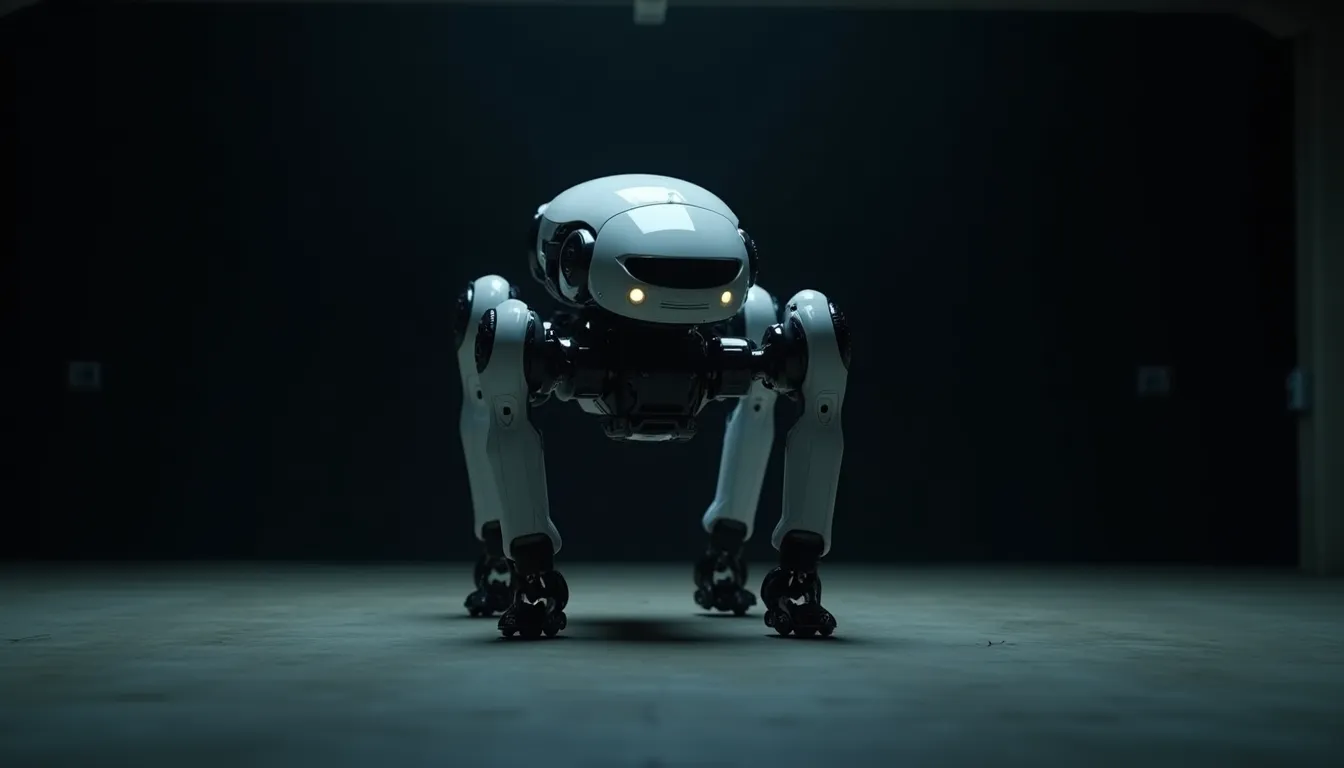
ICE is planning multimillion-dollar contracts for Boston Dynamics Spot robots for surveillance and patrol. Meta is simultaneously deploying robots inside its data centers.
Key Takeaways
- ICE plans to spend millions of dollars on Boston Dynamics Spot robots for surveillance and patrol, per 404 Media procurement documents.
- Meta is running experiments deploying robots inside its data centers to perform inspection and hardware fault-detection tasks, Wired reported on August 28.
- IEEE Spectrum covered the Ollobot AI companion robot on August 25, highlighting a third deployment context: intimate domestic settings.
- No federal statute in the U.S. currently governs how law enforcement agencies may deploy robotic systems or defines required human oversight.
- Boston Dynamics has a published policy against weaponising Spot, but the company has not publicly commented on the ICE procurement.
U.S. Immigration and Customs Enforcement is planning to spend millions of dollars on Boston Dynamics Spot quadruped robots for surveillance and patrol operations, according to 404 Media, reigniting a long-running debate over the use of robotic systems in law enforcement and the absence of a clear regulatory framework governing their deployment.
What Happened
According to 404 Media, procurement documents show ICE intends to contract for Boston Dynamics Spot robots, the four-legged machines that have become a flashpoint in discussions about autonomous systems and civil liberties since their first public deployments in 2019. The agency did not disclose specific contract values publicly, but 404 Media reported the planned spending runs into the millions of dollars. Spot units would be used in enforcement contexts, which critics argue raises serious questions about accountability, human oversight, and the legal basis for robotic policing in immigration operations. Boston Dynamics has previously stated that Spot must not be used as a weapon, but the company has not publicly commented on the ICE procurement as of the 404 Media report.
In a separate but parallel development, Wired reported on August 28 that Meta has been running experiments deploying robots inside its data centers to carry out inspection and maintenance tasks. Meta's program, still in an experimental phase, aims to use robots to navigate server rows, identify hardware faults, and reduce reliance on human workers for repetitive infrastructure tasks. Wired described the initiative as part of Meta's broader effort to automate its physical infrastructure operations, with the company testing multiple robotic platforms. The data center deployment represents a commercial-sector model for robot integration that operates under a very different set of oversight norms than government enforcement use.
On August 25, IEEE Spectrum covered the Ollobot, an AI companion robot designed for home use that is entering a growing consumer segment. The Ollobot is positioned as a social and emotional support device, illustrating how robotic systems are now entering intimate domestic settings - a context where regulatory guidance is even thinner than in commercial or government deployments.
Why It Matters
The ICE procurement crystallises a policy gap that has been widening for several years. There is currently no federal statute in the United States that specifically governs how law enforcement agencies may deploy autonomous or semi-autonomous robotic systems, what data they may collect, or how human operators must remain in the decision loop. The Boston Dynamics Spot robots ICE is pursuing are not autonomous weapons, but their use in enforcement contexts by a federal agency operating in legally contested immigration territory raises distinct accountability questions that existing law does not clearly address.
Meta's data center experiment sits at the other end of the spectrum: a private-sector deployment with commercial motivations, minimal public safety implications, and no direct coercive capacity. But both stories together illustrate how quickly robotic systems are moving from demonstration stages into operational settings - faster, arguably, than any coherent governance structure is forming around them. Those tracking the equity market implications of robotics deployment will note that institutional adoption across both government and hyperscale infrastructure is accelerating, with or without regulatory clarity. The Ollobot story adds a third axis: consumer companion robots entering homes represent a category where data privacy frameworks are the primary available tool, and those frameworks were not designed with embodied AI in mind.
Background
Boston Dynamics' Spot quadruped robot has been at the centre of law enforcement robot debates since at least 2021, when the New York Police Department trialled the machine before public backlash led to the contract being ended. The company's humanoid platform, Atlas, documented in the Boston Dynamics Atlas Humanoid Robot encyclopedia entry, represents the more advanced end of Boston Dynamics' engineering - but it is the more accessible Spot that has found its way into government procurement pipelines. Boston Dynamics has maintained public-facing use policies prohibiting weaponisation, though enforcement of those policies against government buyers remains an open question.
The broader industrial robot context is covered in Industrial Robots - How Machines Transformed Manufacturing, which traces the shift from fixed factory automation to mobile, general-purpose platforms now entering sensitive operational environments.
What to Watch
The ICE procurement will likely draw scrutiny from civil liberties organisations, and it may prompt legislative activity in Congress given the politically charged nature of immigration enforcement. Whether Boston Dynamics publicly addresses the contract terms - particularly its stated prohibition on weaponisation - will be a meaningful signal about how robotics companies navigate government sales. On the Meta side, watch for the company to scale its data center robot program and whether competitors including Google and Amazon accelerate similar internal deployments. For companion robots like Ollobot, the relevant regulatory thread to track is how the FTC and state-level consumer protection bodies approach data collection by home robots, a question that remains largely unanswered heading into late 2026.
- Boston Dynamics Spot is a quadruped robot platform used in industrial inspection, law enforcement trials, and now proposed federal immigration enforcement contexts.
- Boston Dynamics has a published use policy stating that Spot must not be weaponised or used to intimidate people, though policy enforcement against government buyers is untested.
- The Atlas humanoid robot, Boston Dynamics' flagship research platform, is a separate product from Spot and is not involved in the ICE procurement.
- Law enforcement robot deployments in the U.S. lack a governing federal statute, leaving accountability frameworks to agency policy and, in some cities, local ordinance.
Sources
- 404 Media: ICE Plans to Spend Millions on Boston Dynamics Dog Robots
- Wired: Inside Meta's Push to Put Robots to Work in Data Centers
- IEEE Spectrum: AI Companion Robots Are Closing the Human Connection in Modern Homes
- MachineHours Encyclopedia: Boston Dynamics Atlas Humanoid Robot
- MachineHours Encyclopedia: Industrial Robots — How Machines Transformed Manufacturing
Frequently Asked Questions
What are ICE's plans for Boston Dynamics Spot robots?
According to 404 Media, procurement documents show ICE intends to spend millions of dollars contracting for Boston Dynamics Spot quadruped robots to use in surveillance and patrol operations related to immigration enforcement.
What is Meta doing with robots in its data centers?
Wired reported on August 28 that Meta is running experimental deployments of robots inside its data centers to inspect server hardware, identify faults, and reduce reliance on human workers for repetitive maintenance tasks.
Is there a law governing how U.S. agencies can use robots like Spot?
No federal statute specifically governs law enforcement use of robotic systems. Accountability currently depends on agency policy and, in some jurisdictions, local ordinances - a gap that the ICE procurement has brought back into focus.
Has Boston Dynamics commented on the ICE contract?
Boston Dynamics has not publicly commented on the ICE procurement as of the 404 Media report. The company maintains a use policy prohibiting Spot from being weaponised or used to intimidate people.
What is the Ollobot?
The Ollobot is an AI companion robot designed for home use, covered by IEEE Spectrum on August 25. It sits in a growing consumer segment where regulatory guidance on data privacy and safety is limited.
Get MachineHours in your inbox
AI compute and the machine economy in your inbox.