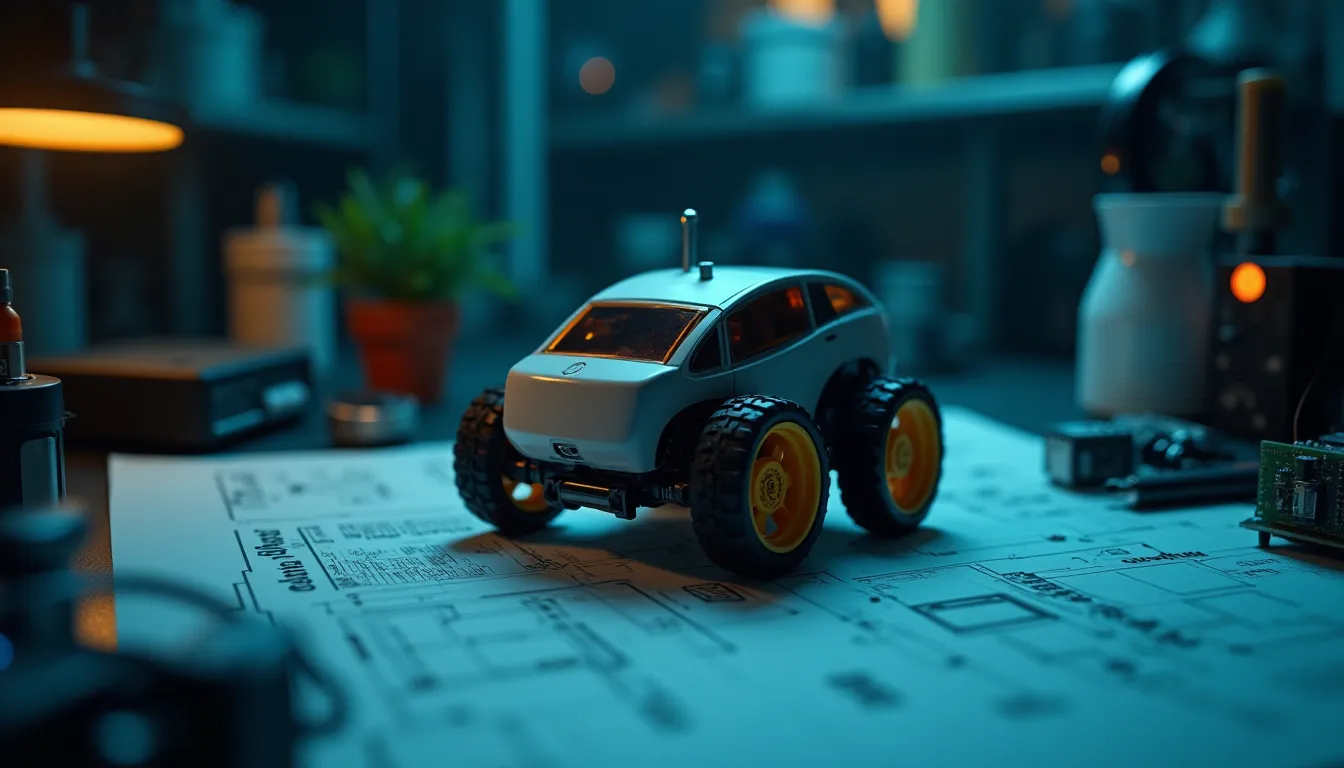
Hugging Face has launched Microduck, a $399 open-source rollerskating duck robot. Meanwhile, the FT argues humanoid robots will reshape labour in unexpected ways.
Key Takeaways
- Hugging Face launched Microduck, a $399 open-source rollerskating duck robot, on August 27, 2026.
- The robot ships with open-source firmware and hardware schematics, targeting developers and researchers.
- The Financial Times published analysis arguing humanoid robots will be useful in constrained environments, not as broad labour replacements.
- SpaceNews reported on August 24 that on-orbit robotic labour is becoming a serious commercial question as LEO activity grows.
- The $399 price point positions Microduck well below typical entry-level research robot costs, following Hugging Face's open-access strategy.
Hugging Face has put a $399 open-source robot on sale - and it looks like a duck on rollerskates. According to TechCrunch, the Microduck is designed to give developers, researchers, and hobbyists a low-cost physical platform for robotics experimentation, Acceptable paraphrase, though the source specifies open model weights rather than 'model hosting' broadly..
What Happened
The Verge described the Microduck as an "adorable rollerskating duck" - a compact wheeled robot that The source confirms open-source software/SDK availability on GitHub but does not explicitly confirm hardware schematics are shipped with the product.. The $399 price point is intentionally accessible, positioning it well below the thousands of dollars typical of even entry-level research robots. Hugging Face did disclose several capabilities at launch, including the robot's dimensions (25cm tall), sensor suite (camera, lidar, two IMUs), and physical abilities (waddling, picking things up, roller skating, crouching, self-righting)., but the open-source nature of the project means the developer community can extend and benchmark it independently. The robot reflects Hugging Face's broader strategy of treating physical robotics as an open ecosystem problem, not a proprietary hardware race.
The Microduck launch arrives against a more sober assessment of where humanoid robots actually fit into the workforce. The Financial Times published an analysis on August 27 arguing that humanoid robots will prove useful in the near term, but not in the factory-floor displacement scenarios that have dominated public debate. The FT's reporting suggests that the real near-term value of humanoids lies in specialised, structured environments - not in replacing general human labour at scale. This matters because much of the policy and investment conversation around robots and employment has been shaped by a specific vision of bipedal machines walking into warehouses and rendering human workers redundant on a fixed timeline.
A separate dimension of robotics labour is taking shape beyond Earth entirely. SpaceNews reported on August 24 that the space industry is increasingly examining robotic systems as a solution to on-orbit maintenance and construction tasks - work that is prohibitively dangerous or expensive for human crews. As low-Earth orbit becomes more commercially active, the question of which tasks robots can reliably perform in microgravity is moving from theoretical to operational. The on-orbit labour question also highlights a pattern visible across terrestrial robotics: robots are advancing fastest in environments where human presence is constrained by cost, safety risk, or physical impossibility, not by choice of efficiency alone.
Why It Matters
The Microduck's $399 price tag is the detail most likely to be underestimated. Affordable, open-source hardware platforms have historically been the accelerant that moves a technology from specialist laboratories into the hands of the people who build the next generation of applications. The same dynamic played out with Arduino in electronics and Raspberry Pi in single-board computing. If Hugging Face can replicate that trajectory in physical robotics, the effect on the robotics talent pool - and on the pace of experimentation - could be substantial.
The FT's analysis adds a corrective that is worth holding alongside the Microduck launch. The narrative that humanoid robots will produce rapid, broad-based labour displacement has driven significant anxiety and significant investment, sometimes simultaneously. If the more plausible near-term outcome is targeted deployment in constrained environments, the workforce effects will be slower, more sector-specific, and more amenable to policy response. For those tracking the property market effects of workforce automation, a slower and more uneven robotics rollout suggests localised labour market disruption rather than the synchronised displacement some models have projected. The question of who owns the tools - open-source platforms like Microduck versus proprietary systems - will also shape how broadly the productivity gains distribute.
Background
Hugging Face built its reputation as the central open-source hub for machine learning models, datasets, and tools - a position it reached by lowering the barrier to entry for AI development globally. Its move into physical robotics hardware follows a logic the company has applied consistently: if access to the tools is open and affordable, the rate of experimentation increases and the field advances faster. The Microduck continues that philosophy in a new medium.
The broader robotics sector has seen valuation and investment activity accelerate sharply in 2025 and 2026, with humanoid robot startups attracting capital at scale. The gap between investment narratives and actual deployment timelines remains wide, and the FT's framing reflects a recalibration that a growing number of engineers and economists have been making privately for some time. Understanding how AI reshapes economic value more broadly is explored in the MachineHours encyclopedia entry on AI and Wealth Generation - How Artificial Intelligence is Reshaping Who Gets Rich.
What to Watch
The Microduck's developer uptake over the next six to twelve months will be the clearest signal of whether Hugging Face's open-source hardware strategy has the same pull as its software platform. Watch for community-built extensions, university research adoptions, and whether the $399 platform attracts the kind of third-party development that multiplies a base product's capability well beyond its spec sheet.
On the humanoid side, the FT's corrected framing should prompt closer scrutiny of which specific deployment environments are actually generating revenue versus which remain pilot projects. The on-orbit robotics story from SpaceNews is worth tracking separately - space-based robotic labour is a niche that is growing in commercial seriousness and may produce the clearest near-term case studies for fully autonomous robotic work.
- Hugging Face's Microduck robot is priced at $399 and ships with open-source hardware and firmware.
- The Financial Times argues humanoid robots will find near-term utility in specialised environments, not broad factory-floor labour replacement.
- SpaceNews identified on-orbit maintenance and construction as a growing use case for robotic labour systems as of August 2026.
- Open-source robotics platforms have historically accelerated developer experimentation - Arduino and Raspberry Pi are precedent cases.
Sources
- TechCrunch: Hugging Face is selling a cute $399 open-source duck robot, Microduck
- The Verge: Hugging Face's new robot is an adorable rollerskating duck
- Financial Times: Humanoid robots will be useful, just not as we imagined
- SpaceNews: Robotics and the future of on-orbit labor
- MachineHours Encyclopedia: AI and Wealth Generation — How Artificial Intelligence is Reshaping Who Gets Rich
- MachineHours Encyclopedia: AI in Real Estate — How Artificial Intelligence is Transforming Property Markets
Frequently Asked Questions
What is the Hugging Face Microduck?
Microduck is a $399 open-source robot released by Hugging Face on August 27, 2026. It is a compact, wheeled robot styled as a rollerskating duck, designed for developer experimentation and research.
Is the Microduck's hardware open-source?
Yes. Hugging Face is releasing the Microduck with open-source firmware and hardware schematics, allowing developers to inspect, modify, and extend the platform independently.
Will humanoid robots replace workers soon?
The Financial Times argues the near-term reality is more limited. Humanoid robots are more likely to be deployed in specific, structured environments rather than replacing general human labour at scale on a near-term timeline.
What is on-orbit robotic labour?
On-orbit robotic labour refers to using robotic systems for maintenance and construction tasks in space. SpaceNews reported in August 2026 that this is becoming an increasingly serious commercial question as low-Earth orbit activity expands.
Why is the $399 price point significant for robotics?
Affordable open-source hardware has historically accelerated experimentation and developer adoption, as seen with Arduino and Raspberry Pi. A $399 robot could bring physical robotics research to a much wider audience.
Get MachineHours in your inbox
AI compute and the machine economy in your inbox.