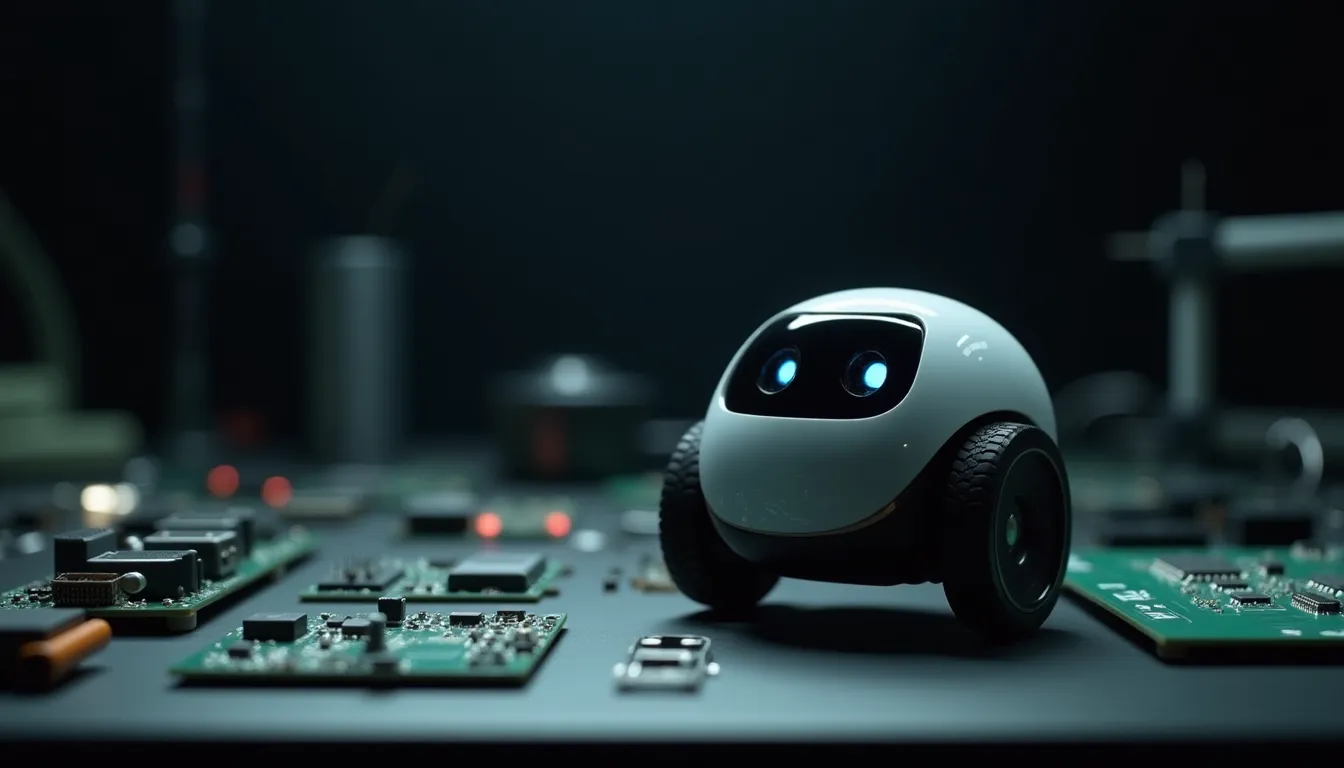
Hugging Face is selling Microduck, a $399 open-source rollerskating duck robot, as new reporting challenges assumptions about humanoid robots replacing human workers at scale.
Key Takeaways
- Hugging Face is selling Microduck, an open-source rollerskating duck robot, for $399 - undercutting most developer robotics kits on the market.
- The Financial Times argues humanoid robots will prove useful but not as direct human labour replacements at the scale the industry has projected.
- Chinese manufacturers showcased robots boxing, mixing drinks, and competing publicly, but real factory performance metrics remain largely undisclosed.
- SpaceNews identified on-orbit robotics as one domain where automation already has an unambiguous economic case over human labour due to cost and safety.
- Hugging Face's open-source hardware strategy mirrors its approach to AI model weights, aiming to grow a developer community around low-cost physical platforms.
Hugging Face has put a $399 open-source robot duck on sale, and it rollerskates. According to TechCrunch, the device - named Microduck - is designed as an accessible, hobbyist-friendly entry point into robotics development, continuing Hugging Face's strategy of pushing open hardware as aggressively as it pushes open AI models.
What Happened
The Verge reported that Microduck is an "adorable rollerskating duck" built around open-source principles, positioning it as a platform for developers and researchers who want a low-cost hardware testbed without the five-figure price tags attached to most commercial robotics kits. At $399, it undercuts nearly every comparable developer-facing robot on the market. Hugging Face has not disclosed production volumes or shipping timelines for the initial batch.
The launch arrives on the same day that the Financial Times published a pointed analysis arguing that humanoid robots will prove useful, but not in the ways the industry has been promising. The FT's framing is direct: the labour-replacement narrative that has dominated investor pitches and press releases does not match the operational reality of deploying bipedal machines in workplaces designed for humans. Dexterity, edge cases, and the sheer variability of human tasks continue to slow deployment at meaningful scale.
A separate Financial Times investigation from earlier this week examined China's humanoid robot showcase events, where machines were shown boxing, mixing cocktails, and performing in competitive contexts. The report asked whether these demonstrations translate into genuine performance advantages over human workers in uncontrolled environments - and found the answer remains uncertain. Chinese manufacturers including Unitree and others have accelerated public demonstrations, but performance metrics in real factory settings are rarely disclosed.
Meanwhile, SpaceNews published an analysis of robotic labour in orbital environments, where the calculus is different: human labour in space costs orders of magnitude more than on the ground, and the safety risks make automation not a competitive choice but a necessary one. On-orbit robotics represents one of the few domains where cost and risk considerations already favour machines unambiguously over people.
Why It Matters
These four stories, arriving within days of each other, expose the gap between robotics as spectacle and robotics as labour infrastructure. Microduck is charming and cheap, but its significance is structural: Hugging Face is doing to robotics hardware what it did to model weights - commoditising access and inviting a developer community to iterate. That strategy produced real compounding effects in AI; whether it replicates in physical hardware remains to be tested.
The FT's scepticism about humanoid labour replacement is worth taking seriously. The humanoid robot pitch rests on a single compelling idea: a machine shaped like a person can work in spaces built for people, without retooling factories or warehouses. But that pitch has consistently underestimated the cognitive and physical flexibility required for even routine human jobs. The workforce displacement story that has driven robotics valuations skyward may be arriving more slowly - and differently - than projected. Investors tracking the equity market implications of robotics deployment should note the divergence between demo-stage performance and production-ready utility.
Background
The humanoid robot sector has attracted significant capital on the premise that bipedal, human-proportioned machines can operate in existing infrastructure without costly retrofits. That form-factor advantage is real but has proven difficult to fully exploit: teaching a robot to navigate a warehouse aisle is far simpler than teaching it to handle the full range of objects, surfaces, and unexpected situations a human worker encounters in a shift. Companies including Boston Dynamics, whose Atlas platform remains a reference point for bipedal capability, have spent years on locomotion problems that still require significant engineering resources.
At the affordable end, the Unitree R1 entered the market at $5,900, itself considered a price milestone. Microduck at $399 is not competing in that space - it is a developer toy with educational and research value, not a warehouse candidate - but it signals that the hardware cost curve in robotics is compressing across all segments.
What to Watch
Three threads deserve attention over the next six months. First, whether Hugging Face's open-source hardware community produces meaningful software contributions around Microduck - the robot's value multiplies if developers build and share control systems openly. Second, whether any of the Chinese humanoid manufacturers showcased in the FT's reporting disclose verifiable productivity metrics from actual production deployments rather than staged events. Third, the on-orbit robotics market identified by SpaceNews is small today but structurally favourable for automation; watch for NASA and commercial station operators to announce robotics procurement decisions as the cost of human spaceflight continues to rise. The European manufacturing sector is also accelerating its evaluation of humanoid deployment, which will provide a useful dataset on real-world performance independent of Chinese or US promotional narratives.
- Humanoid robots are designed with human-like proportions to operate in environments built for people, eliminating the need to retool existing infrastructure.
- The global humanoid robot market is projected to reach multi-billion dollar scale, though timelines for mass deployment have repeatedly been pushed back.
- Key technical barriers include dexterous manipulation, real-time adaptation to unstructured environments, and battery life sufficient for full work shifts.
- A single humanoid robot design capable of performing diverse tasks across industries would represent a different labour cost model than specialised industrial arms.
Sources
- TechCrunch: Hugging Face is selling a cute $399 open-source duck robot, Microduck
- The Verge: Hugging Face's new robot is an adorable rollerskating duck
- Financial Times: Humanoid robots will be useful, just not as we imagined
- Financial Times: China's robots rock, box and mix drinks. Can they outperform humans?
- SpaceNews: Robotics and the future of on-orbit labor
- MachineHours Encyclopedia: Humanoid Robots — The Race to Build Human-Form Machines
Frequently Asked Questions
What is Hugging Face's Microduck robot?
Microduck is a $399 open-source rollerskating duck robot sold by Hugging Face, designed as an affordable hardware platform for developers and researchers interested in robotics.
Will humanoid robots replace human workers?
The Financial Times argues humanoid robots will be useful but not in the direct labour-replacement role the industry has promoted. Real-world dexterity and adaptability remain significant barriers to at-scale deployment.
How do Chinese humanoid robots compare to human workers?
Chinese manufacturers have staged public demos of robots boxing and mixing drinks, but the Financial Times found that verified performance data from uncontrolled production environments is rarely disclosed.
Where is robotics labour replacement already economically justified?
SpaceNews identified on-orbit environments as a domain where automation is already economically and logistically superior to human labour, due to the extreme cost and safety risks of human spaceflight.
How does Microduck's price compare to other humanoid robots?
At $399, Microduck is far below developer-facing humanoid platforms. The Unitree R1, considered an affordable milestone, launched at $5,900.
Get MachineHours in your inbox
AI compute and the machine economy in your inbox.