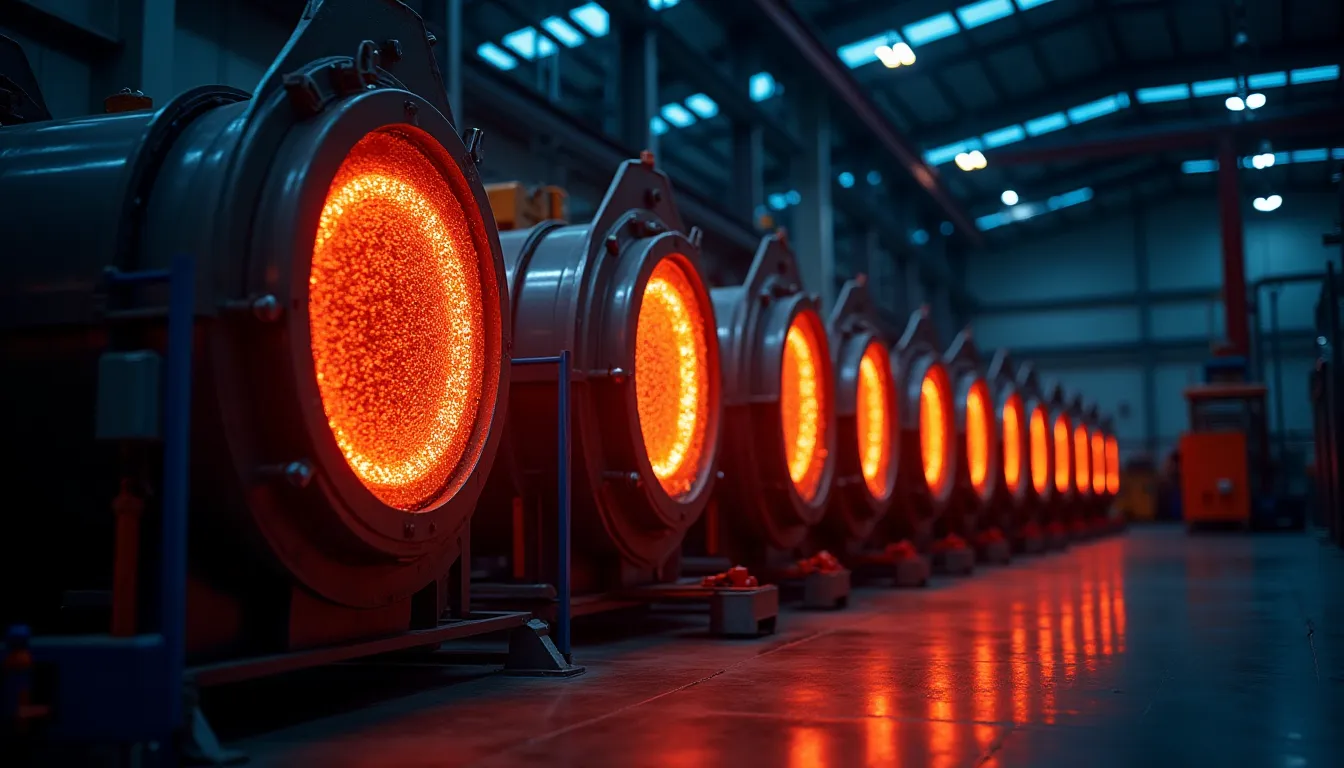
Holcim, one of the world's largest cement producers, has partnered with startup Electrified Thermal Solutions to become the first cement company to deploy thermal batteries for industrial heat generation, marking a significant test of electrified heat technology in one of the world's most carbon-intensive industries.
Key Takeaways
- Holcim is the first cement company to deploy thermal batteries for industrial heat, replacing fossil fuel combustion in kilns
- Thermal batteries store electricity as heat in dense materials and release it on demand, enabling renewable electricity to power high-temperature industrial processes
- Cement production accounts for 8% of global CO2 emissions, making it one of the largest industrial sources; thermal batteries address the fuel component of these emissions
- The economics of thermal battery technology depend on access to cheap off-peak electricity, which is becoming more available as renewable generation grows
- Success in cement could accelerate thermal battery adoption across heavy industries including steel, glass, and chemicals production
- The deployment signals that industrial decarbonization is expanding into sectors previously considered too difficult or costly to electrify
Holcim, one of the world's largest cement producers, has become the first company in its sector to deploy thermal battery technology for industrial heat generation. The partnership with startup Electrified Thermal Solutions represents a concrete test of whether electrified heat can compete at industrial scale in a sector that accounts for roughly 8 percent of global CO2 emissions.
A First for Global Cement
Holcim's deployment marks the first adoption of thermal batteries in the global cement industry, where kilns have historically relied on fossil fuels to generate the extreme heat required for production. Thermal batteries store electrical energy as heat and release it on demand, replacing gas or coal-fired systems. This shift is notable because cement kilns operate continuously at very high temperatures, creating a demanding operating environment that has traditionally discouraged electrification efforts.
The deployment signals a broader industrial trend: decarbonization pressure is now reaching sectors previously considered too technically difficult or costly to electrify. Cement is among the most carbon-intensive industries on the planet, and any viable electrified heat technology that proves itself there has a potential pathway into steel, glass, and chemicals production. The commercial signal matters as much as the technical one: a global building materials company adopting thermal batteries gives investors and other industrial operators a reference point they did not have before.
How Thermal Batteries Work in Industrial Settings
Thermal battery technology converts electricity to heat stored in dense materials such as firebrick. The stored heat is then released on demand to power industrial processes. For cement production, this eliminates the need for direct combustion of fossil fuels in the kiln itself. Instead, electricity—increasingly sourced from renewable generation—charges the thermal battery during periods of low-cost power or high renewable availability, and the stored heat powers production when needed.
The economics of thermal batteries depend heavily on access to cheap off-peak electricity, which is becoming more available as variable renewable generation grows. As power grids integrate larger shares of wind and solar capacity, periods of low-cost electricity are becoming more frequent and predictable. This creates favorable conditions for thermal battery economics, since operators can charge during these windows and draw heat continuously during production hours.
Industrial heat accounts for roughly 20 percent of global energy use, and decarbonizing it has proven more difficult than electrifying transport or power generation. Most industrial heat comes from direct combustion of fossil fuels—natural gas, coal, or oil—burned in furnaces, kilns, and boilers to reach the high temperatures required. Replacing this with renewable electricity requires either direct electric heating (which can be inefficient at very high temperatures) or thermal storage technologies that can hold heat reliably and release it in a controlled manner. Thermal batteries address this gap by storing heat in materials engineered to withstand repeated charge and discharge cycles without degradation.
The Scale and Significance of Cement Emissions
Cement production is responsible for approximately 8 percent of global CO2 emissions, making it one of the largest industrial sources worldwide. This outsized emissions footprint stems from two factors: the fuel required to generate kiln heat, and the chemical process of turning limestone into clinker, which releases CO2 as a byproduct. The thermal battery deployment addresses only the fuel component of cement's emissions profile, but that component is substantial. Eliminating fossil fuel combustion in cement kilns would represent a meaningful reduction in global industrial emissions.
Other carbon-intensive heavy industries face similar challenges. Steel production, glass manufacturing, and chemical processing all rely on high-temperature heat that is currently fossil-fuel dependent. If thermal batteries prove cost-competitive and reliable in cement, manufacturers in these sectors will likely accelerate adoption. This could create a cascading effect across heavy industry, with thermal battery deployment becoming standard practice rather than experimental.
Competitive Implications and Industry Watch
The Holcim-Electrified Thermal Solutions arrangement will be closely watched to see whether thermal batteries can maintain performance and cost competitiveness in continuous industrial operation. Cement kilns are among the most demanding industrial environments: they run 24/7, reach temperatures exceeding 1,400 degrees Celsius, and must maintain precise process control to produce consistent product quality. If the pilot deployment meets production targets and cost expectations, expect other cement and heavy industry players to move quickly toward similar arrangements.
The success of this deployment will also shape investment patterns in thermal battery technology. Electrified Thermal Solutions is a startup, meaning the company will need to scale manufacturing, reduce costs, and expand its customer base to achieve profitability and sustainability. A successful Holcim deployment creates a beachhead for customer acquisition in heavy industry and provides proof-of-concept that investors in thermal battery startups can point to when raising capital.
Broader Industrial Decarbonization Context
Holcim's move reflects mounting regulatory and market pressure on cement producers to reduce emissions. Many countries and regions have established climate targets that implicitly require heavy industry to decarbonize, and cement producers face increasing scrutiny from investors, customers, and policymakers. Concrete is a fundamental building material—global cement production exceeds 4 billion tons annually—so reducing its carbon footprint has outsized importance in achieving climate goals.
For Holcim specifically, becoming the first cement company to deploy thermal batteries is also a competitive positioning move. The company can market its products as produced with renewable heat, potentially commanding a premium in markets where customers prioritize low-carbon materials. This creates a commercial incentive that reinforces the climate imperative: reducing emissions becomes both environmentally necessary and economically rational.
Industrial electrification is now a primary focus of clean energy infrastructure investment, and thermal batteries represent a category of enabling technology that supports broader decarbonization goals. As the power grid continues to integrate renewable generation, electrified heat becomes increasingly feasible because the electricity powering thermal batteries can come from wind, solar, hydro, or other low-carbon sources.
What Success Looks Like
The Holcim deployment will need to clear several technical and commercial hurdles to be considered a success. The thermal battery system must maintain reliable heat delivery to the kiln across multiple charge-discharge cycles without performance degradation. Energy losses during charging, storage, and discharge must be minimal enough that the total system—including renewable electricity plus thermal battery—remains cost-competitive with conventional fossil fuel operation. The system must integrate seamlessly with existing kiln control systems and not disrupt production workflows.
If these conditions are met, thermal batteries could become a standard feature of next-generation heavy industry infrastructure worldwide. This would accelerate the decarbonization timeline for sectors that currently lack viable alternatives to fossil fuels, moving industrial emissions reduction from the theoretical to the practical domain.
Sources
- Canary Media: In a first, cement giant to tap thermal batteries for cleaner heat
- Canary Media: xAI has quietly built a massive battery at its Memphis data center hub
- Canary Media: Illinois revamps clean energy jobs training for a shifting economy
- Canary Media: Is it time to rethink the Northeast's cap-and-trade system?
- Carbon Brief: CCC: Heathrow expansion could push flights to '80% of UK emissions by 2050'
- MachineHours Encyclopedia: The Energy Cost of AI — Training Runs, Inference, and the Data Centre Power Crisis
- MachineHours Encyclopedia: Battery Technology — The Race to Power Robots and Electric Vehicles
Frequently Asked Questions
What is a thermal battery and how does it work in cement production?
A thermal battery stores electrical energy as heat, typically in dense materials like firebrick, and releases it on demand. In cement production, it replaces fossil fuel combustion in kilns, reducing CO2 emissions from one of the world's most carbon-intensive industrial processes.
Why did xAI build a battery system at its Memphis data center?
xAI's Memphis data center is one of the largest AI compute facilities in the US. The battery installation provides backup power and grid stabilization for the site, reflecting how AI operators now build significant energy infrastructure alongside their compute hardware.
What is the Regional Greenhouse Gas Initiative and why is it under scrutiny?
The Regional Greenhouse Gas Initiative is a cap-and-trade program covering northeastern US states. Critics argue its allowance prices are too low to drive deep emissions cuts, while supporters say it has generated billions for clean energy programs.
How could Heathrow expansion affect UK climate targets?
The UK's Climate Change Committee warned that Heathrow expansion could cause aviation to consume as much as 80 percent of the UK's remaining carbon budget by 2050, putting the government's approved third runway in direct tension with legally binding net-zero commitments.
What is Illinois doing to support clean energy workers?
Illinois is redesigning its clean energy jobs training programs to better align worker skills with growing demand in solar, wind, and battery storage industries, adjusting curricula as federal clean energy investment stimulates project pipelines across the Midwest.
Get MachineHours in your inbox
AI compute and the machine economy in your inbox.