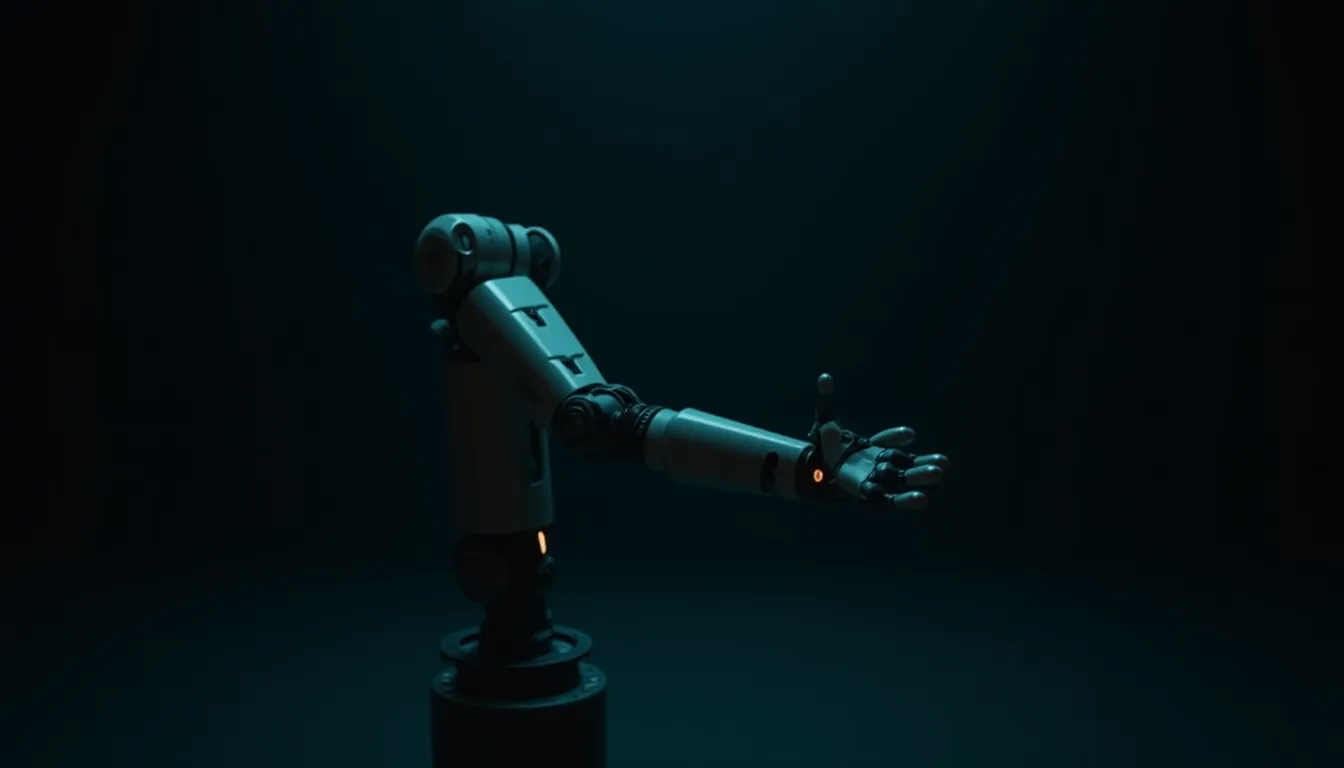
Genesis AI has unveiled Eno, a humanoid robot that deliberately avoids human aesthetics. Meanwhile, robot lawn mower makers and iRobot are competing for consumer automation dollars in 2026.
Key Takeaways
- Genesis AI revealed Eno, a robot that deliberately avoids human form, positioning it against Figure AI and Boston Dynamics humanoid designs.
- Wired's 2026 robot lawn mower roundup names TerraMow and Mammotion as leading options, reflecting a maturing consumer automation market.
- iRobot is offering 15% off via promotional code, suggesting price pressure as competition in autonomous home cleaning intensifies.
- Alibaba's Qwen-RobotSuite includes three embodied AI models covering manipulation, world modeling, and navigation for physical robots.
- Astrobotic unveiled its Griffin-1 lunar lander, extending robotic system development into environments where human presence is not viable.
Genesis AI has revealed a robot called Eno that largely moves away from the humanoid form, though its hands are designed to exactly match the form and function of human hands., according to The Verge, challenging the assumption that robots designed for human environments must look anything like a person. The disclosure arrives as the broader consumer robotics market sees intensifying competition, with manufacturers racing to automate tasks from lawn care to household cleaning.
What Happened
The Verge's report on Eno describes a machine built around functional geometry rather than the bipedal, two-armed silhouette that has dominated robotics product launches over the past two years. Genesis AI argues that humanoid robots don't need to look human, and that Eno is designed 'around human capability' rather than human appearance. Genesis AI disclosed plans to begin production and targeted customer deployments by the end of 2026, starting with manufacturing, laboratories, and logistics, followed by hospitals, hotels, and consumers.
On the consumer automation front, Wired published its 2026 roundup of the best robot lawn mowers, highlighting TerraMow and Mammotion as leading options for homeowners seeking to automate outdoor maintenance. The review reflects a maturing market where robotic outdoor tools are moving from novelty to mainstream household consideration, with multiple competing products now offering GPS-guided boundary mapping and obstacle avoidance without perimeter wire installation.
iRobot, the company best known for the Roomba vacuum, is meanwhile pushing consumer adoption through discounting, with Wired flagging a 15% promotional code available for iRobot products. Price reductions at this level suggest the company is working to maintain market share as competition in autonomous home cleaning intensifies.
In a separate development, MarkTechPost reported on Qwen-RobotSuite, a set of three embodied AI models from Alibaba's Qwen team covering vision-language-action manipulation, video world modeling, and navigation. The suite is designed to give physical robots more capable perception and decision-making foundations, which could accelerate the deployment of automation in warehouse, logistics, and light manufacturing roles - sectors that employ millions of workers globally.
Also this week, SpaceNews reported that Astrobotic unveiled its Griffin-1 lunar lander, a development that sits at the intersection of robotics and space infrastructure but signals ongoing investment in autonomous systems operating in environments where human presence is impossible or prohibitively expensive.
Why It Matters
Genesis AI's decision to move away from the humanoid template is more than aesthetic - it has direct implications for which jobs robots can practically displace and at what cost. A non-humanoid design optimised for specific task categories may reach commercial viability faster than general-purpose humanoids, which require complex balance and dexterity systems to perform even routine physical work. If that logic proves correct, labour substitution in targeted sectors could accelerate well ahead of current forecasts.
The consumer robotics picture tells a complementary story. Robot lawn mowers and autonomous vacuums are already displacing hours of weekly household labour, even if economists have not yet fully captured this in productivity statistics. As prices fall and reliability improves, the pool of households incorporating robotic tools into domestic routines will expand. Those tracking the property market effects of workforce automation will note that homes with integrated robotic systems are beginning to carry different maintenance cost profiles, a factor that may increasingly influence buyer decisions. Qwen-RobotSuite's release adds another layer: better AI foundations mean the gap between current consumer robots and genuinely capable labour-substituting machines is narrowing.
Background
The question of robot form factor connects to a broader debate about where automation creates economic value. The Robotics and Housing encyclopedia entry at MachineHours documents how construction robotics - another domain where human-shaped robots have limited utility - is projected to reduce building costs by 20 to 50 percent and construction time by 30 to 70 percent through precision assembly and reduced labour requirements. The lesson from construction automation is that purpose-built machines consistently outperform human-mimicking designs in structured task environments.
That pattern is now being tested in consumer and commercial robotics more broadly. Genesis AI's Eno and Alibaba's Qwen-RobotSuite both suggest that the next generation of deployable robots will be defined by task competence rather than anthropomorphic appearance, which has significant implications for how quickly these systems can be integrated into existing workplaces and homes.
What to Watch
Genesis AI has not disclosed a commercial timeline for Eno, making the company's next announcement - pricing, pilot deployments, or manufacturing partnerships - the key signal to monitor. On the AI model side, watch for third-party benchmarks of Qwen-RobotSuite against competing embodied AI frameworks from Google DeepMind and Physical Intelligence. In the consumer market, whether iRobot's discounting strategy stabilises its market position or signals deeper financial pressure will become clearer over the next two quarters. More broadly, the convergence of improved AI foundations, non-humanoid design thinking, and falling consumer price points suggests 2026 could be the year robotic labour substitution moves from pilot programs to measurable workforce impact in select sectors.
- Construction robotics is projected to reduce homebuilding costs by 20 to 50 percent compared to conventional labour-intensive methods.
- Automated construction approaches can cut building timelines by 30 to 70 percent through standardised manufacturing and precision assembly.
- Labour shortages in the construction industries of developed economies are a primary driver of interest in purpose-built robotic systems.
- Purpose-built robotic designs consistently outperform humanoid-form machines in structured, repetitive task environments.
Sources
- The Verge: The next humanoid robot might not look human at all
- Wired: The Best Robot Lawn Mowers (2026): TerraMow, Mammotion
- Wired: iRobot Promo Code: 15% Off
- MarkTechPost: Meet Qwen-RobotSuite
- SpaceNews: Astrobotic unveils Griffin-1 lunar lander
- MachineHours Encyclopedia: Robotics and Housing — How Construction Automation Could Solve the Housing Crisis
Frequently Asked Questions
What is Genesis AI's Eno robot and how is it different from other humanoid robots?
Eno is a robot designed by Genesis AI that abandons the bipedal, two-armed human form factor. Genesis AI argues human-shaped designs carry unnecessary mechanical constraints, and Eno uses functional geometry instead.
What is Qwen-RobotSuite and who made it?
Qwen-RobotSuite is a set of three embodied AI models developed by Alibaba's Qwen team. It covers vision-language-action manipulation, video world modeling, and navigation to improve robot perception and decision-making.
Which robot lawn mowers did Wired recommend for 2026?
Wired's 2026 roundup highlighted TerraMow and Mammotion as leading robot lawn mower options, noting GPS-guided boundary mapping and obstacle avoidance without perimeter wire installation.
Why does robot form factor matter for labour and employment?
Form factor determines which tasks a robot can perform at commercial scale. Non-humanoid designs optimised for specific tasks may reach viability faster than general humanoids, potentially accelerating labour substitution in targeted sectors.
Is iRobot offering any discounts in 2026?
Yes. As of June 2026, Wired flagged a 15% promotional code available for iRobot products, which the article interprets as a response to intensifying competition in the autonomous home cleaning market.
Get MachineHours in your inbox
AI compute and the machine economy in your inbox.