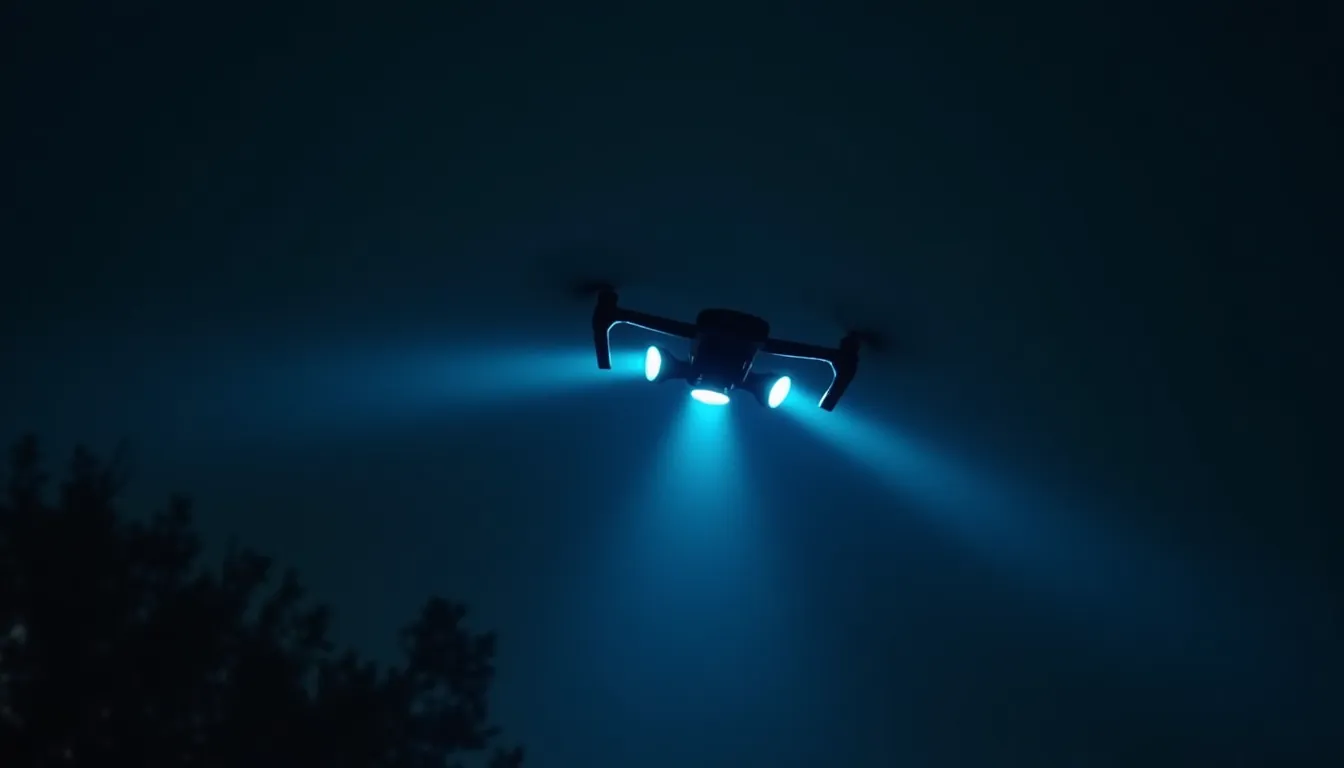
Traditional physical perimeter defenses like fences and gates are no longer effective against drone threats, forcing military installations and critical infrastructure to adopt layered counter-UAS systems, advanced sensors, and AI-driven detection. The economics of drone defense—destroying $50 drones with systems costing $15,000 to $4 million—presents a new strategic challenge.
Key Takeaways
- Traditional perimeter fences and gates are no longer effective defenses against drone threats, which operate in airspace beyond conventional boundary controls
- The economics of drone defense are asymmetric: $50 drones require $15,000 to $4 million systems to defeat, creating unsustainable cost ratios
- Modern facility security requires layered sensor integration, AI-driven threat classification, and unified operating pictures to discriminate between threat and non-threat drones
- Facility security must extend detection zones far beyond physical perimeters, with sufficient standoff distance to enable response before drone impact
- Critical infrastructure dependencies on distributed power, communications, and data center infrastructure expand security needs beyond single-facility boundaries
The traditional security model of "gates, guards and guns" has become structurally inadequate in an era when adversaries can bypass physical perimeters entirely through aerial incursion. Military installations, critical infrastructure facilities, and commercial space operations now face a threat environment that a taller fence or heavier gate cannot address, forcing a fundamental rethinking of facility security architecture.
The Collapse of Perimeter-Based Security Models
The shift stems from the proliferation of low-cost, readily available drone technology. Conflicts in Ukraine and Iran have highlighted how cheap, expendable drones allow adversaries to launch waves of attacks in an attempt to overwhelm defense systems. Unlike traditional ground-based threats that a perimeter fence can contain, drones operate in the airspace above facilities, making them immune to conventional boundary controls.
The economic calculus of drone defense creates a stark challenge. Adversaries deploy drones that cost as little as $50, yet destroying them requires systems costing anywhere from $15,000 to $4 million per round. As Jason Rahimitabar, Executive Vice President of LEXSO (Layered Extended Security Operations) at Constellis, stated: "You have all these cheap drones that can cost 50 bucks and you're mitigating it with something that's costing anywhere from $15,000, up to $4 million per round. The economics just doesn't work."
Real-world incidents demonstrate the immediacy of the threat. Barksdale Air Force Base was overflown by drones in multiple instances, highlighting one of the challenges of present-day security where defense must be built upward as well as outward. Although no damage occurred at Barksdale, the incident underscored that military installations in the continental United States face the same drone vulnerability as frontline installations abroad.
Detection, Classification, and Response Speed
The challenge extends beyond simply detecting drones. Drones are difficult to pick up with sensors or radar due to their maneuverability and small size, they don't follow a set flight path, and they don't have to stay a certain distance from the ground. This technical advantage means that traditional perimeter-monitoring approaches—watching for threats at the fence line—are obsolete.
To mitigate drone threats, counter-UAS measures and UAS tracking and detection must extend detection zones far beyond the perimeter, because drones can reach targets faster and from greater distances than ground-based intruders. Operators must detect airborne threats at sufficient standoff distance to have time to respond before a drone reaches its objective.
Quickly identifying whether a drone is actually a threat is critical, because not every drone is dangerous—facilities may have hobbyist drone pilots in nearby areas conducting harmless activities, but if a drone wanders off course or gets too close to the perimeter, it can trigger a security alert. Activating expensive counter-UAS measures against harmless civilian drones is both economically wasteful and a potential public relations liability.
Sensor Integration and Unified Operating Pictures
Modern facility security requires layered sensor architectures that can discriminate between threat and non-threat. Systems such as LEXSO integrate multiple sensing technologies including radar and LIDAR, and are built to be sensor-agnostic, providing real-time data through a unified operating picture that operators can use to quickly identify potential threats and decide how to respond.
A unified interface orchestrates multiple sensor types into a single layer, simplifying the operator interface to enable near real-time decision-making, threat response, and filtering of false alarms regardless of sensor type or sensor manufacturer. The goal is to reduce operator cognitive burden while maintaining situational awareness across the entire airspace above and around a facility.
Artificial Intelligence and Data Processing
The volume of data generated by modern sensor networks exceeds human processing capacity. Artificial intelligence helps by quickly sorting through data and presenting it in a form that operators can understand and draw accurate conclusions from. In integrated security systems, AI can process multiple sensor inputs—radar, visual line of sight from cameras, acoustic sensors—and process the level of confidence through layered approaches to those sensors, confirming threat information through multiple types of sensor data.
This layered AI approach reduces false alarms while improving threat classification confidence. Rather than relying on a single sensor that may be ambiguous, AI systems cross-reference multiple independent data streams to confirm whether a detected object poses an actual security risk. This is essential when the cost of a false alarm may approach the cost of responding to an actual threat.
Downstream and Infrastructure-Level Threats
Securing a single facility is no longer sufficient when modern operations depend on distributed infrastructure. Modern facilities rely on off-site power generation, communications infrastructure and data centers to run effectively, and they are increasingly becoming targets of opportunity. In the recent Iran conflict, two Amazon Web Services data centers in the United Arab Emirates were targeted, highlighting that threats are not contained to single sites.
Because of the interconnected nature of modern infrastructure, threats to commercial sites such as data centers, water storage facilities, and power facilities that supply military operators must be considered, as they are actively being targeted. This means that security must be comprehensive and integrated across multiple departments—not just physical security but also fire and safety, search and rescue, and IT personnel—with all stakeholders operating from a common operating picture.
Institutional Adaptation and Investment Needs
Current security postures for critical infrastructure are not adequately prepared for drone threats, nor do they have budgets to handle the scale of the threat, because security operators and budgets have historically been siloed into just maintaining guards at the front gate. Adapting to the drone-enabled threat environment requires rethinking what security truly means and expanding institutional investment accordingly.
The convergence of cheap drone proliferation, technical detection challenges, economic asymmetries in countermeasures, and distributed infrastructure dependencies means that the era of fence-based perimeter security has ended. In its place must come integrated, AI-enabled, multi-sensor detection systems with rapid response capabilities—a fundamental and costly shift in how military installations and critical infrastructure operators must approach facility protection.
Sources
- Breaking Defense: In the age of drones, a bigger fence around your facility doesn't protect you anymore
- Breaking Defense: Air Force seeks more portable C2, comms approach after studying Epic Fury
- Breaking Defense: The fight over the FY27 defense budget is on. Here's 13 key issues for Congress to resolve.
- Breaking Defense: The president doesn't need a one-trick Army
- SpaceNews: Commercial Space Federation (CSF) Welcomes Two New Associate Members
- MachineHours Encyclopedia: Von Neumann Architecture — The Blueprint of Every Computer
Frequently Asked Questions
Why can't a bigger fence stop drone threats to military facilities?
Drones bypass ground-based perimeter controls entirely by operating in airspace above or around fences and gates. Effective defence requires active, AI-assisted detection and intercept systems, not passive barriers.
What did the Epic Fury exercise reveal about US Air Force C2 systems?
The Air Force's analysis of Epic Fury found that fixed command-and-control nodes are vulnerable in contested environments. The service is now seeking more portable, distributed C2 and communications architectures.
What are the 13 FY2027 defence budget issues Congress must resolve?
Breaking Defense listed 13 contested priorities including counter-drone capabilities and autonomous systems investment, set against competing demands for shipbuilding, munitions, and next-generation aircraft programmes.
Why is the Commercial Space Federation expanding its membership?
The CSF's addition of new associate members reflects the commercial space sector's growing alignment with defence procurement and federal contracting frameworks, positioning firms closer to government spending.
How does AI factor into counter-drone defence systems?
AI-driven detection, threat classification, and intercept coordination are essential because drone threats operate faster than human-only response chains allow. The sensor-to-shooter loop requires automated decision support.
Get MachineHours in your inbox
AI compute and the machine economy in your inbox.