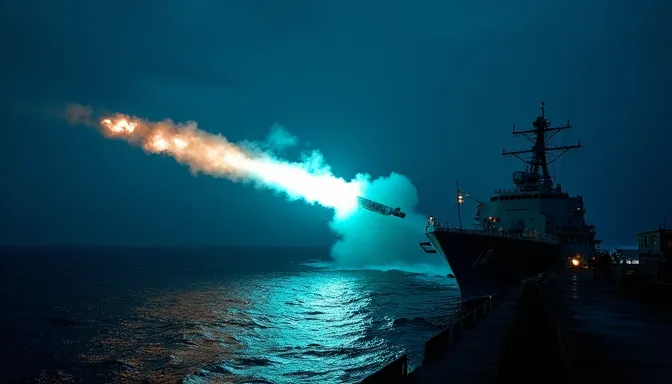
A CSIS report finds the US expended up to two-thirds of key missile stockpiles during a 39-day campaign against Iran, raising long-range resupply concerns.
Key Takeaways
- CSIS found US forces used 33-66% of key long-range missile stockpiles in a 39-day campaign against Iran.
- Seven of nine missile categories analyzed show detrimental resupply effects, per the CSIS report.
- Patriot, THAAD, and Standard Missiles are classified as heavily used with no substitutes.
- Tomahawks, JASSM cruise missiles, and Precision Strike Missiles are heavily used with some substitutes available.
- Only short-range weapons like AIM-120 AMRAAM and GBU-39B bombs show no significant supply constraints.
Center for Strategic and International Studies researchers found that US forces burned through between a third and two-thirds of key long-range missile inventories during a 39-day campaign against Iran, according to Defense News. The analysis warns that seven of nine missile categories now show detrimental resupply effects, pushing the Pentagon toward munitions with ranges under 300 miles as it rebuilds depleted stockpiles and revealing a structural vulnerability in US force projection across multiple theaters.
What Happened
According to Defense News, the CSIS analysis used munitions expenditure data current as of November 3 to assess how the campaign against Iran, which ran 39 days until an April 8 ceasefire, affected US defense posture globally. The report explicitly states that the United States still has enough munitions to renew a fight against Iran, but expresses great concern about capacity against China, noting that rebuilding inventories will require a multiyear commitment extending beyond the current crisis. This distinction is critical: the report frames Iran as a manageable challenge relative to a peer competitor.
CSIS sorted missile types into nine categories, with seven classed as having detrimental effects on resupply capacity. Patriot missiles, Terminal High Altitude Area Defense interceptors, and Standard Missiles are listed as heavily used with no substitutes, indicating dire stockpile conditions. Long-range ground-attack weapons including Tomahawks, AGM-158 JASSM cruise missiles, and Precision Strike Missiles are described as heavily used but with some substitutes available.
The only missile types CSIS lists as having no significant constraints in most scenarios are short-range munitions, including GBU-39B small-diameter bombs and the AIM-120 AMRAAM, which is designed to strike low-altitude targets. According to the report as cited by Defense News, the United States has large numbers of munitions with the same explosive yield and accuracy as long-range systems but with ranges under 300 miles. At the same time, munitions with shorter ranges increase the importance of establishing air superiority.
CSIS warns that although production rates are increasing, demand from the United States and its allies continues to exceed supply, meaning timelines have lengthened. The report frames the issue plainly: the problem is not money, assuming Congress continues its support, but time.
Why It Matters
The CSIS findings expose a structural tension in force projection capabilities. If US forces are pushed toward sub-300-mile weapons, establishing air superiority becomes operationally necessary, and the Pentagon's approach to targeting and munitions strategy may shift accordingly. The report notes that while the U.S. is still capable of leveraging existing missiles against targets in the short term, shortages of long-range munitions create operational challenges. At the same time, munitions with shorter ranges increase the importance of establishing air superiority. This could create complexities if the U.S. faces a powerful adversary that has sufficient air power and defenses to fend off shorter-range weapons and prevent them from being effective.
CSIS identifies time, not money, as the constraint, assuming Congress continues its support. The report indicates that although production rates are increasing, global demand from the United States and its allies continues to exceed supply, which has lengthened timelines for rebuilding inventory. Moving toward shorter-range munitions reflects current stockpile realities during the multiyear rebuilding period CSIS describes.
Background
The CSIS report analyzes nine categories of missile types used in the campaign against Iran. The analysis distinguishes between weapons with no available substitutes—Patriot, THAAD, and Standard Missiles—and long-range ground-attack systems where some alternatives exist. Short-range munitions, by contrast, show no significant resupply constraints according to the CSIS assessment. The report emphasizes that while the United States has sufficient munitions to renew conflict with Iran in the short term, the concern about China reflects a different calculation about peer-competitor scenarios and the multiyear timeline required for inventory recovery.
What to Watch
Monitor whether Congress follows through on funding to accelerate production of Patriot, THAAD, and Standard Missile stockpiles, and whether manufacturers can actually scale output given that CSIS attributes the bottleneck to time rather than money. Watch how Pentagon procurement strategies evolve in response to shorter-range munition reliance during the rebuilding period. Any sustained shortfall against a peer competitor like China, which CSIS flags as a greater concern than Iran, would test whether current operational capabilities can accommodate the inventory gap. Additionally, track announcements of new production facilities or capital commitments from defense contractors, as these often signal confidence in sustained demand and Pentagon commitment to closing the resupply timeline.
Key Facts
- CSIS analysis found the US expended between 33% and 66% of key munition inventories during the 39-day campaign ending with an April 8 ceasefire against Iran.
- Seven of nine missile categories analyzed by CSIS show detrimental effects on resupply capacity.
- Patriot, THAAD, and Standard Missiles are classified as heavily used with no substitutes available, indicating dire stockpile conditions.
- Only short-range munitions, including AIM-120 AMRAAM and GBU-39B bombs, show no significant resupply constraints, forcing operational reliance on sub-300-mile weapons.
- CSIS identifies time, not funding, as the primary constraint limiting production rate acceleration to rebuild depleted inventories.
Further reading and context
Sources
- Defense News: US missile shortages create a range problem, report shows
- MachineHours: AI & Robotics Acceleration Index
- The Integrated Circuit — Putting Multiple Transistors on One Chip
- Quantum Computing — The Next Leap Beyond Classical Limits
- Quantum Error Correction — Why It Is the Hardest Problem in Computing
- The AI Wealth Concentration Problem — Who Captures the Gains?
Frequently Asked Questions
What did the CSIS report find about US missile stockpiles?
The CSIS analysis, covered by Defense News, found the US expended between a third and two-thirds of key long-range munition inventories during a 39-day campaign against Iran that ended with an April 8 ceasefire.
Which missile types are most depleted?
Patriot missiles, THAAD interceptors, and Standard Missiles are classified by CSIS as heavily used with no substitutes, indicating the most severe stockpile conditions among the nine categories analyzed.
Does the US have enough missiles to fight China?
CSIS states the US has sufficient inventory to renew a conflict with Iran but expresses great concern about capacity in a scenario against China, saying rebuilding will take a multiyear commitment.
Why does the shortage push the US toward shorter-range weapons?
CSIS notes the US holds large stocks of munitions with similar yield and accuracy to long-range systems but with ranges under 300 miles. These short-range weapons show no significant supply constraints, making them available as long-range stockpiles are rebuilt.
Is the missile shortage a funding problem?
According to the CSIS report, the core constraint is not funding, assuming continued congressional support, but time, since global demand for munitions currently exceeds production capacity.
Get MachineHours in your inbox
AI compute and the machine economy in your inbox.