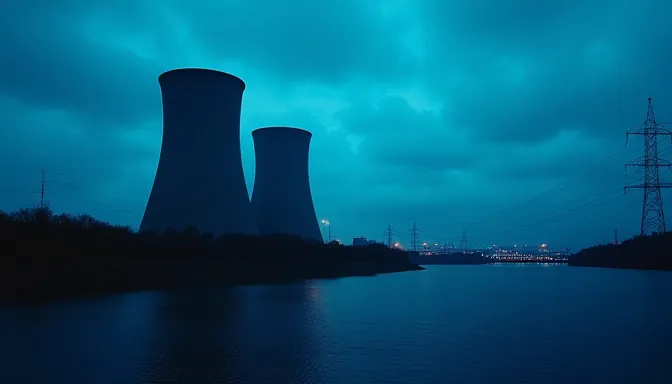
Constellation CEO Joe Dominguez said Wall Street overreacted to fears Democrats will halt data center growth, citing new Amazon and Google deals and a $5 billion DOE loan.
Key Takeaways
- Constellation CEO Joe Dominguez told investors on the third-quarter earnings call that the market overreacted to fears Democrats will block data centers
- Many Democrats who won the House and Senate this month ran on anti-data-center campaigns, which The Verge says triggered a $2.5 trillion sell-off in AI-adjacent stocks
- Constellation signed new third-quarter contracts with Amazon and Google, adding to 20-year deals with Microsoft and Meta
- The Department of Energy approved a $5 billion loan to Constellation this month, while Vistra received $4.2 billion
Constellation Energy chief executive Joe Dominguez told investors that Wall Street has overreacted to fears that the new Democratic majorities in Congress will choke off data center growth. Speaking on Constellation's third-quarter earnings call, Dominguez said: "I do think we've seen a bit of an overreaction in the market to the election results based upon fear that Democrats won't let data centers get built," according to The Verge.
What Happened
Constellation, which The Verge describes as America's largest operator of nuclear power plants, addressed the midterm results directly on the call. Many of the Democrats who won control of the House and Senate this month ran on anti-data-center campaigns, and The Verge reports that the result triggered a historic $2.5 trillion sell-off in AI-adjacent stocks that spread beyond technology into the energy, construction and materials sectors.
Dominguez argued that Democrats have little incentive to stop the buildout. "The market scare that people got last week was not lost on Democrats," he said. "They do not want to be the reason that the economy takes a nosedive by halting data center development." He pointed to labor as the deciding factor: "The bottom line is that Democrats care deeply about economic growth and they care very deeply about the many labor jobs that go with data center construction. With labor such a key constituent for Democrats, it's hard to imagine that we are going to halt work." He acknowledged there "might be some differences" and that some local areas "are not going to want data centers."
He also noted that Virginia and Illinois, states that already had Democratic governors before the election, have seen "a great deal of data center development."
Constellation's Big Tech Deals
Constellation's confidence rests on a growing list of contracts with technology companies. Dominguez said the company signed major contracts in the third quarter to supply power to Amazon and Google data centers. Those follow earlier agreements described by The Verge: Microsoft signed a 20-year deal with Constellation to fund the revival of a nuclear plant at Three Mile Island in Pennsylvania, and Meta signed a 20-year power purchase agreement for the output of Constellation's Clinton Clean Energy Center, a single-reactor plant in Clinton, Illinois.
Three Mile Island carries a particular history. The Nuclear Regulatory Commission describes the 1979 partial meltdown there as the "most serious accident in US commercial nuclear power plant operating history," and The Verge notes that the NRC overhauled its safety standards after the accident. Constellation now owns the site.
Federal financing is also flowing to the sector. The Department of Energy this month approved a $5 billion loan to Constellation, which the company will use to upgrade its existing nuclear fleet. Another nuclear energy company, Vistra, received a $4.2 billion loan, according to The Verge.
Data Centers Are Not a Simple Partisan Issue
The Verge's reporting suggests the politics of data centers do not split neatly along party lines. Some Democrats have opposed harsh measures such as moratoriums. In Virginia, Republican state senator Richard Stuart has aggressively pursued data center regulation. In October, Democratic governor Abigail Spanberger denied Stuart's request for a special legislative session to address a Virginia Department of Environmental Quality report on the state's groundwater supply, which has become strained amid rapid data center growth.
At the federal level, the Bipartisan American Affordability and Jobs Act, co-sponsored by two Democrats, is being marketed as a way to speed up permitting for new power plants and transmission lines and to connect new data centers to the grid faster. The Senate is expected to vote on its passage. New Mexico Sen. Martin Heinrich, one of the Democrats backing the bill, has highlighted provisions meant to protect utility customers from rate increases caused by data centers. Researchers at Columbia University SIPA's Center on Global Energy Policy called those protections "mixed," noting that they do not account for wholesale capacity and energy prices, a "principal way" data center demand can raise household bills. The Verge adds that Senate Democrats are sharply divided on the bill, which critics say would fast-track data center projects at the expense of public input and environmental oversight.
Dominguez closed with an observation about political alignment: "Interestingly, in many respects the election had the Republicans saying a lot of the same things that the Democrats were saying. And I believe that the policy solutions are going to be somewhat similar."
Why It Matters
For the nuclear industry, the stakes are high. The Verge reports that until a few years ago many of Constellation's plants were in severe financial distress and at risk of closing early, because there were not enough customers to keep old reactors running. Electricity demand from data centers has reversed that. As The Verge points out, Constellation's future is closely tied to the data center buildout, and Dominguez's job on an earnings call is to reassure investors. Even so, his argument that labor and economic growth will temper Democratic opposition is a direct counterpoint to the market's reaction. Whether it holds will depend on how the new Congress handles permitting, consumer protections and local resistance. MachineHours' nuclear revival investment case covers the broader financial picture for operators like Constellation.
Background
Nuclear energy has had bipartisan support for years. The Department of Energy classifies nuclear as a clean energy source because operating a reactor does not directly produce carbon emissions, which makes it attractive to technology companies balancing data center growth against their climate goals. Both the Biden and Trump administrations have supported nuclear development through developer tax credits, and the Trump administration has pushed for a sweeping reform of the NRC to make it easier for new reactors to obtain operating licenses. Nuclear waste remains a major unresolved issue.
Power purchase agreements, explained in MachineHours' guide to how hyperscalers source clean energy, work differently than many readers might expect. Because of how the US grid and energy markets operate, a Constellation plant does not need to be in the same state as the data center it serves; it only needs to be connected to the same region from which the grid draws power. In that sense, The Verge says, the agreement is symbolic: the data center pays independent power providers such as Constellation to supply the grid with extra electricity so that its demand does not disrupt other customers.
What to Watch
The next test is the Senate vote on the Bipartisan American Affordability and Jobs Act, and whether its consumer protections address the wholesale price concerns raised by Columbia researchers. Investors will also watch how Constellation uses its $5 billion federal loan, and whether local opposition changes where new data centers, and the power contracts that serve them, end up being built. The Verge notes that developers can take projects elsewhere: 38 states offer data center tax incentives, according to the National Conference of State Legislatures.
Key Facts
- Joe Dominguez called the market's reaction to the midterm results an overreaction on Constellation's third-quarter earnings call.
- Constellation signed third-quarter contracts to power Amazon and Google data centers; it also has 20-year deals with Microsoft (Three Mile Island) and Meta (Clinton, Illinois).
- The Department of Energy approved a $5 billion loan to Constellation this month to upgrade its existing fleet; Vistra received $4.2 billion.
- The $2.5 trillion sell-off in AI-adjacent stocks reached the energy, construction and materials sectors.
Further reading and context
Sources
- The Verge: Big Nuclear isn't worried about the Democrats stopping data centers
- MachineHours Encyclopedia: Small Modular Reactors — How SMRs Could Power the AI Economy
- MachineHours Analysis: Energy Transition Meets AI — The Nuclear Revival Investment Case
- MachineHours: AI & Robotics Acceleration Index
- Power Purchase Agreements — How Hyperscalers Source Clean Energy for AI
- The Picks and Shovels Strategy for AI Investing
Frequently Asked Questions
Why isn't Constellation worried about Democrats restricting data centers?
CEO Joe Dominguez argued on the third-quarter earnings call that Democrats care about economic growth and the labor jobs tied to data center construction, and noted that Virginia and Illinois, which had Democratic governors before the election, have seen a great deal of data center development.
What triggered the $2.5 trillion stock sell-off mentioned in the story?
According to The Verge, the sell-off followed this month's midterm elections, in which many Democrats who ran on anti-data-center campaigns won control of the House and Senate. It spread from AI-adjacent tech stocks to the energy, construction and materials sectors.
What federal loans has the nuclear industry received recently?
The Department of Energy approved a $5 billion loan to Constellation this month to upgrade its existing nuclear fleet, and nuclear energy company Vistra received a $4.2 billion loan, per The Verge.
Which tech companies have power deals with Constellation?
Constellation signed third-quarter contracts to supply Amazon and Google data centers. It also has a 20-year deal with Microsoft to fund the revival of a nuclear plant at Three Mile Island and a 20-year power purchase agreement with Meta for its Clinton, Illinois plant, per The Verge.
Is data center opposition split along party lines?
Not cleanly. The Verge noted that Virginia Republican state senator Richard Stuart has aggressively pursued data center regulation, while Virginia's Democratic governor denied his request for a special session on the issue.
Get MachineHours in your inbox
AI compute and the machine economy in your inbox.