Four manufacturers deployed SCHUNK, Universal Robots, and FANUC systems to reach precision levels once exclusive to large firms, per The Robot Report.
Key Takeaways
- Torneria Novoletto in Italy used SCHUNK's R-C2 automation concept to pursue unmanned 24/7 operation.
- Telesis paired laser and dot peen marking systems with Universal Robots arms, removing the need for safety enclosures.
- Northern Kentucky Machine deployed FANUC M-20 robots with Automation Within Reach's RC-2 tending system for lights-out manufacturing.
- PrecisionForm Inc. used Universal Robots' ActiNav system to automate bin picking and extend the life of older CNC equipment.
- None of the four companies disclosed cost, ROI, or headcount figures in the reported case studies.
Smaller manufacturers are closing the precision gap with large corporations by deploying targeted robotic systems rather than overhauling entire production lines, according to The Robot Report. The outlet detailed four separate case studies, from an Italian pharmaceutical components maker to a Kentucky job shop, where cobots and industrial arms are now handling tasks that once demanded enterprise-scale capital investment. The common thread across all four: robotics vendors are packaging precision, safety, and programming simplicity into systems small operations can deploy without specialist robotics staff on hand.
What Happened
According to The Robot Report, Italian manufacturer Torneria Novoletto, which produces components for the chemical, medical, and pharmaceutical sectors, implemented SCHUNK's R-C2 automation concept to solve precision and process reliability problems on medium-sized batches. The system combines advanced clamping devices and grippers with robotic handling, and The Robot Report reported that it cut setup and changeover times while allowing continuous handling of different workpiece sizes. The outlet noted the integration has helped the company pursue unmanned 24/7 operation and mitigate skilled-labor shortages.
The Robot Report also detailed how Telesis, an industrial marking solutions provider, paired its laser and dot peen markers with force- and power-limited robot arms from Universal Robots. That combination, the outlet reported, lets the marking system work alongside human employees without complex safety enclosures while maintaining consistent quality across varied materials and part geometries.
A third case documented by The Robot Report involved Northern Kentucky Machine (NKM), a flexible job shop facing labor shortages and capacity constraints. NKM deployed FANUC M-20 Series industrial robots using Automation Within Reach's "RC-2" CNC machine-tending system. According to the report, operators adapted quickly to programming and running the robotic cells, which enabled extended "lights-out" manufacturing runs and freed human workers for other tasks, helping NKM compete with other midsize operations on larger projects.
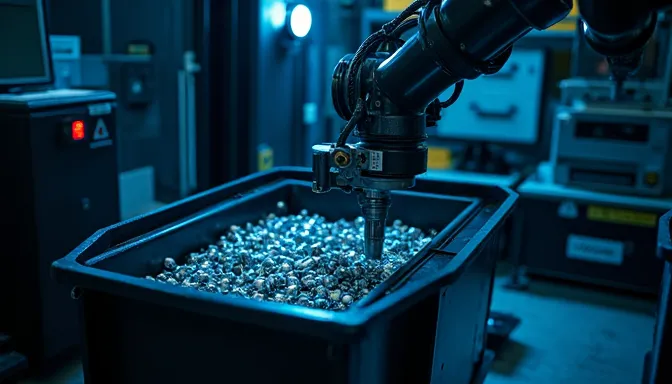
The fourth case centered on PrecisionForm Inc., a producer of small custom metal parts that needed to automate bin picking for CNC machines. The Robot Report described how the company deployed Universal Robots' ActiNav system, integrating a UR5 cobot with vision and path-planning capabilities to reliably pick parts from deep bins with challenging geometries, even on older CNC equipment, extending the useful life of existing machinery.
Why It Matters
These four cases point to a labour market effect that is more nuanced than simple headcount reduction. Note that three of the four cases (Torneria Novoletto, NKM, and PrecisionForm) explicitly cite skilled-labor shortages or labor challenges as a driver, while the Telesis case does not mention labor shortages as a motivating factor. NKM's operators moved into robot programming and cell management; PrecisionForm's staff were freed to oversee multiple machines instead of manual bin picking; Telesis built a system designed explicitly to work beside people without protective enclosures. This is consistent with the pattern MachineHours has tracked in its AI Acceleration Index, where the capability sub-score (62) runs well ahead of the employment sub-score (18), suggesting automation capability is outpacing measurable workforce displacement so far at the shop-floor level. Whether that gap holds as cobot pricing falls further is an open question with direct equity market implications for robotics deployment across industrial suppliers and integrators. For now, the reported cases describe reskilling and role-shifting rather than straightforward job loss, though none of the four companies disclosed headcount changes.
Background
Industrial robotics has moved through several accessibility thresholds since Unimate became the first programmable industrial robot arm installed at General Motors in 1961, as detailed in MachineHours' history of the first industrial robot. The broader shift toward automating complex assembly and precision tasks across industries is covered in MachineHours' history of industrial robots. The cases reported by The Robot Report represent a further step in that trajectory: collaborative robots and vision-guided arms designed specifically for operations too small to justify the capital and engineering overhead that defined earlier generations of factory automation.
What to Watch
None of the four companies cited by The Robot Report disclosed cost figures, ROI timelines, or headcount changes, so the actual labour market impact of this wave of midmarket automation remains unquantified. Watch whether vendors like Universal Robots, FANUC, and SCHUNK publish adoption or employment data tied to these integrations, and whether other job shops report similar reskilling patterns rather than layoffs. The broader question is whether cobot deployment at this scale changes hiring patterns for CNC operators and quality inspectors, or simply shifts existing staff into robot-tending and programming roles as described in the NKM and PrecisionForm cases.
Further reading and context
For more on how industrial automation has evolved from large-enterprise exclusivity to broader accessibility, see MachineHours' entries on industrial robots and manufacturing transformation, the first industrial robot, Unimate, and Figure's approach to commercial humanoid robotics, which contrasts with the task-specific cobot deployments described above.
- Torneria Novoletto (Italy) implemented SCHUNK's R-C2 automation concept to pursue unmanned 24/7 operation on medium-sized production batches.
- Telesis integrated laser and dot peen marking systems with force- and power-limited Universal Robots arms for enclosure-free human-robot collaboration.
- Northern Kentucky Machine deployed FANUC M-20 Series robots with Automation Within Reach's RC-2 CNC machine-tending system to boost throughput.
- PrecisionForm Inc. used Universal Robots' ActiNav system with a UR5 cobot for automated bin picking into CNC machines, extending legacy equipment lifespan.
Further reading and context
Sources
- The Robot Report: Robot integration brings high-precision production to midmarket manufacturers
- MachineHours Encyclopedia: Industrial Robots — How Machines Transformed Manufacturing
- MachineHours Encyclopedia: Unimate — The First Industrial Robot Arm
- MachineHours Encyclopedia: Boston Dynamics Atlas Humanoid Robot
- MachineHours: AI & Robotics Acceleration Index
- Honda ASIMO Humanoid Robot
- Figure Humanoid Robot
Frequently Asked Questions
What companies were featured in The Robot Report's midmarket robotics story?
The Robot Report detailed four companies: Torneria Novoletto (Italy), Telesis, Northern Kentucky Machine, and PrecisionForm Inc., each integrating robotics from SCHUNK, Universal Robots, or FANUC.
Did the robot integrations lead to job losses at these manufacturers?
The Robot Report did not report headcount reductions. Instead, it described workers shifting into robot programming and oversight roles, such as at Northern Kentucky Machine and PrecisionForm, while robots covered tasks affected by existing labor shortages.
What is SCHUNK's R-C2 automation concept?
According to The Robot Report, SCHUNK's R-C2 combines advanced clamping devices and grippers with robotic handling, allowing continuous handling of different workpiece sizes and automated reclamping to reduce setup and changeover times.
What is Universal Robots' ActiNav system used for?
The Robot Report said ActiNav combines a UR5 cobot with vision and path-planning technology to perform bin picking from deep bins with challenging part geometries, which PrecisionForm Inc. used to feed CNC machines.
Why is midmarket robotics adoption significant for the labour market?
The cases reported by The Robot Report suggest robots are being deployed to address existing skilled-labor shortages rather than replace current staff outright, though none of the companies disclosed specific employment data.
Get MachineHours in your inbox
AI compute and the machine economy in your inbox.