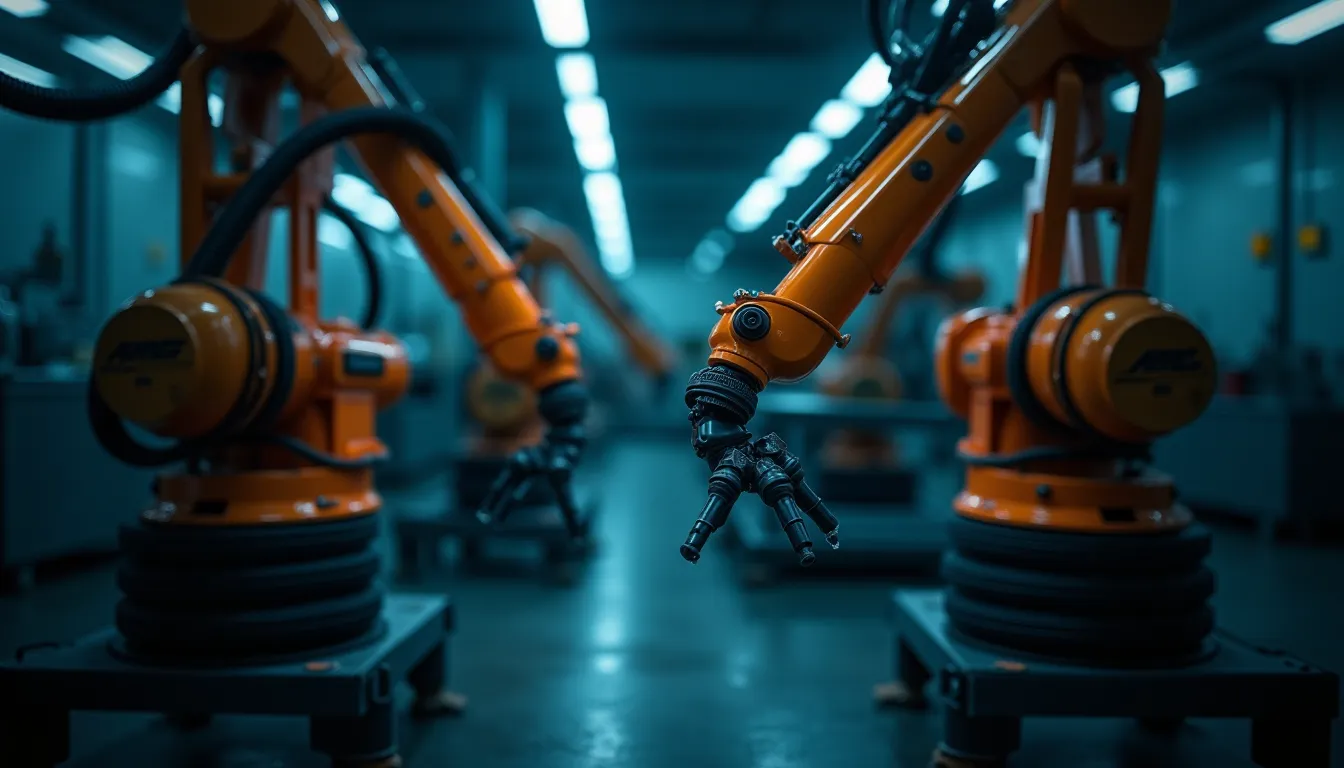
China's manufacturing sector is deploying purpose-built industrial robots at scale, while humanoid robots remain limited to demonstrations and long-term development bets. Financial Times analysis reveals the disconnect between investor hype around bipedal robots and the actual commercial automation happening on factory floors.
Key Takeaways
- China's manufacturing sector is deploying specialized industrial robots at scale while humanoid robot development remains a long-term bet, not a near-term commercial engine
- Humanoid robots will likely prove useful only in narrow, high-value applications like hazardous environments and remote operations, not general-purpose assembly line replacement
- Historical patterns show specialized, task-optimized automation systems achieve commercial scale decades before general-purpose alternatives, suggesting humanoids follow a similar delayed timeline
- Investor portfolios concentrated in humanoid developers may face longer paths to revenue than projected while industrial automation companies continue compounding proven returns
- China's investment priorities—as the world's largest robotics market by deployment volume—serve as leading indicator for global automation trends and should inform capital allocation decisions
China's actual robotics revolution is unfolding on factory floors, not in humanoid demonstrations, according to Financial Times analysis published September 1. While Chinese companies and state media have amplified demonstrations from firms like Unitree and others, the country's deployment volume and manufacturing output is concentrated in articulated arms, collaborative robots, and specialized automation equipment for electronics, automotive, and logistics sectors. This distinction carries significant implications for how robotics investment capital is actually flowing in the world's largest robotics market by deployment volume.
The Industrial-Versus-Humanoid Divide
The Financial Times reporting establishes a clear bifurcation between China's visible robotics narrative and its economic reality. Humanoid robot development is positioned as a long-term strategic bet rather than the near-term commercial engine driving current robotics investment. A companion Financial Times analysis from August 27 reinforces this framing, arguing that humanoid robots will ultimately prove useful—but not in the ways current marketing suggests.
Rather than replacing general human labor on assembly lines, the analysis points toward narrower, high-value applications in hazardous environments, remote operations, and specialized tasks where the human form factor genuinely matters. The implication for investors is direct: humanoid valuations may be running ahead of addressable markets. This assessment conflicts with the narrative that has driven much robotics funding over the past two years, during which investors have poured capital into humanoid startups on the premise that general-purpose, human-form robots represent the next major automation wave.
What China's Actual Deployment Looks Like
The durable commercial opportunity in China—the world's largest robotics market by deployment volume—remains concentrated in purpose-built industrial systems rather than bipedal platforms. This pattern reflects historical precedent in automation. The history of industrial robots in manufacturing shows a consistent pattern: specialized, task-optimized systems achieve commercial scale decades before general-purpose alternatives. The current humanoid cycle appears to be following a similar arc, with deployment realities lagging the investment narrative by several years.
Purpose-built systems offer proven commercial value through lower total cost of ownership and demonstrated reliability. Articulated arm robots, collaborative robots designed to work alongside human operators, and specialized automation for high-volume electronics and logistics work have generated billions in capital investment and deployment across Chinese manufacturing. These systems operate within predictable cost-benefit frameworks that manufacturers understand and can model with confidence.
Humanoid robots, by contrast, theoretically offer the ability to operate in existing facilities without structural modifications—a meaningful cost advantage over traditional fixed automation. That theoretical benefit, however, has not yet translated into large-scale factory deployments at competitive unit economics. The lack of production contracts measured in thousands of units—rather than pilot programs—remains the key indicator that humanoids have not achieved commercial viability in manufacturing settings.
Portfolio and Market Implications
The Financial Times industrial-versus-humanoid framing cuts directly against the narrative driving much of the robotics funding surge. Funds that have concentrated positions in humanoid developers may face longer paths to revenue than projected, while industrial automation plays—less photogenic but commercially proven—continue to compound. The equity market implications of this divergence are substantial: valuation multiples in the robotics sector will likely adjust to deployment reality rather than demo cycles as institutional investors reassess the timeline and addressable market for humanoid automation.
This has real consequences for capital allocation. The shift in focus from speculative humanoid development toward proven industrial automation platforms suggests that investor portfolios may need rebalancing. Companies providing collaborative robots, vision systems, motion control, and software for existing production lines operate in markets with demonstrated demand and established procurement channels. By contrast, humanoid manufacturers are competing for a market that remains largely undefined and unproven at scale.
The data-driven approach that Financial Times brings to this analysis reflects a broader market correction underway. When the world's largest robotics market—China—is prioritizing industrial automation over humanoid development, that signals fundamental economic realities about which automation strategies deliver measurable returns on investment. Pilot programs and prototype deployments, while valuable for technology development, do not constitute a commercial foundation for venture capital returns.
Timeline and Strategic Positioning
The key indicator over the next 12 to 18 months will be whether any humanoid developer announces a production contract measured in thousands of units rather than pilot programs. Absent that, the Financial Times framing—that industrial automation is the actual robot revolution—will continue to gain credibility with institutional allocators. Such contracts would signal that manufacturers have moved beyond evaluation phases and are committing capital to production deployment at scale.
China's investment choices carry outsized weight in global robotics markets because of the country's manufacturing scale, labor economics, and technological development resources. When Chinese manufacturers and policymakers prioritize industrial automation over humanoids, this reflects economic calculation about which technologies deliver measurable productivity gains. That calculation typically precedes broader global adoption patterns by 12 to 24 months.
The current environment, in which humanoid demonstrations generate significant media attention while industrial robots quietly drive billions in annual deployment value, reflects the gap between narrative and execution that characterizes many emerging technology cycles. Financial Times reporting adds analytical rigor to a distinction that should inform investor decision-making: the robotics revolution is real, but it is primarily happening through proven automation technologies applied at scale, not through next-generation humanoid platforms still in early commercial stages.
Strategic Lessons from Historical Automation Cycles
The pattern that emerges from examining how China's robotics investment is actually allocated echoes historical precedent in manufacturing technology adoption. When new automation categories emerge, initial enthusiasm often outpaces addressable market size. This mismatch typically resolves over three to five year periods as deployment realities become clear and capital markets adjust expectations accordingly.
Industrial automation has consistently followed this pattern. Early-stage general-purpose systems attract venture capital and founder enthusiasm before specialized applications prove more economically viable. Task-specific robots designed for particular manufacturing environments—automotive welding, electronics assembly, pharmaceutical packaging—achieve scale and profitability before general-purpose platforms solve the broader set of technical, economic, and safety challenges required for broader deployment.
The humanoid robotics cycle shows the same characteristics. Founder-led companies with compelling demonstrations attract capital and media attention. Media coverage amplifies the narrative that humanoid robots represent the next major productivity wave. But actual manufacturer procurement—the mechanism through which robots move from demonstration phases to production deployment—tells a different story. Manufacturers are committing capital to robots that solve specific problems with proven efficiency, not to experimental platforms still navigating the technical and economic hurdles of general-purpose design.
China's demonstrated preference for industrial automation over humanoid investment reflects this economic reality. As the world's largest robotics market by deployment volume, Chinese manufacturers' capital allocation decisions function as a leading indicator for global automation trends. That indicator currently points toward continued growth in purpose-built industrial systems rather than accelerating humanoid deployment.
Sources
- Financial Times: China's real robot revolution is not about humanoids
- The Verge: GoPro has been acquired and is getting into 'defense, government, robotics and aerospace'
- TechCrunch: Hugging Face is selling a cute $399 open source duck robot, Microduck
- Financial Times: Humanoid robots will be useful, just not as we imagined
- MachineHours Encyclopedia: Humanoid Robots Enter European Manufacturing
- MachineHours Encyclopedia: Industrial Robots — How Machines Transformed Manufacturing
Frequently Asked Questions
What is China actually investing in for robotics if not humanoids?
According to Financial Times, China's robotics deployment is concentrated in articulated arms, collaborative robots, and specialized automation for electronics, automotive, and logistics sectors - not humanoid platforms, which remain a long-term bet.
Why did Starman Holding acquire GoPro?
The Verge reports Starman Holding acquired GoPro with plans to enter defense, government, robotics, and aerospace markets, leveraging the brand's rugged visual capture hardware for those higher-margin sectors.
What is Hugging Face's Microduck robot?
Microduck is a $399 open-source, duck-shaped robot from Hugging Face designed for developers and researchers to experiment with robotics AI on a low-cost physical platform.
Will humanoid robots ever be useful in manufacturing?
Financial Times analysis from August 27 argues humanoid robots will prove useful, but in narrower applications such as hazardous environments and remote operations, rather than as general-purpose assembly line workers.
What does the industrial robot trend mean for investors?
The FT's reporting suggests that investors concentrated in humanoid startups may face longer revenue timelines than projected, while proven industrial automation systems continue to scale commercially.
Get MachineHours in your inbox
AI compute and the machine economy in your inbox.