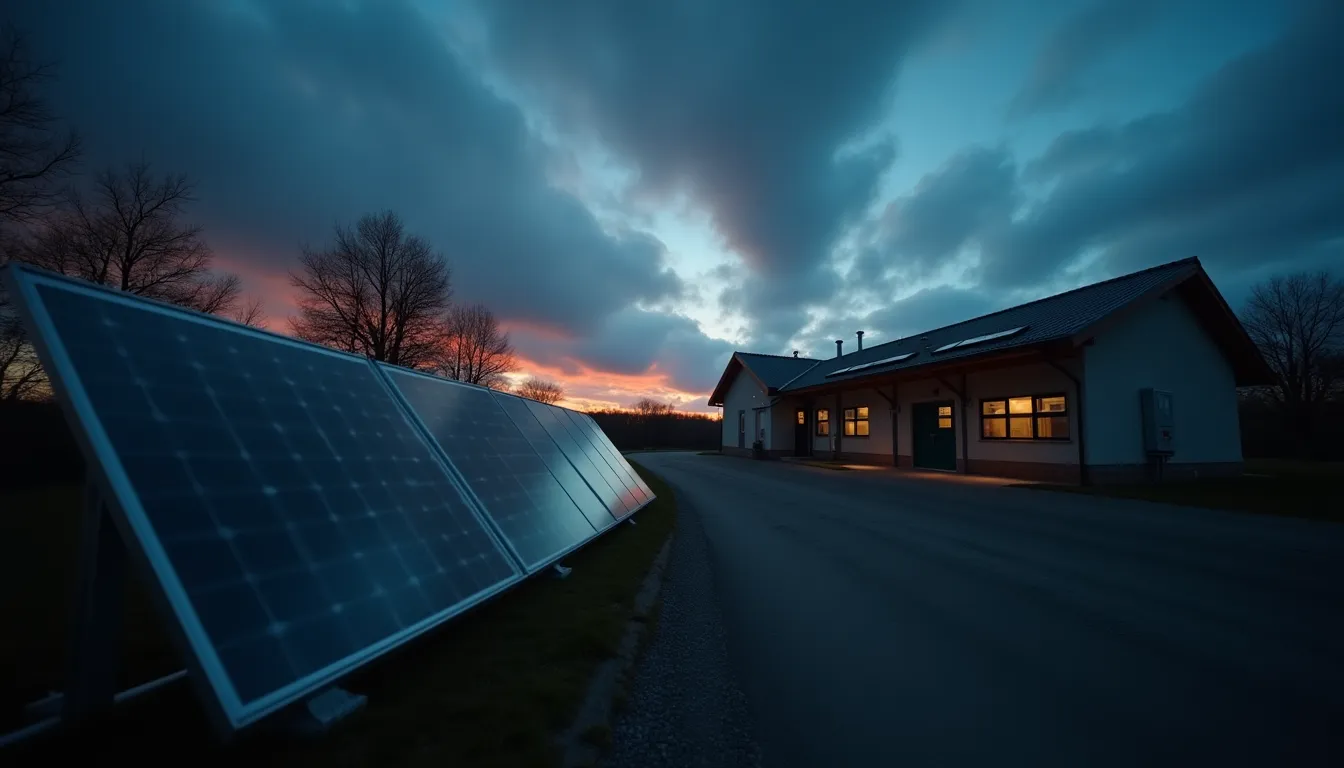
China's installed solar capacity has exceeded coal for the first time on record, marking a historic nameplate milestone. However, coal plants still generate far more electricity because they operate at much higher utilisation rates, illustrating a critical gap in the energy transition that battery storage deployment will need to close.
Key Takeaways
- China's installed solar capacity has surpassed coal for the first time, but coal plants still generate more electricity due to higher utilisation rates (50-60% vs 15-25%)
- Battery storage has become essential to bridge the gap between solar capacity and reliable electricity generation, shifting midday solar production to evening peak demand
- Grid-scale battery costs have fallen over 90% since 2010, making solar-plus-storage economically viable and routine in new deployments
- Capacity milestones and generation milestones are fundamentally different measures; genuine decarbonisation requires both solar expansion and proportional battery storage deployment
- China's dominance in lithium-ion battery manufacturing positions it to scale storage at the speed needed to match solar capacity growth
China's installed solar capacity has crossed a historic threshold, surpassing coal in total gigawatts deployed, according to reporting on September 4. The milestone represents a symbolic turning point in the world's largest energy market and its most aggressive clean energy deployment programme. Yet the achievement carries a critical caveat: despite winning the capacity race, solar still trails coal by a wide margin in the measure that actually matters—electricity generation.
This distinction between capacity and generation defines the current state of the global energy transition and explains why battery storage has become central to decarbonisation strategy rather than optional infrastructure.
The Capacity-Generation Gap
Installed capacity is a nameplate measure: it reflects the total megawatts or gigawatts of generation equipment available if all facilities operated continuously at full power. Generation is what that equipment actually produces when accounting for real-world operating patterns. Coal plants run for far more hours per year than solar arrays, meaning coal still dominates the country's electricity output, despite solar's capacity advantage.
This gap exists because coal plants operate as baseload generators—running continuously or near-continuously to meet steady demand. Solar facilities, by contrast, operate only when the sun is available, typically achieving capacity factors (actual output divided by theoretical maximum) between 15 and 25 percent depending on geography and weather. China's solar sites, concentrated in regions with high insolation, perform at the higher end of that range, but even optimal locations cannot generate electricity at night or during cloud cover.
Coal capacity factors in China typically range between 50 and 60 percent. This means a coal plant running at 50 percent capacity produces twice as much annual electricity as a solar facility at equivalent nameplate capacity running at 25 percent. The ratio is even more skewed during winter months or cloudy seasons when solar output drops sharply while coal production remains steady.
The policy implication is direct: expanding renewable capacity alone does not guarantee decarbonisation. A grid that replaces coal with solar at 1:1 capacity ratio would experience reliability crises, brownouts during non-solar hours, and the need to keep coal (or other flexible generators) online as backup. China's experience illustrates this constraint at continental scale.
Why Battery Storage Closes the Gap
Grid-scale battery storage systems store electricity generated during peak production—typically midday solar—and release it during evening demand peaks, a function that becomes more valuable as solar penetration rises. By time-shifting solar generation from daytime production to evening consumption, batteries convert a variable resource into one that can follow demand patterns more closely.
The economics of grid-scale battery storage have improved dramatically. Grid-scale battery costs have fallen by more than 90% since 2010, making storage economically viable alongside solar and wind projects. This cost trajectory means that pairing solar capacity with battery storage—once prohibitively expensive—has become routine in new grid deployments.
Battery systems paired with solar can shift generation by four to six hours, covering the early-evening demand peak that unassisted solar cannot reach. For China's grid, this capability is particularly valuable. Evening peak demand in urban China occurs between 6 PM and 10 PM, hours when solar production has fallen to zero. Without storage, solar capacity sits idle during peak demand periods, requiring other generators to meet the load. With storage, that midday solar generation can be deployed during peak demand, displacing coal generation when grid demand is highest.
Battery storage systems are now being deployed at gigawatt scale in the US, China, and Europe, moving from pilot installations to core grid infrastructure. China's lithium-ion battery manufacturing capacity—by far the largest globally—positions the country to deploy storage at scale. If China's battery deployment accelerates in parallel with its solar expansion, the gap between capacity milestones and generation milestones will narrow significantly.
The Broader Transition Pattern
China's nameplate milestone while remaining dominated by coal in generation terms exemplifies a pattern familiar to grid analysts: capacity milestones and generation milestones are not the same thing, and the latter is where decarbonisation targets are ultimately won or lost. The headline that "solar has beaten coal" is analytically incomplete without the context that electricity generation tells a different story.
This distinction has major implications for energy policy and investment. Policymakers measuring progress by capacity targets may declare victory prematurely, while grid operators managing reliability know that capacity without dispatchability creates instability. For China, achieving genuine generation parity with coal would require either massive battery deployment, nuclear expansion, or both.
Lithium-ion chemistry dominates current grid-scale deployments, though alternative chemistries including iron-air and flow batteries are entering commercial service. China's control over the lithium-ion battery supply chain gives it a strategic advantage in this transition. Chinese manufacturers dominate global lithium processing and cell production, meaning that scaling battery storage to match solar capacity expansion is logistically feasible in ways it is not for other major economies.
What Comes Next
The clearest near-term indicator to track is China's solar generation share, not just installed capacity. If battery deployment accelerates—as the country's manufacturing dominance in lithium-ion cells suggests it could—the gap between capacity and generation milestones will narrow faster than most grid models currently project. Conversely, if battery deployment lags solar capacity expansion, China's grid operators will face increasing pressure to maintain coal plants as backup, undermining the decarbonisation rationale for solar investment.
The transition from coal-based generation to solar-plus-storage requires that both technologies scale in tandem. China's achievement in reaching capacity parity with coal is genuine; its significance depends entirely on whether battery infrastructure deployment can follow at matching speed.
Sources
- Canary Media: A Virginia school district pioneers solar and battery microgrids
- The Verge: DIY plug-in solar gains momentum in the US
- Canary Media: Solar is now bigger than coal in China — and yet still way behind
- Carbon Brief: Analysis: UK solar power hits record high over summer 2026
- Carbon Brief: How this summer's heat and drought impacted crops in Europe – in six charts
- MachineHours Encyclopedia: Grid-Scale Battery Storage — Technologies, Costs, and the Energy Transition
Frequently Asked Questions
Has solar actually beaten coal in China?
On installed capacity (nameplate gigawatts), yes. But coal still produces more electricity because coal plants run many more hours per year. The generation gap remains wide even as the capacity milestone has been crossed.
What is a school microgrid and why is Virginia using them?
A microgrid pairs rooftop solar with battery storage so a building can operate independently from the main grid during outages. The Virginia district is using this configuration to keep schools running when extreme weather disrupts the broader grid.
What is plug-in solar and how does it differ from rooftop solar?
Plug-in solar units are compact panels that connect directly to a standard outlet, letting renters or homeowners generate some electricity without a full rooftop installation. They generate far less power than a conventional system but require minimal setup.
Why does the UK solar record matter globally?
The UK's summer 2026 record adds a European data point showing that solar output milestones are falling across multiple major economies simultaneously, driven by both expanded capacity and favourable conditions.
How does Europe's crop drought connect to energy and climate trends?
Carbon Brief's data shows heat and drought cut crop yields across Europe in summer 2026. This climate variability feeds into grid demand modelling and reinforces the case for resilient, distributed energy infrastructure.
Get MachineHours in your inbox
AI compute and the machine economy in your inbox.