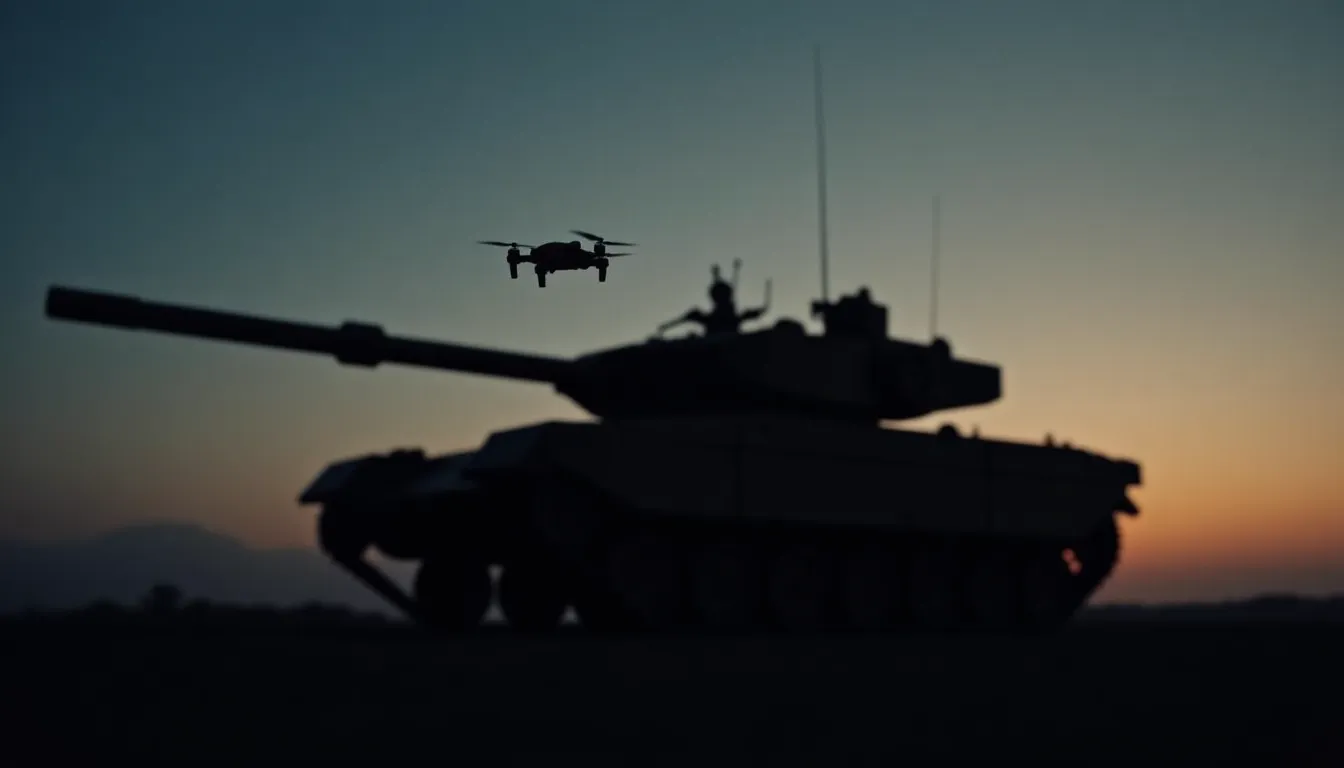
China is overhauling tank survivability doctrine to counter FPV drones and top-attack munitions, according to Breaking Defense. The report lands alongside new Navy cyber ambitions and SpaceX's expanded access to classified DoD tracking data.
Key Takeaways
- China is redesigning tank armor and doctrine to counter FPV drones and top-attack munitions, per Breaking Defense
- The U.S. Navy wants expanded offensive, expeditionary cyber teams operating alongside fleet assets
- F-16 fleets are getting upgraded electronic warfare systems to counter modern radar and jamming threats
- SpaceX has reportedly been given unique access to classified DoD space tracking data
- Syria's president says the country wants to end foreign military presence and reclaim sovereignty over all bases
Chinese military planners are redesigning tank armor and doctrine specifically to counter first-person-view drones and top-attack munitions, according to Breaking Defense.
What Happened
According to Breaking Defense, Chinese defence planners are treating FPV drones and top-attack loitering munitions as a central threat to armored vehicles, prompting changes to turret armor, active protection systems, and crew training aimed at reducing exposure to drone-guided strikes. The report frames this as part of a broader global reassessment of tank survivability now that low-cost drones with onboard targeting can defeat traditional top armor.
Separately, the U.S. Navy is pushing to expand its offensive cyber posture. Breaking Defense reports that naval leaders want more expeditionary cyber teams capable of operating forward, alongside traditional fleet assets, rather than relying solely on centralized cyber commands.
On the air power front, the F-16 fleet is being upgraded with improved electronic warfare systems, according to Breaking Defense, extending the aircraft's relevance against modern radar and jamming threats decades after its introduction.
In space policy, Breaking Defense reports, citing sources familiar with the arrangement, that SpaceX has been granted unique access to classified Department of Defense space tracking data, a level of access not typically extended to commercial launch and satellite providers.
Finally, geopolitical dynamics in the Middle East continue to shift. Syria's president has said the country intends to end foreign military presence and reassert sovereignty over all bases on its territory, according to Breaking Defense.
Why It Matters
The tank survivability story is the clearest signal of how autonomous and semi-autonomous weapons are forcing conventional militaries to redesign hardware around threats that did not exist in prior doctrine. FPV drones combine cheap airframes with camera-guided or increasingly AI-assisted targeting, letting operators strike top armor with minimal training and low cost per kill. China's response suggests planners now treat drone-guided top-attack as a baseline threat rather than an edge case, a posture shift likely to spread to other major armored forces. Combined with the Navy's push for offensive cyber teams and SpaceX's expanded access to classified tracking data, the pattern points toward militaries integrating autonomous sensing, targeting, and data systems more deeply into core operations. Investors watching this convergence of software-driven warfare and hardware procurement can find relevant defence and space sector equity analysis useful for tracking how contractors are repositioning around these threats.
Background
Consumer robotics offers an instructive parallel for how autonomous systems move from novelty to necessity. The Roomba proved in 2002 that affordable autonomous machines could reliably operate in unpredictable real-world environments, a template that has since scaled into far more consequential domains, including battlefield robotics and drone warfare, where low-cost autonomous or semi-autonomous platforms now shape doctrine at the level of tank design.
What to Watch
Watch whether China's armor redesign includes explicit AI-based active protection systems capable of detecting and intercepting FPV drones automatically, rather than relying on passive armor changes alone. Also watch how the Navy defines what counts as offensive cyber capability at the tactical edge, and whether Congress or DoD leadership responds publicly to reports of SpaceX's expanded access to classified tracking data, given the precedent it could set for other commercial space contractors.
Sources
- Breaking Defense: How China is rethinking tank survival against FPVs and top-attack threats
- Breaking Defense: Navy wants more offensive, 'expeditionary' cyber capabilities
- Breaking Defense: The still-formidable F-16 will be even more capable with better electronic warfare
- Breaking Defense: SpaceX given unique access to classified DoD space tracking data
- Breaking Defense: Syria looks to end foreign military presence, have sovereignty over all bases
- MachineHours Encyclopedia: Roomba: First Mass-Market Consumer Robot
Frequently Asked Questions
Why is China redesigning tank armor now?
According to Breaking Defense, Chinese planners are responding to the growing effectiveness of FPV drones and top-attack munitions, which have proven capable of destroying armored vehicles despite their traditional top armor protections.
What kind of cyber capabilities does the Navy want?
Breaking Defense reports the Navy wants more offensive, expeditionary cyber teams that can operate forward with fleet units rather than relying solely on centralized cyber commands.
What access has SpaceX reportedly been given to DoD data?
Sources cited by Breaking Defense say SpaceX has unique access to classified Department of Defense space tracking data, a level of access not typically granted to commercial space companies.
What did Syria's president say about foreign military bases?
He said Syria intends to end foreign military presence in the country and reassert full sovereignty over all bases on its territory, according to Breaking Defense.