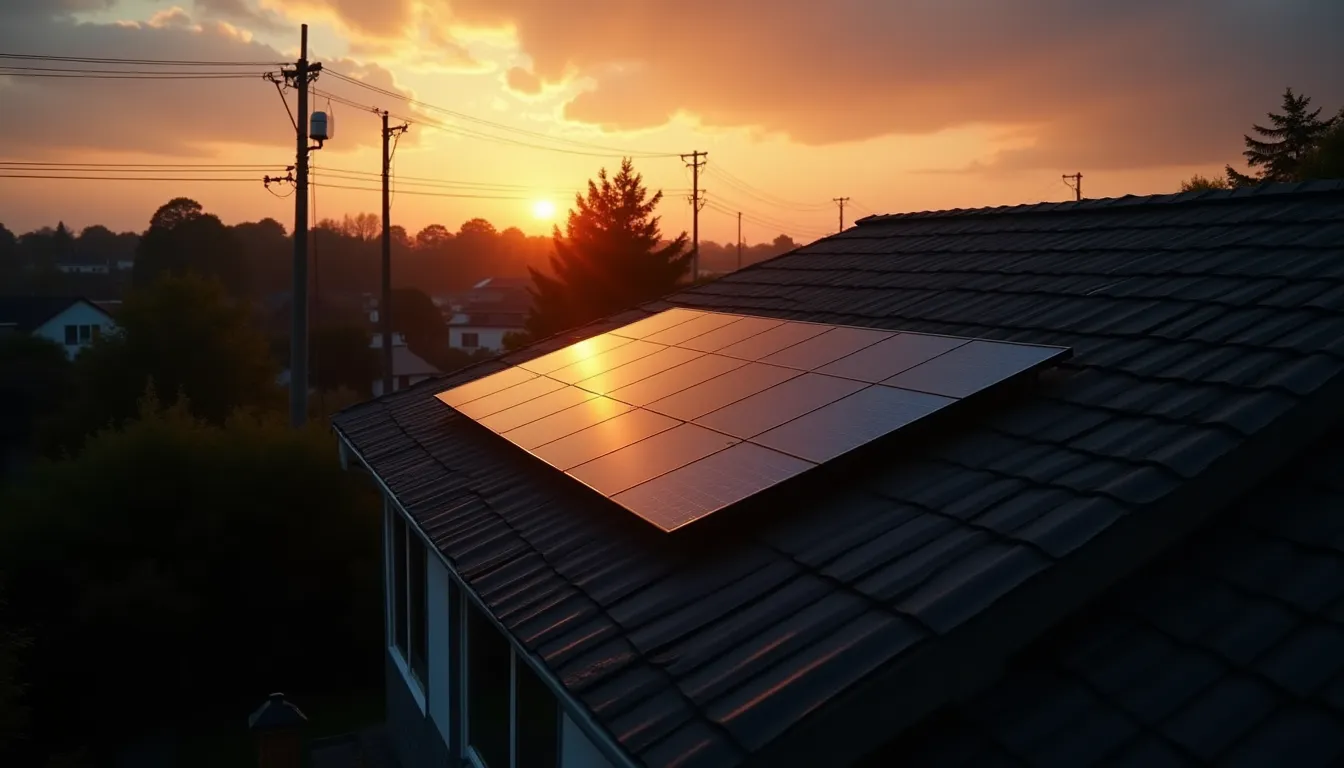
California is streamlining permits for heat pumps and solar installations while Trump's DOE orders coal plants to stay open, exposing a deepening fracture in U.S. energy policy.
Key Takeaways
- California is overhauling permits for heat pumps, rooftop solar, and battery storage to reduce installation delays across the state.
- Trump's DOE has issued orders requiring coal plants scheduled for retirement to stay online, citing grid reliability - drawing legal challenges from utilities.
- An Idaho county that banned new renewable energy projects is reconsidering after losing tax revenue from solar development.
- England's June 2026 heatwave drove record ambulance call volumes, according to Carbon Brief analysis of NHS data.
- Canary Media analysis describes Newsom's climate record as one of real renewable additions alongside persistent compromises on gas and oil extraction.
California Governor Gavin Newsom is pushing a significant permitting overhaul to accelerate residential clean energy adoption, according to Canary Media, targeting heat pumps, rooftop solar, and battery storage systems - arriving on the same day that federal data confirmed England's June 2026 heatwave drove record ambulance demand, underlining the mounting human cost of delayed climate action.
What Happened
California's new permitting initiative aims to remove administrative friction that has slowed residential clean energy installations across the state. According to Canary Media, the changes target the patchwork of local permits, inspections, and approvals that routinely add weeks or months to heat pump and solar deployments. The state has not disclosed a specific implementation date but framed the effort as part of a broader push to hit its climate goals. California's grid already draws heavily on renewable generation, and accelerating distributed installations could reduce peak demand pressure - a factor that matters increasingly as AI data centre construction intensifies across the western United States.
A separate Canary Media analysis of Newsom's climate legacy describes a record that includes real renewable capacity additions but also persistent compromises on gas infrastructure and oil extraction. The permitting move appears calibrated to strengthen that record ahead of what many observers expect will be a national political campaign for the governor.
At the federal level, the picture is sharply different. Canary Media reported that the Trump administration's Department of Energy has continued issuing orders requiring coal-fired power plants that were scheduled for retirement to remain operational. The directive uses emergency grid reliability authorities, forcing plant operators to keep running facilities that were economically uncompetitive. The policy has drawn legal challenges from utilities and state regulators who argue it distorts power markets and locks in long-term emissions.
Meanwhile, in Idaho, a county that previously enacted a ban on new renewable energy projects is now reconsidering that position, according to a further Canary Media report. Local officials cited economic development pressure and lost tax revenue as primary drivers behind the potential reversal - a signal that even in politically conservative regions, the financial case for solar is proving difficult to ignore.
Across the Atlantic, Carbon Brief revealed that England's June 2026 heatwave generated record demand for ambulance services, with heat-related call volumes surpassing any previously recorded period. The data, drawn from National Health Service records, provides a concrete public health metric for what extreme heat events cost at an operational level - and reinforces the urgency behind permitting reforms designed to expand cooling infrastructure.
Why It Matters
The five stories together map a U.S. energy system pulling in opposite directions simultaneously. California's permitting reform addresses one of the most documented bottlenecks in clean energy deployment: local administrative delays that persist even when the economics and policy intent both favour installation. Cutting those barriers could accelerate grid relief at a moment when power demand is rising sharply, driven in significant part by the construction of AI data centres throughout California and the broader western grid.
The Trump DOE's coal plant orders represent the opposite impulse - using federal authority to slow the retirement of assets that utilities themselves have judged uneconomic. That creates stranded-cost risk for ratepayers and delays the grid modernisation that both clean energy advocates and data centre operators are pressing for. Investors tracking the intersection of energy infrastructure and technology build-out can find detailed market context through commodity and energy market analysis resources that cover the evolving cost dynamics between fossil and renewable generation.
The Idaho reversal is a smaller but instructive data point: even where political opposition to renewables has been codified into local law, the tax base argument is beginning to shift the calculation. England's ambulance data adds a dimension that policy debates often lack - a specific, measurable human outcome tied directly to inadequate heat resilience infrastructure.
Background
The tension between federal fossil fuel policy and state-level clean energy expansion is not new, but the scale of AI-driven electricity demand has added a new variable. Hyperscale data centre operators are signing long-term Power Purchase Agreements to secure renewable capacity, often in regions where grid infrastructure is under strain. California's grid operator, CAISO, has repeatedly flagged distributed energy resources - including rooftop solar and home batteries - as essential buffers during peak demand events. Permitting reform that speeds residential installations therefore has direct relevance to grid stability for industrial-scale power consumers as well.
Grid-scale storage is increasingly part of this picture. The declining cost of grid-scale battery storage has made pairing solar with storage more viable, but permitting timelines remain a friction point that prevents rapid deployment even when projects are fully financed.
What to Watch
California's implementation timeline for the permitting overhaul will be the first test of whether the reform produces measurable acceleration in installations or remains largely aspirational. Legal challenges to the Trump DOE's coal retention orders are working through federal courts, and a ruling against the administration could force a rapid unwinding of those directives - with knock-on effects for wholesale power prices in affected regions. Idaho's county council vote on reversing the renewables ban is worth monitoring as an early indicator of whether economic pragmatism is beginning to outpace ideological opposition in rural energy policy. On the health side, England's heatwave ambulance data is likely to inform infrastructure planning discussions in the UK and across Europe as governments assess the cost of under-investment in cooling and grid resilience.
- Power Purchase Agreements now represent the primary mechanism for hyperscale cloud providers, including Microsoft, Google, and Amazon, to secure long-term renewable energy supply.
- PPAs typically run 10 to 25 years and are structured to guarantee a fixed energy price, shielding buyers from wholesale market volatility.
- New renewable capacity constructed under PPA contracts contributes directly to grid supply, rather than drawing from existing clean energy generation.
- AI data centre electricity demand is among the fastest-growing sources of new load on power grids in North America and Europe, accelerating corporate PPA activity.
Sources
- Canary Media: California moves to cut red tape for heat pumps, solar, and more
- Canary Media: Gavin Newsom's complicated legacy on climate and clean energy
- Canary Media: An Idaho county banned renewables. It's having second thoughts.
- Canary Media: Trump's DOE keeps forcing coal plants to stay open
- Carbon Brief: Revealed: England's June 2026 heatwave sparked record demand for ambulances
- MachineHours Encyclopedia: Power Purchase Agreements — How Hyperscalers Source Clean Energy for AI
- MachineHours Encyclopedia: Grid-Scale Battery Storage — Technologies, Costs, and the Energy Transition
Frequently Asked Questions
What types of projects does California's new permitting reform cover?
The reform targets heat pumps, rooftop solar installations, and battery storage systems, aiming to reduce local permit and inspection delays that currently add weeks or months to project timelines.
Why is the Trump administration keeping coal plants open?
The Trump DOE has invoked emergency grid reliability authorities to require coal plant operators to keep facilities running that utilities had already scheduled for retirement on economic grounds.
Why did an Idaho county ban renewables, and why might it reverse course?
The Idaho county enacted a ban on new renewable projects, but local officials are now reconsidering due to lost tax revenue and foregone economic development from solar projects that went elsewhere.
What did England's June 2026 heatwave reveal about public health infrastructure?
Carbon Brief reported that the heatwave generated record demand for NHS ambulance services, providing a direct measurable link between extreme heat events and emergency health system strain.
How does California's permitting reform connect to AI data centre power demand?
Faster rooftop solar and battery storage deployment adds distributed generation and storage capacity to California's grid, easing peak demand pressure at a time when AI data centre construction is adding significant new electrical load.
Get MachineHours in your inbox
AI compute and the machine economy in your inbox.