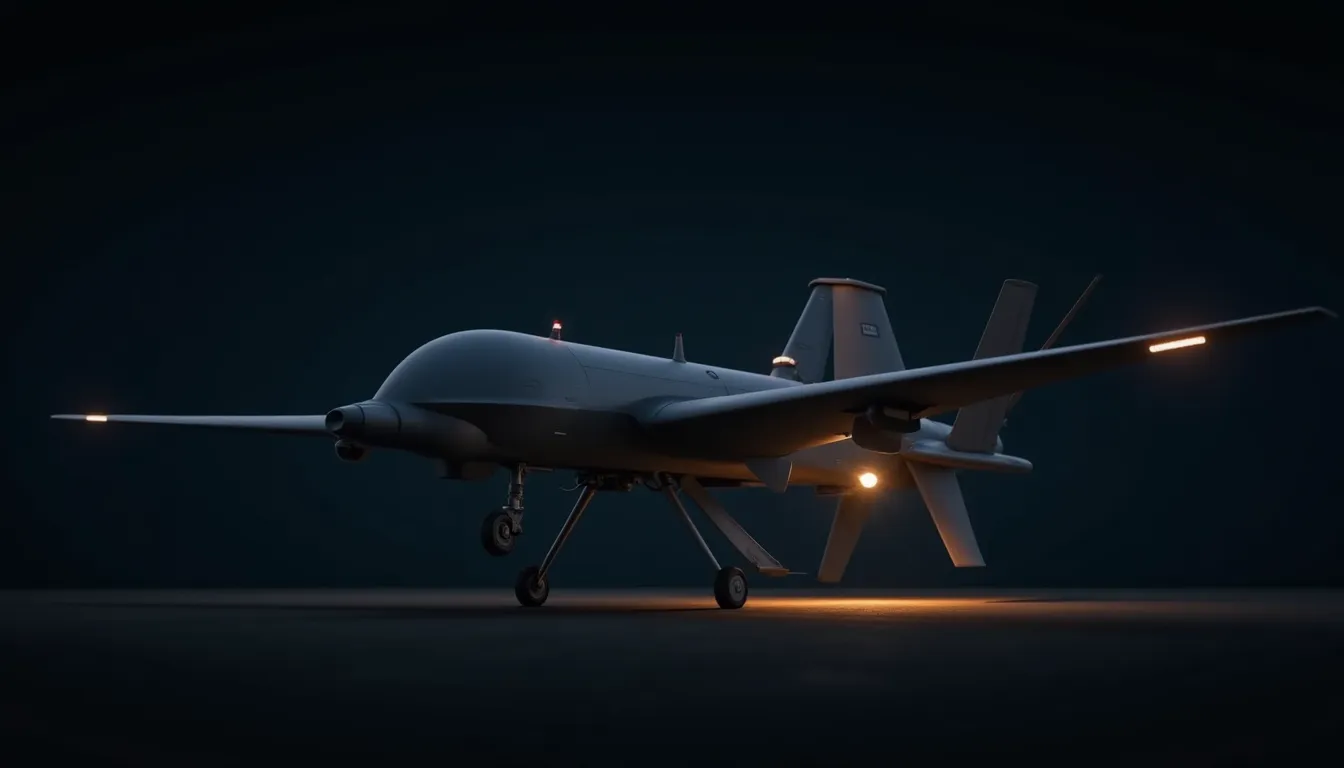
Army's top tech official details drone autonomy plans as Australia and Indonesia test AI-enabled missile and cyber capabilities in a joint exercise.
Key Takeaways
- Army's technology chief discussed autonomy and acquisition reform for drones in an October 21 Breaking Defense interview.
- Australia and Indonesia marked missile and cyber capability firsts in a joint exercise reported October 21.
- Solstar provided Wi-Fi connectivity for a NASA proximity operations demonstration, SpaceNews reported October 21.
- SpaceNews reported continued momentum toward operational space-based quantum key distribution.
- Pentagon is weighing force posture and rebuilding costs for Middle East bases, per an October 20 Breaking Defense report.
The U.S. Army's top uniformed technology official used an October 21 interview with Breaking Defense to lay out how autonomous flight systems and reformed acquisition pathways will shape the service's growing drone fleet. The same day, the outlet reported on a separate story out of the Indo-Pacific: an Australia-Indonesia military exercise that notched missile and cyber capability 'firsts,' a sign that AI-adjacent defence systems are moving from testbeds into live joint operations across allied forces.
What Happened
According to Breaking Defense, the Army's technology leadership is rethinking how autonomous drone systems get built, tested and fielded, with acquisition speed framed as a central constraint on how quickly new autonomy features reach units. The service did not disclose specific unit costs or fielding timelines in the published remarks, but the emphasis on acquisition reform alongside autonomy suggests the Army views procurement bureaucracy, not just technology maturity, as the bottleneck to scaling AI-enabled drone fleets.
Separately, Breaking Defense reported on an October 21 joint exercise between Australia and Indonesia that achieved what the two militaries described as missile and cyber capability firsts. The exercise did not publicly detail the degree of autonomous or AI-assisted targeting involved, but the pairing of missile and cyber milestones in a single drill points toward integrated, software-driven combat systems becoming standard practice in allied exercises.
In orbit, SpaceNews reported that Solstar supplied Wi-Fi connectivity for a NASA proximity operations demonstration on October 21, supporting data collection during a proximity operations demonstration, which NASA said could help train AI models for future autonomous missions including satellite servicing. SpaceNews also covered continued momentum behind space-based quantum key distribution, noting that the technology is advancing toward operational use for securing space-to-ground communications, a capability with direct implications for military satellite links.
On the budget side, Breaking Defense reported on October 20 that the Pentagon is weighing the cost and force posture implications of rebuilding bases in the Middle East, a reminder that even as autonomy and software dominate headlines, physical infrastructure costs remain a major constraint on how fast new systems can actually deploy.
Why It Matters
Read together, these stories describe a defence establishment trying to close the gap between autonomous technology and the acquisition, infrastructure and policy systems meant to field it. The Army's push to pair autonomy with acquisition reform suggests military leaders increasingly see procurement speed, not algorithm quality, as the limiting factor in deploying AI-enabled drones at scale. The Australia-Indonesia exercise reinforces that allied forces are testing integrated missile-cyber capabilities in live drills rather than isolated labs. For investors tracking where defence budgets are flowing, this convergence of autonomy, secure communications and base infrastructure spending is worth watching through defence and space sector equity analysis rather than any single program announcement.
Background
The broader trajectory of autonomous systems moving from novelty to routine military use echoes an earlier consumer shift. The Roomba proved in 2002 that autonomous machines could operate reliably in uncontrolled environments at an affordable price, establishing a template that later informed how industries, including defence, approached fielding autonomy at scale rather than treating it as experimental.
What to Watch
Watch for follow-up detail on how the Army's acquisition reforms translate into actual contract timelines for autonomous drone programs, and whether the Australia-Indonesia missile and cyber firsts get replicated in future joint drills with other Indo-Pacific partners. Progress on space-based quantum key distribution will also matter for how quickly militaries can secure satellite links against future threats, while the Pentagon's Middle East basing review will shape how much budget remains for autonomy and software investment versus physical infrastructure rebuilds.
Sources
- Breaking Defense: Army's tech chief talks autonomy, acquisition and the future of drones
- Breaking Defense: Australia marks missile, cyber 'firsts' in exercise with Indonesia
- SpaceNews: Solstar provides Wi-Fi connectivity for NASA proximity operations demonstration
- SpaceNews: Summer of Quantum: Building momentum for space-based QKD
- Breaking Defense: Pentagon weighs force posture, costs of rebuilding Middle East bases
- MachineHours Encyclopedia: Roomba: First Mass-Market Consumer Robot
Frequently Asked Questions
What did the Army's tech chief say about drone autonomy?
According to Breaking Defense, the Army's top technology official discussed pairing autonomous flight capabilities with reformed acquisition pathways to field drones faster, though specific timelines were not disclosed.
What were the 'firsts' in the Australia-Indonesia exercise?
Breaking Defense reported the joint exercise achieved missile and cyber capability firsts, though the report did not detail the specific systems or AI involvement used.
How does NASA's proximity operations demo relate to defence?
Solstar's Wi-Fi connectivity support for NASA's proximity operations demonstration involves autonomous close-range satellite maneuvering, a capability relevant to both civil space missions and military satellite servicing.
Why does space-based quantum key distribution matter for defence?
QKD technology secures satellite communications against interception, a capability with direct relevance to protecting military satellite links as the technology moves toward operational deployment.