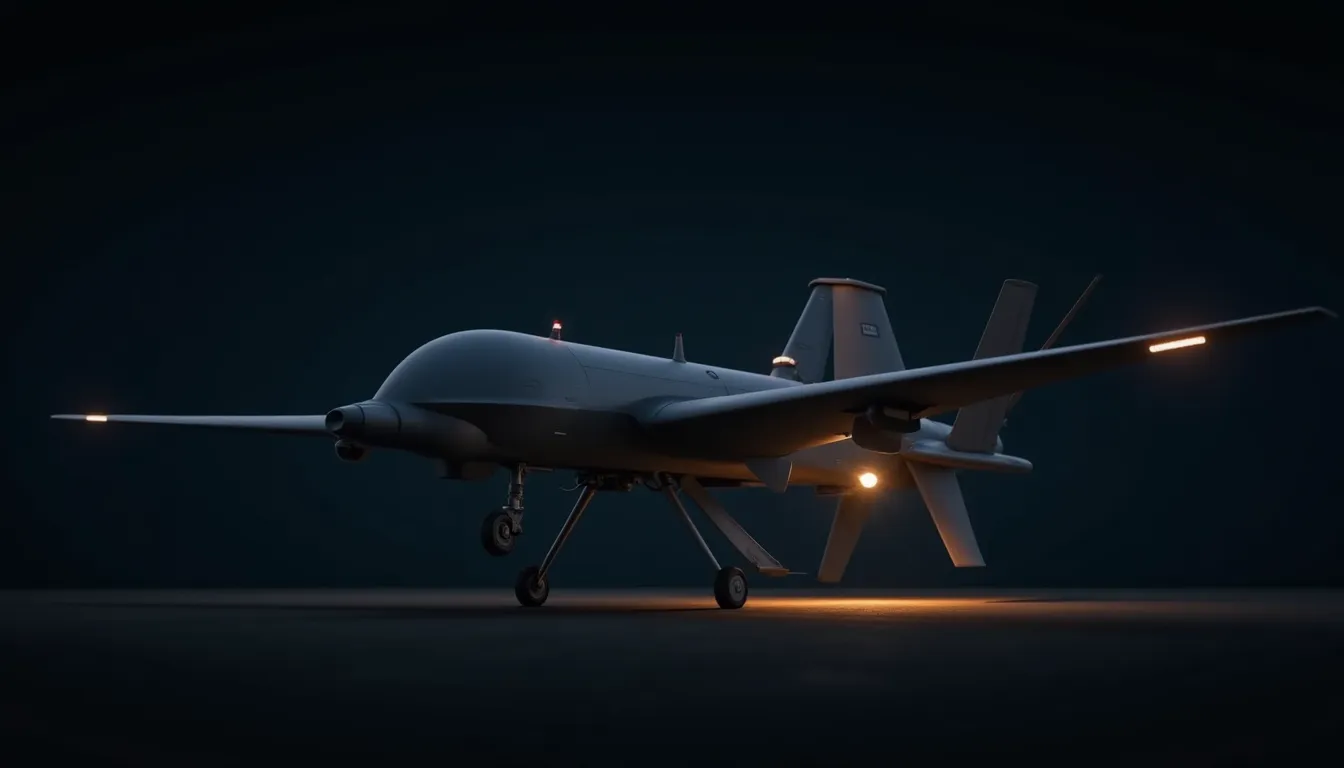
The U.S. Army's Chief Technology Officer details plans for autonomous flight systems and acquisition reform, as the service's drone marketplace exceeds $800 million in purchases and expands beyond aircraft to ground, maritime and counter-drone systems.
Key Takeaways
- The Army's drone marketplace has exceeded $800 million in purchases and expanded beyond aircraft to include ground, maritime and counter-drone systems
- The service views acquisition speed, not technology maturity, as the primary bottleneck to deploying autonomous systems at scale
- Autonomous systems are planned to support both tactical operations and logistics functions including ammunition, fuel, food, water and medical supplies
- The newly reflagged Futures and Autonomous Systems Command reflects organizational commitment to treating autonomy as a core military function
- The Army's strategy couples autonomous system development with procurement reform to accelerate the transition from prototype to operational deployment
The U.S. Army's top uniformed technology official used an October 21 interview with Breaking Defense to lay out how autonomous flight systems and reformed acquisition pathways will shape the service's growing drone fleet and multi-domain unmanned operations.
Army Drone Marketplace Reaches $800 Million Milestone
Army Chief Technology Officer Alex Miller outlined the scale and scope of the service's drone marketplace, which has handled more than $800 million in purchases. The marketplace has evolved beyond its initial focus on unmanned aircraft to encompass a broader range of autonomous systems, expanding to include ground, maritime and counter-drone systems.
This expansion reflects a strategic shift within the Army toward multi-domain autonomy rather than treating drone operations as a single-platform problem. The diversification of the marketplace signals confidence that autonomous technologies can operate reliably across different operating environments—from aerial surveillance to ground-based logistics support to maritime domain awareness. By centralizing procurement across these categories, the Army appears to be creating economies of scale and accelerating the vendor ecosystem's ability to develop and field new autonomous capabilities.
Autonomy Supporting Logistics and Tactical Operations
Miller highlighted a broad vision for how autonomous technology will support Army operations across multiple functional domains. The Army sees autonomous tech supporting everything from battlefield protection to logistics, ammunition, food, fuel, water and medical supplies.
This scope demonstrates that Army autonomy planning extends far beyond kinetic operations or surveillance. Logistics and supply chain management represent some of the most resource-intensive and casualty-prone functions in military operations. Autonomous systems capable of reliably moving ammunition, fuel, food, water and medical supplies to forward units could reduce vulnerability windows for logistics convoys, decrease personnel exposure to enemy fire, and improve distribution speed to dispersed units operating across large areas.
The inclusion of medical supply logistics is particularly significant, as speed of delivery can directly affect casualty survival rates. By automating supply chain operations, the Army can potentially reduce the number of personnel required for logistics operations and redeploy those soldiers to combat or critical support roles. The emphasis on battlefield protection suggests the service views autonomous systems as part of an integrated defense architecture, not merely as remote delivery mechanisms.
Acquisition Speed as the Critical Bottleneck
The Army's technology leadership is rethinking how autonomous drone systems get built, tested and fielded, with acquisition speed framed as a central constraint on how quickly new autonomy features reach units. This framing reveals a strategic insight: the Army does not believe the primary barrier to deploying autonomous systems is technological maturity, but rather bureaucratic process.
Traditional military procurement cycles can require years of requirements definition, testing, documentation and contract negotiation before fielding. For rapidly evolving technologies like autonomous systems and artificial intelligence, this timeline creates a structural mismatch—by the time a system reaches troops, newer algorithms, sensors and computational platforms may already be available. The service did not disclose specific unit costs or fielding timelines in the published remarks, but the emphasis on acquisition reform alongside autonomy suggests the Army views procurement bureaucracy as the primary bottleneck to scaling AI-enabled drone fleets.
This diagnosis aligns with broader Pentagon efforts to accelerate acquisition for critical technologies. If the Army successfully reforms its procurement pathways for autonomous systems, the service could create a template for more responsive fielding of other emerging capabilities. The consequence would be a shift from static, multi-year development programs to more agile, iterative approaches where prototype systems reach units faster, feedback is collected and used to drive the next development cycle, and newer capabilities are integrated as they mature.
Newly Reflagged Command Structure for Autonomy
Miller highlighted the newly reflagged Futures and Autonomous Systems Command and its relationship to the Pentagon's wider autonomy push. The establishment of a dedicated command structure for autonomous systems and future operations indicates organizational commitment to treating autonomy as a core military function rather than a supplementary capability.
Organizational structure often signals strategic priority within the military. By establishing a distinct command focused on futures and autonomous systems, the Army is centralizing expertise, accountability and resource allocation for this domain. This structure likely facilitates faster decision-making on autonomous system requirements and reduces the risk that autonomy development remains siloed within individual branches or specialty commands. A unified command can coordinate testing protocols, establish common standards for autonomous system performance and interoperability, and streamline the path from concept to deployment.
Implications for Defense Modernization
The convergence of expanded drone marketplace spending, multi-domain autonomous system development and acquisition reform signals a fundamental shift in how the Army approaches modernization. Rather than viewing autonomy as a technology to be bolted onto existing platforms, the service appears to be redesigning operational concepts and procurement processes around autonomous capabilities from the ground up.
The $800 million marketplace represents substantial budget allocation, but the real strategic significance lies in the diversification beyond aircraft and the explicit coupling of autonomy investment with acquisition process reform. If the Army successfully accelerates fielding timelines for autonomous systems, the service could establish a competitive advantage in multi-domain operations, improve the safety and sustainability of logistics operations, and create a more flexible force structure less dependent on large concentrations of personnel in vulnerable supply and transport roles.
Sources
- Breaking Defense: Army's tech chief talks autonomy, acquisition and the future of drones
- Breaking Defense: Australia marks missile, cyber 'firsts' in exercise with Indonesia
- SpaceNews: Solstar provides Wi-Fi connectivity for NASA proximity operations demonstration
- SpaceNews: Summer of Quantum: Building momentum for space-based QKD
- Breaking Defense: Pentagon weighs force posture, costs of rebuilding Middle East bases
- MachineHours Encyclopedia: Roomba: First Mass-Market Consumer Robot
Frequently Asked Questions
What did the Army's tech chief say about drone autonomy?
According to Breaking Defense, the Army's top technology official discussed pairing autonomous flight capabilities with reformed acquisition pathways to field drones faster, though specific timelines were not disclosed.
What were the 'firsts' in the Australia-Indonesia exercise?
Breaking Defense reported the joint exercise achieved missile and cyber capability firsts, though the report did not detail the specific systems or AI involvement used.
How does NASA's proximity operations demo relate to defence?
Solstar's Wi-Fi connectivity support for NASA's proximity operations demonstration involves autonomous close-range satellite maneuvering, a capability relevant to both civil space missions and military satellite servicing.
Why does space-based quantum key distribution matter for defence?
QKD technology secures satellite communications against interception, a capability with direct relevance to protecting military satellite links as the technology moves toward operational deployment.
Get MachineHours in your inbox
AI compute and the machine economy in your inbox.