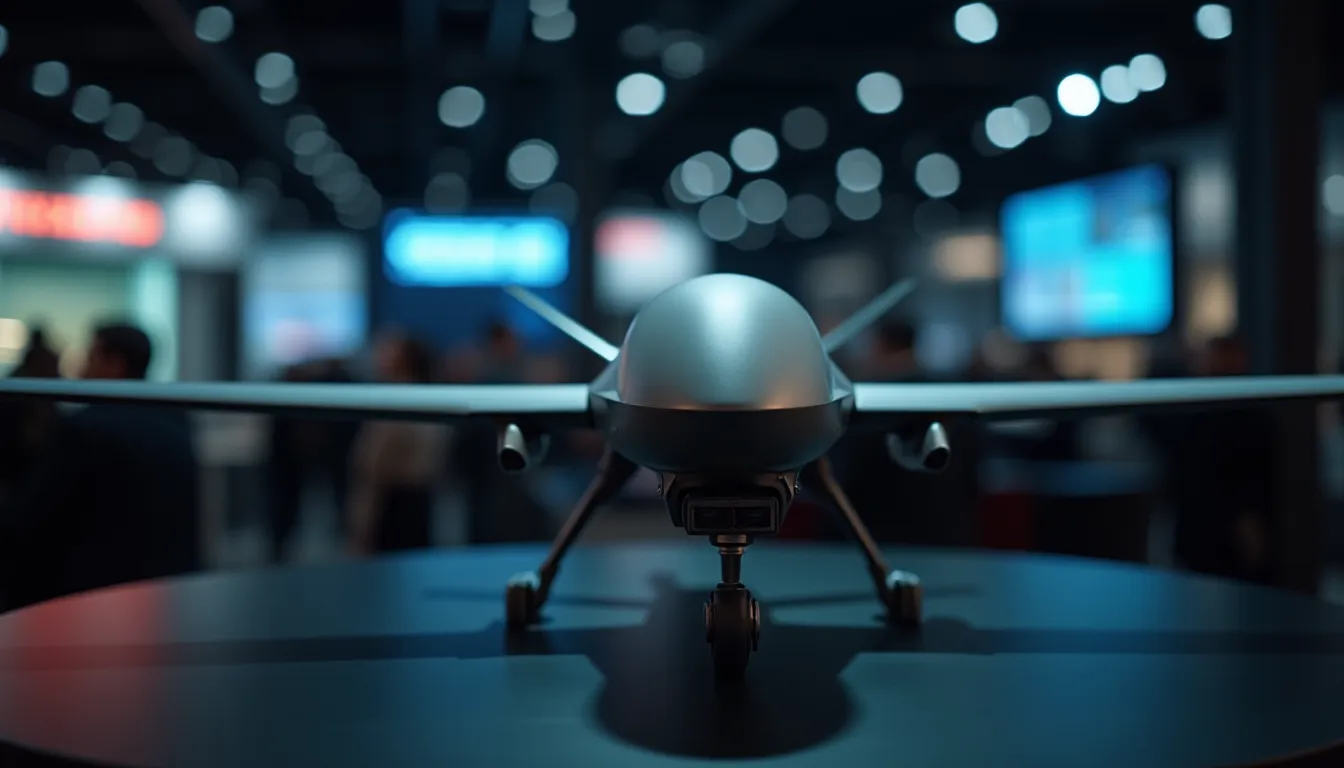
AeroVironment and Australian firm NIOA will jointly offer and support loitering munitions in Australia, as separate reports detail a new artillery munition and leadership change at General Dynamics.
Key Takeaways
- AeroVironment and NIOA announced a teaming agreement on October 8, 2026 to offer and support loitering munitions in Australia.
- A separate report detailed supply chain work behind a liquid-fueled, howitzer-fired munition with a 150 km range.
- B-1 bombers have left England, prompting analyst warnings about limited basing options and base defense needs.
- General Dynamics CEO Phebe Novakovic will step down in 2027.
- SpaceNews examined the infrastructure and funding requirements for building a sustained lunar base.
- The global drone technology market is projected to grow from $43.6 billion to $109.8 billion by 2030.
AeroVironment and Australian munitions supplier NIOA announced a teaming agreement on October 8, 2026, to offer and support loitering munitions in the Australian market, according to Breaking Defense. The deal positions NIOA as a local support and sustainment partner for AeroVironment's loitering munitions systems as Canberra continues to build out its precision strike inventory.
What Happened
The NIOA-AeroVironment arrangement, reported by Breaking Defense, gives AeroVironment a domestic Australian partner capable of in-country sustainment, a structure increasingly common as allied governments push for sovereign industrial participation in defence procurement rather than pure import arrangements.
Separately, Breaking Defense detailed the industrial supply chain being assembled behind a liquid-fueled, howitzer-fired munition capable of reaching 150 kilometers, underscoring how far artillery procurement has moved beyond legacy shell designs toward propulsion-assisted rounds requiring new supplier networks.
On the airpower side, Breaking Defense reported that the departure of B-1 bombers from England has prompted analysts to flag limited basing options and renewed emphasis on base defense investment, a procurement priority with direct budget implications for host and allied nations.
In corporate news with procurement consequences, Breaking Defense reported that General Dynamics CEO Phebe Novakovic will step down in 2027, a leadership transition at one of the Pentagon's largest contractors that will be watched closely by government program offices managing multi-year contracts with the company.
Finally, SpaceNews examined what sustained lunar surface infrastructure would require, a question that ultimately depends on long-horizon government funding commitments rather than any single technology milestone.
Why It Matters
Taken together, these stories point to a defence sector where procurement structure matters as much as the hardware itself. Teaming agreements like NIOA-AeroVironment let allied governments satisfy local content and sustainment requirements without each nation building munitions production from scratch. The howitzer munition supply chain story shows prime contractors now treating industrial base resilience as a procurement deliverable in its own right. Leadership continuity at General Dynamics, base defense budgeting after the B-1 drawdown, and the funding scale a moon base would require all hinge on the same underlying variable: government willingness to commit multi-year, multi-billion-dollar budgets. For investors tracking how these contract flows translate into company performance, defence and space sector equity analysis increasingly focuses on backlog and sustainment revenue rather than one-off program wins.
Background
Loitering munitions sit within the broader category of autonomous and semi-autonomous flight systems covered in MachineHours' Drone Technology - Autonomous Flight and Its Economic Impact entry, which tracks how AI-guided aerial systems have moved from niche military tools into a market projected to grow substantially by 2030. Defence applications, including loitering munitions and strike drones, are among the fastest-growing segments within that broader autonomous flight economy, alongside logistics and surveillance uses.
What to Watch
Watch for whether the NIOA-AeroVironment teaming agreement converts into a formal Australian government contract award, and on what timeline local production or assembly might begin. General Dynamics' succession planning ahead of Novakovic's 2027 departure will likely draw scrutiny from program managers overseeing the company's existing government contracts. Further detail on the 150-kilometer howitzer munition's supplier network, and any formal basing decisions following the B-1 departure from England, are likely in coming reporting cycles.
Sources
- Breaking Defense: NIOA, AeroVironment team to offer and support loitering munitions Down Under
- Breaking Defense: Weaponizing the supply chain for a liquid-fueled howitzer-fired munition that flies 150 km
- Breaking Defense: After B-1's leave England, analysts point to limited options, importance of base defense
- Breaking Defense: General Dynamics CEO Phebe Novakovic to step down in 2027
- SpaceNews: What will it take to build a moon base?
- MachineHours Encyclopedia: Drone Technology — Autonomous Flight and Its Economic Impact
Frequently Asked Questions
What did AeroVironment and NIOA announce?
On October 8, 2026, AeroVironment and Australian firm NIOA announced a teaming agreement to offer and support loitering munitions in the Australian market, giving AeroVironment a local sustainment partner.
Who is Phebe Novakovic and what is happening with her role?
Phebe Novakovic is CEO of General Dynamics and, according to Breaking Defense, she will step down from the position in 2027.
What is the 150 km munition story about?
Breaking Defense reported on the supply chain being built to support a new liquid-fueled, howitzer-fired munition capable of flying 150 kilometers, reflecting a shift toward propulsion-assisted artillery rounds.
Why are B-1 bombers leaving England significant?
Breaking Defense reported that after B-1 bombers left England, analysts flagged limited alternative basing options and the growing importance of investing in base defense.
How does this relate to drone technology more broadly?
Loitering munitions are part of the wider autonomous flight systems category, which MachineHours' encyclopedia projects will grow from a $43.6 billion to $109.8 billion market by 2030.