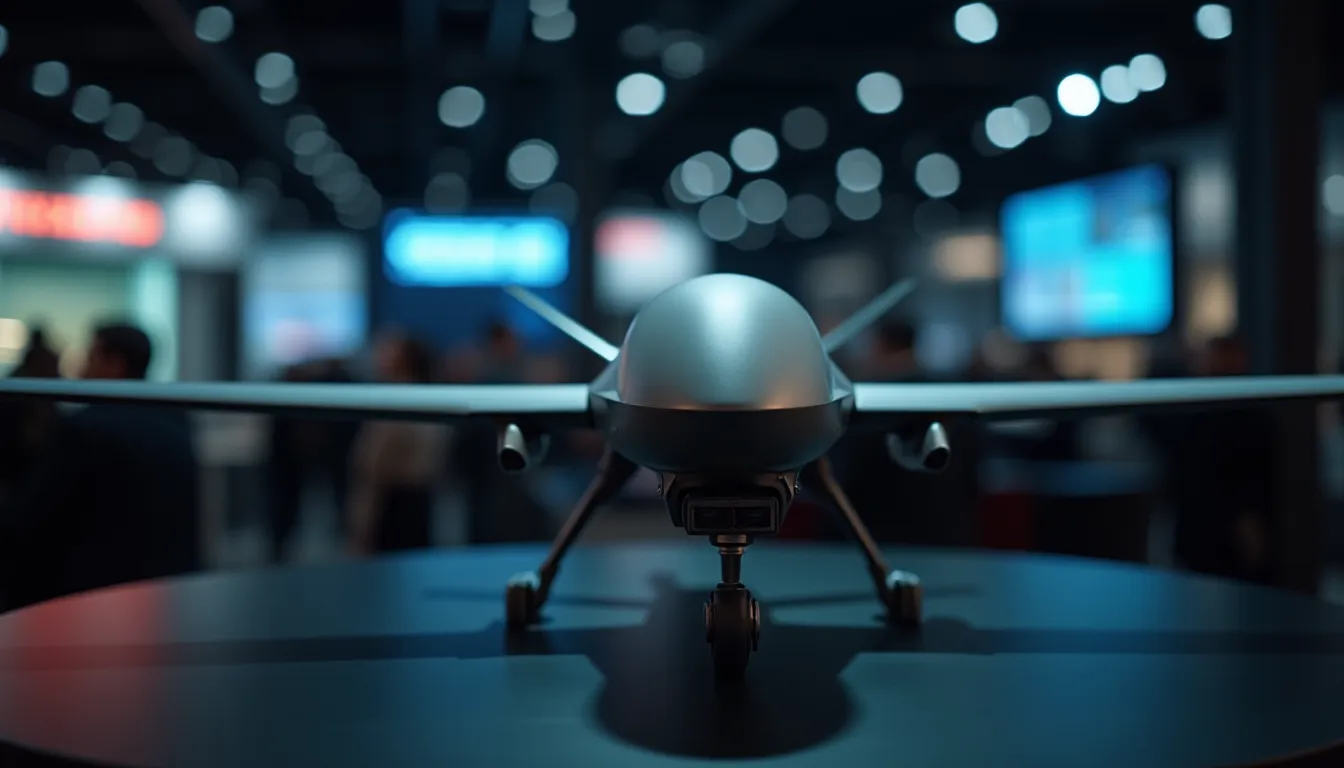
AeroVironment and Australian munitions supplier NIOA announced a strategic partnership to introduce, support and sustain loitering munitions capabilities in Australia and New Zealand. The agreement positions NIOA as a local distribution, support and industrial partner for AeroVironment's Switchblade loitering munition family, reflecting a broader shift toward sovereign industrial participation in
Key Takeaways
- AeroVironment and NIOA announced a strategic partnership to introduce and sustain loitering munitions capabilities in Australia and New Zealand, with NIOA serving as the local partner for distribution, support and capability development.
- The arrangement supports Australia's 2024 Guided Weapons and Explosive Ordnance plan, which called for introduction of the Switchblade 300 loitering munition into the Australian Army.
- The partnership exemplifies a shift in allied defence procurement toward hybrid models emphasizing sovereign industrial participation and in-country sustainment capability rather than pure foreign military sales arrangements.
- Both companies are exploring opportunities to expand support and industrial capability in Australia, suggesting potential for future licensed production or assembly activities beyond current distribution arrangements.
- Loitering munitions provide tactical-level precision strike capability with operator control and terminal accuracy, filling a gap between unguided fire support and expensive strategic munitions in modern combat operations.
Strategic Framework and Industrial Structure
The partnership establishes a framework for cooperation across AeroVironment's portfolio, including the combat-proven Switchblade family of precision loitering munitions. According to the announcement, both companies "will also explore opportunities to expand support and industrial capability in Australia" and the arrangement "reflects a shared commitment to supporting Australian Defence Force requirements and exploring opportunities for local support, sustainment and future industrial capability development."
This structure exemplifies an increasingly common approach among allied governments seeking to balance procurement modernization with sovereign industrial participation. Rather than pure import arrangements where foreign suppliers handle all aspects of capability provision, the NIOA-AeroVironment model allows host nations to retain domestic control over critical defence sustainment infrastructure. This approach addresses legitimate policy concerns about long-term supplier dependence while leveraging the technical expertise of established munitions manufacturers.
Ben James, NIOA's executive vice president of Australia and New Zealand, characterized the partnership as significant for both nations' defence posture. He stated that "Combining NIOA's deep expertise in strategic munitions supply, manufacturing and support with AeroVironment's global leadership in loitering munitions and autonomous systems technology represents a significant win for both the ADF and in the integration of Australian and US industrial bases."
From AeroVironment's perspective, the arrangement strengthens market access in a critical Indo-Pacific region. Justin McFarlin, vice president of international business development at AeroVironment, said the partnership combines "AeroVironment's combat-proven technologies with a trusted Australian defence industry partner to support customers, strengthen sovereign capability outcomes and establish the foundations for long-term growth across the region."
Switchblade Introduction Timeline and Capability Requirements
The partnership directly supports Australia's defence modernization roadmap. According to James, Australia's 2024 Guided Weapons and Explosive Ordnance (GWEO) plan called for the introduction of the Switchblade 300 loitering munition into the Australian Army. The partnership arrangement provides the technical and logistical infrastructure to execute this acquisition and subsequent capability expansion.
Loitering munitions occupy a distinct category within autonomous systems. These platforms combine elements of both surveillance and strike capability—they can loiter over a target area to conduct reconnaissance before executing terminal guidance, providing tactical flexibility that traditional standoff munitions cannot match. The Switchblade systems represent a mature technology with documented combat employment, reducing technical risk compared to developmental platforms.
The introduction of such capabilities reflects operational lessons from recent conflicts where precision strike range has become a critical requirement. Modern conflict has demonstrated the value of systems that extend effective strike distance while maintaining operator control and terminal accuracy. Loitering munitions like Switchblade bridge the gap between unguided fire support and expensive strategic munitions, offering cost-effective options for tactical-level precision strikes.
Broader Context of Allied Defence Procurement Evolution
The NIOA-AeroVironment arrangement reflects a fundamental shift in how allied governments structure defence industrial participation. Cold War procurement models typically involved either domestic production of entire systems or straightforward foreign military sales where the supplier nation retained all production and sustainment roles. Contemporary models increasingly feature hybrid arrangements where allied nations partner on specific functions—particularly sustainment, training, and logistics—while retaining clear industrial participation.
This evolution serves multiple policy objectives simultaneously. First, it maintains supply security by establishing in-country expertise and inventory management capabilities that do not depend entirely on a foreign supplier's production schedule or strategic priorities. Second, it develops domestic industrial expertise in advanced technologies, building human capital and organizational knowledge that benefits broader defence capabilities. Third, it creates local economic benefit and employment associated with defence spending, addressing domestic political requirements around defence procurement.
For the United States and its allies, such arrangements also strengthen coalition industrial integration. When Australian firms develop deep working relationships with US defence contractors through partnerships like NIOA-AeroVironment, they build interoperability expertise and supply chain familiarity that extends beyond any single weapons system. This dynamic has broader geopolitical significance in an Indo-Pacific context where allied industrial coordination provides strategic resilience against supply chain disruptions.
Competitive and Strategic Implications
The partnership announcement indicates that loitering munitions remain a competitive priority within allied procurement. The category encompasses multiple competing systems at varying maturity levels and price points. By securing NIOA as a dedicated regional partner with local market knowledge, AeroVironment establishes an advantaged position for the Switchblade family within Australian and New Zealand procurement decisions.
NIOA's role is equally strategic. As an Australian national champion in munitions supply, the firm's partnership with AeroVironment extends its portfolio into emerging technology categories while providing access to proven combat systems. This positions NIOA to capture sustainment revenue streams extending across decades of service life, not merely one-time procurement events.
The emphasis on "future industrial capability development" signals that both parties anticipate this as a long-term relationship potentially extending beyond distribution and support into joint manufacturing or assembly activities. Such expansion would represent substantial deepening of the industrial relationship and would typically require formal government agreements governing technology transfer and export controls.
Strategic Outlook
Watch for whether the NIOA-AeroVironment teaming agreement converts into formal Australian government contract awards and the timeline for local production or assembly initiation. The agreement establishes the framework; government procurement decisions will determine its commercial magnitude. Additionally, monitor whether the partnership expands to include licensed production or co-development activities in Australia, which would represent a more substantial commitment to in-country industrial capability than current distribution and support arrangements alone.
Sources
- Breaking Defense: NIOA, AeroVironment team to offer and support loitering munitions Down Under
- Breaking Defense: Weaponizing the supply chain for a liquid-fueled howitzer-fired munition that flies 150 km
- Breaking Defense: After B-1's leave England, analysts point to limited options, importance of base defense
- Breaking Defense: General Dynamics CEO Phebe Novakovic to step down in 2027
- SpaceNews: What will it take to build a moon base?
- MachineHours Encyclopedia: Drone Technology — Autonomous Flight and Its Economic Impact
Frequently Asked Questions
What did AeroVironment and NIOA announce?
On October 8, 2026, AeroVironment and Australian firm NIOA announced a teaming agreement to offer and support loitering munitions in the Australian market, giving AeroVironment a local sustainment partner.
Who is Phebe Novakovic and what is happening with her role?
Phebe Novakovic is CEO of General Dynamics and, according to Breaking Defense, she will step down from the position in 2027.
What is the 150 km munition story about?
Breaking Defense reported on the supply chain being built to support a new liquid-fueled, howitzer-fired munition capable of flying 150 kilometers, reflecting a shift toward propulsion-assisted artillery rounds.
Why are B-1 bombers leaving England significant?
Breaking Defense reported that after B-1 bombers left England, analysts flagged limited alternative basing options and the growing importance of investing in base defense.
How does this relate to drone technology more broadly?
Loitering munitions are part of the wider autonomous flight systems category, which MachineHours' encyclopedia projects will grow from a $43.6 billion to $109.8 billion market by 2030.
Get MachineHours in your inbox
AI compute and the machine economy in your inbox.