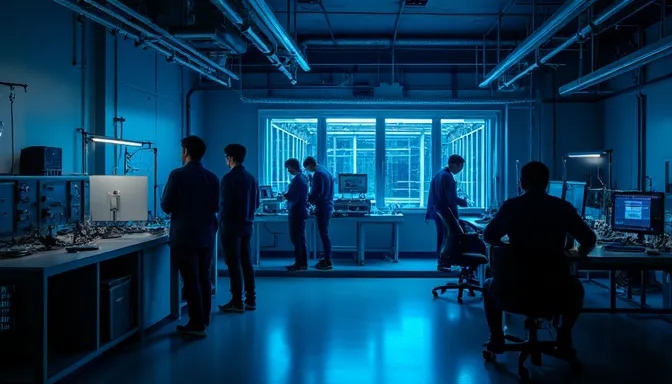
Aalborg University has ordered a ConScience Plug'N'Teach superconducting quantum computer, starting at two qubits and expanding to seven by 2027.
Key Takeaways
- Aalborg University ordered a ConScience Plug'N'Teach superconducting quantum computer, per Quantum Computing Report.
- The system launches with two qubits and will expand to seven qubits after installation.
- Installation is scheduled for 2027 across two rooms at Aalborg's Department of Electronic Systems.
- ConScience integrates its own superconducting processors with Quantum Machines control electronics and Bluefors cryogenic refrigeration.
- ConScience, based in Gothenburg at Chalmers University of Technology, has grown without external venture capital.
Aalborg University in Denmark has ordered a superconducting quantum computer from Swedish hardware maker ConScience AB, according to Quantum Computing Report, with installation set for 2027 starting at just two qubits before scaling to seven. The order represents a shift toward on-premises quantum hardware education, moving university training beyond cloud-based simulators to hands-on cryogenic systems that prepare engineers for the technical challenges of fault-tolerant quantum computing.
What Happened
According to Quantum Computing Report, Aalborg University's Department of Electronic Systems has selected ConScience's Plug'N'Teach system for hands-on engineering education and component research. The on-premises installation will occupy two rooms and integrate ConScience's superconducting quantum processors with control and readout electronics from Quantum Machines and cryogenic dilution refrigeration hardware from Bluefors. The system launches with two superconducting qubits and will later expand to seven.
Rather than relying on cloud-based simulation or remote processor access, the university intends to train engineering students directly on cryogenic hardware operation, microwave control, and qubit readout, Quantum Computing Report notes. Faculty will also use the installation for research into component miniaturization, energy efficiency, and materials modeling. This hands-on exposure addresses a critical gap in quantum engineering education: while commercial quantum services provide access to processors via cloud interfaces, students gain little understanding of the cryogenic systems, control electronics, and qubit fabrication processes that underpin every physical quantum computer.
ConScience, based in Gothenburg and operating out of cleanroom facilities at Chalmers University of Technology, has built its business supplying superconducting qubit devices, including its Qubit-in-a-box product line, to academic labs and commercial quantum developers without external venture capital, according to the same report. The company has remained bootstrapped while expanding its superconducting qubit manufacturing and education-focused system design. Company executives described the Aalborg deployment as an expansion from standalone quantum chips into integrated educational systems aimed directly at workforce bottlenecks in quantum hardware engineering.
The Plug'N'Teach architecture bundles ConScience's qubit fabrication with Quantum Machines' classical control stack and Bluefors' cryogenic infrastructure into a teaching-focused package. This integration matters because it removes the burden of system integration from universities, allowing faculty to focus on curriculum design and student training rather than sourcing incompatible components from multiple vendors. The two-to-seven qubit expansion pathway suggests a staged deployment: initial commissioning with manageable system complexity, followed by scaling once operational procedures mature and faculty expertise develops.
Why It Matters
The MachineHours AI Acceleration Index, calculated November 16, 2026, records a compute sub-score of 55 against an overall index of 39, with employment at just 18. This disparity signals strong hardware momentum paired with acute talent scarcity. Per MachineHours' background material on the quantum computing commercial race, useful fault-tolerant quantum computers are estimated to require millions of error-corrected logical qubits, while current systems (including commercial ones) have only hundreds to thousands of noisy physical qubits. That gap matters for understanding this deal: ConScience and Aalborg are not pursuing a fault-tolerance milestone directly. Instead, they are building the training infrastructure that produces the engineers who will eventually operate and design fault-tolerant machines.
The employment gap has real consequences. Quantum hardware development requires expertise spanning superconducting qubit physics, cryogenic engineering, microwave control systems, classical-quantum interface design, and materials science. Few universities offer hands-on courses in these areas, partly because acquiring and operating a physical quantum processor has until now required millions of dollars and substantial institutional resources. Cloud-based access to commercial quantum processors teaches quantum algorithm development but provides no exposure to the hardware fabrication, characterization, and control challenges that dominate industrial quantum engineering roles.
Deployments like Aalborg's target exactly that employment gap. By moving quantum hardware training onto physical cryogenic systems, the university creates experiential learning that simulators cannot replicate: students encounter decoherence timescales not as theoretical numbers but as practical constraints on experiment duration; they debug microwave control sequences in real time; they observe how qubit fabrication variability manifests in measured device characteristics. For readers tracking investment implications of quantum computing advances, education-focused orders rarely move corporate valuations directly. However, they signal sustained demand for the component suppliers, control electronics makers, and cryogenics firms that sit beneath every fault-tolerant roadmap, including Quantum Machines and Bluefors, both named as partners in this build. Each educational installation represents a customer reference, a training opportunity for vendor personnel, and evidence of market demand independent of venture funding cycles.
Background
Superconducting qubits are one of several competing hardware approaches in quantum computing, alongside trapped ion, photonic, and topological systems, each with different tradeoffs for scaling toward error-corrected operation, as detailed in MachineHours' quantum hardware field guide.
What to Watch
The immediate marker will be the 2027 installation date itself and whether ConScience hits its stated expansion from two to seven qubits on schedule. Equipment delays or technical setbacks during commissioning would signal broader supply chain or integration challenges. Longer term, monitor whether other universities follow Aalborg's lead in ordering on-premises teaching systems rather than relying on cloud access to larger commercial processors, and whether that shift measurably eases the engineering talent shortage that ConScience executives flagged as the deal's underlying rationale.
Any public data on student outcomes or research output from the Department of Electronic Systems after installation would offer the first empirical test of whether hands-on cryogenic training produces different engineering results than simulation-based coursework. Track whether graduates from Aalborg's program move into industrial quantum engineering roles at higher rates than peers trained only on cloud quantum services. Watch also for competing offerings from other quantum hardware companies: if Aalborg's deployment proves successful, expect IBM, IonQ, and others to develop education-focused products of their own, potentially fragmenting the university quantum hardware market across multiple competing platforms.
- Aalborg University will install ConScience's Plug'N'Teach superconducting quantum computer in 2027, launching with two qubits and expanding to seven.
- The system integrates ConScience's superconducting processors with Quantum Machines control electronics and Bluefors cryogenic refrigeration, providing a full-stack teaching platform.
- MachineHours' AI Acceleration Index shows compute at 55 but employment at only 18 (November 16, 2026), reflecting strong hardware progress paired with acute talent scarcity that educational deployments directly address.
- ConScience has grown organically without external venture capital by supplying superconducting qubit devices to academic and commercial customers, positioning education-focused systems as a market expansion beyond standalone chip sales.
Further reading and context
- Quantum Hardware — Superconducting, Trapped Ion, Photonic and Topological Approaches Compared
- When Quantum Computers Can Crack Bitcoin: The Timeline, the Threat, and the Fix
- Von Neumann Architecture — The Blueprint of Every Computer
- RLHF — Reinforcement Learning from Human Feedback and How It Trains LLMs
Sources
- Quantum Computing Report: Aalborg University Orders ConScience Plug'N'Teach Superconducting Quantum Computer for Hands-On Engineering Training
- MachineHours: Quantum Hardware Landscape
- MachineHours Encyclopedia: The Quantum Computing Race — Google Willow, IBM Quantum, and the Road to Commercial Advantage
- MachineHours: AI & Robotics Acceleration Index
- When Quantum Computers Can Crack Bitcoin: The Timeline, the Threat, and the Fix
- Von Neumann Architecture — The Blueprint of Every Computer
- RLHF — Reinforcement Learning from Human Feedback and How It Trains LLMs
Frequently Asked Questions
What quantum computer did Aalborg University order?
Aalborg University ordered a ConScience Plug'N'Teach superconducting quantum computer for hands-on engineering education and component research, according to Quantum Computing Report.
How many qubits will the system have?
The system launches with two superconducting qubits and will later expand to seven qubits, per the Quantum Computing Report article.
When will the system be installed?
Installation at Aalborg University is scheduled for 2027, occupying two rooms in the Department of Electronic Systems.
Who supplies the supporting hardware?
Quantum Machines supplies control and readout electronics, and Bluefors supplies the cryogenic dilution refrigeration infrastructure, according to the report.
Who is ConScience AB?
ConScience is a Swedish quantum hardware company based in Gothenburg, operating from cleanroom facilities at Chalmers University of Technology, that has grown without external venture capital by supplying superconducting qubit devices to academic and commercial labs.
Get MachineHours in your inbox
AI compute and the machine economy in your inbox.