Latest Developments
Updated 9 May 2026The autonomous weapons debate has gained significant momentum following Palantir's battlefield AI network success in Ukraine, where the platform processes 2.3 million satellite images daily with 96% accuracy in real-time target identification. This operational validation has catalyzed the emergence of an $8.4 billion autonomous target recognition market as NATO allies accelerate procurement of AI-driven defense systems.
The development raises critical questions about the boundaries between AI-assisted and fully autonomous weapons systems. While Palantir's technology focuses on target identification rather than engagement, defense analysts note the rapid progression toward systems capable of making lethal decisions without human intervention.
Investment implications are substantial, with defense contractors experiencing increased valuations as military budgets prioritize AI capabilities. However, regulatory uncertainty persists as international bodies debate governance frameworks for autonomous weapons. The technology's dual-use nature, demonstrated by parallel advances in civilian AI applications like Roche's pathology platform and Cadence's chip design tools, complicates efforts to establish military-specific controls while maintaining technological competitiveness.
Recent Coverage
Palantir's Battlefield AI Network Processes 2.3 Million Satellite Images Daily as Ukraine Conflict Validates $8.4 Billion Autonomous Target Recognition Market
7 May 2026
Roche's AI Pathology Platform Achieves 97% Accuracy in Cancer Staging as $34 Billion Digital Diagnostics Market Transforms Oncology Workflow
6 May 2026
Cadence's AI-Driven EDA Tools Cut Chip Design Time 67% as $8.9 Billion Market Emerges for Algorithmic Circuit Optimization
2 May 2026
Key Takeaways
- US Department of Defense allocated $2.4 billion to AI initiatives in fiscal 2024, showing 15% annual growth.
- Ukraine conflict accelerated AI weapons development, compressing a decade of progress into two years of real-world testing.
- Palantir reported $634 million government revenue in Q3 2024, with 33% year-over-year growth from defense contracts.
- Anduril Industries achieved $8.5 billion valuation in 2024 after raising $1.48 billion for autonomous defense systems.
- AI-assisted drones improved Ukrainian mission success rates by 40% while reducing operator training from weeks to days.
- Defense AI spending remains recession-resistant due to stable government budgets and national security priorities.
The AI Arms Race: Defence Spending Drives Technology's Next Investment Frontier
The integration of artificial intelligence into military systems represents more than a technological evolution—it signals a fundamental shift in how nations project power and how investors should evaluate the AI sector's most recession-resistant opportunities. With the US Department of Defense allocating $2.4 billion to AI initiatives in fiscal year 2024, marking a 15% annual growth rate, defence AI has emerged as a critical investment theme that transcends typical technology cycles.
The conflict in Ukraine has accelerated this transformation, serving as an unintended proving ground for AI-powered military systems. From autonomous drone swarms to predictive logistics algorithms, the war has demonstrated both the tactical advantages and ethical complexities of AI warfare. For investors, this real-world validation has translated into substantial opportunities across both public and private markets, with companies like Palantir Technologies experiencing revenue acceleration directly tied to defence contracts.
Ukraine: The Unintended AI Laboratory
The ongoing conflict has provided unprecedented insights into AI's military applications. Ukrainian forces have deployed AI-enhanced targeting systems that can identify and track Russian equipment with minimal human oversight. These systems, initially developed for civilian applications, have been rapidly adapted for military use—a pattern that highlights the dual-use nature of many AI technologies.
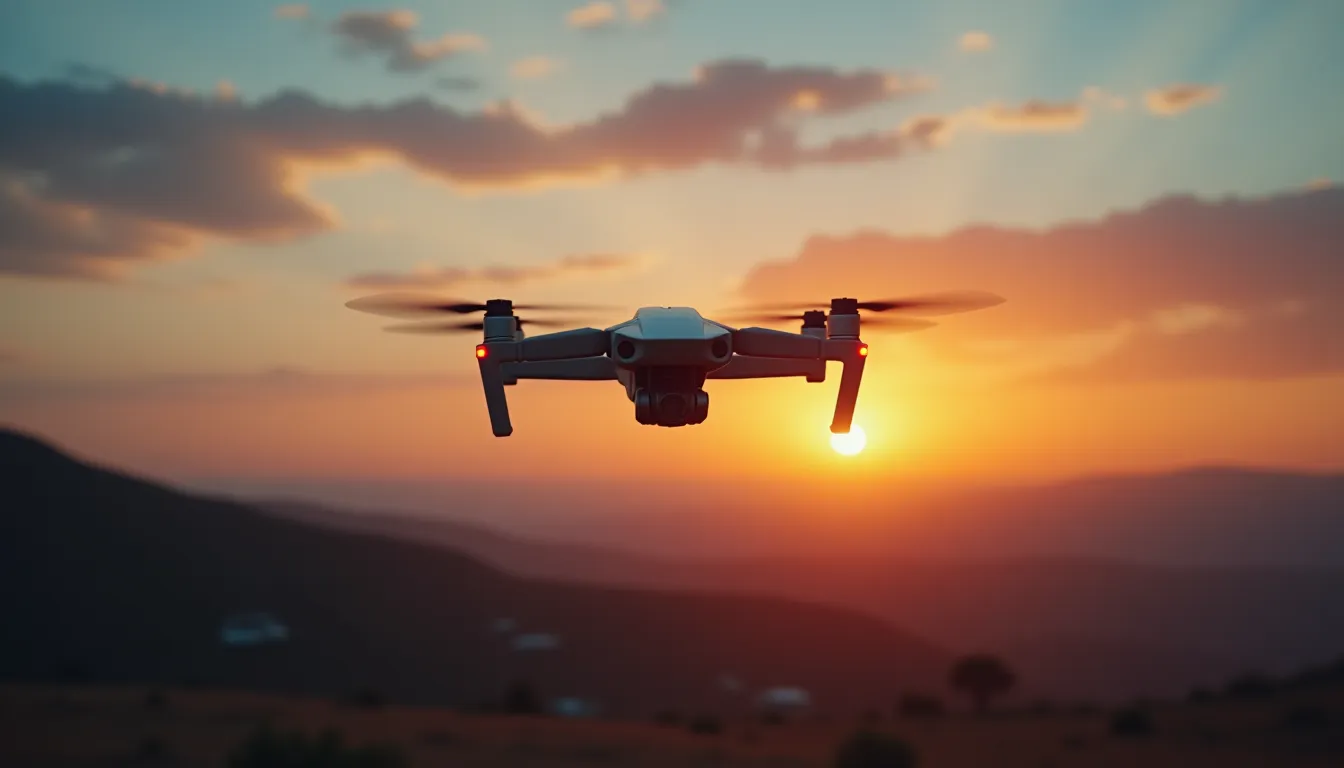
Drone autonomy has evolved particularly rapidly. What began as remote-controlled aircraft have increasingly incorporated machine learning algorithms capable of independent navigation and target recognition. The Ukrainian military reports that AI-assisted drones have improved mission success rates by approximately 40% while reducing operator training time from weeks to days.
"The Ukraine conflict has compressed a decade of AI military development into two years. We're seeing capabilities emerge that were theoretical in 2022 become operational reality today." — Defense industry analyst assessment, 2024
Logistics optimization represents another critical application. AI systems are now managing supply chain decisions, predicting equipment failures, and optimizing resource allocation across multiple fronts simultaneously. These applications demonstrate AI's value beyond kinetic operations, addressing the historically mundane but strategically crucial aspects of military operations.
The Corporate Beneficiaries
Palantir Technologies has emerged as perhaps the clearest beneficiary of increased defence AI spending. The company's Artificial Intelligence Platform (AIP) for military applications has driven significant revenue acceleration. Palantir reported $634 million in government revenue for Q3 2024, representing 33% year-over-year growth, with defence contracts comprising the majority of this increase.
The company's software platforms enable military commanders to process vast amounts of battlefield data, from satellite imagery to communications intercepts, providing actionable intelligence in near real-time. This capability has proven particularly valuable as military operations become increasingly data-driven.
Scale AI, while privately held, has secured substantial contracts for military data labeling and training set preparation. The company's $1.3 billion valuation reflects investor confidence in AI infrastructure for defence applications. Scale's work involves preparing datasets for training military AI systems, a less visible but equally critical component of the AI defence stack.
| Company | Market Status | 2024 Defence Revenue | Primary AI Application | Growth Rate |
|---|---|---|---|---|
| Palantir | Public (NYSE: PLTR) | $634M (Q3 annualized) | Data analytics, battlefield intelligence | 33% YoY |
| L3Harris | Public (NYSE: LHX) | $1.2B (estimated) | Communications, electronic warfare | 12% YoY |
| Anduril | Private | $500M (estimated) | Autonomous defence systems | 80% YoY |
| Shield AI | Private | $200M (estimated) | AI pilot systems, drone autonomy | 120% YoY |
Anduril Industries, founded by former Oculus founder Palmer Luckey, has raised $1.48 billion across multiple funding rounds, achieving a $8.5 billion valuation in 2024. The company's autonomous defence systems, including AI-powered surveillance towers and interceptor drones, represent a new category of military technology that operates with minimal human oversight.
Shield AI has focused specifically on AI pilot systems capable of operating in GPS-denied environments. The company's Hivemind technology enables aircraft to operate autonomously in complex, contested environments—a capability that has attracted significant Pentagon interest and private investment.
The Autonomous Weapons Dilemma
The development of lethal autonomous weapons systems (LAWS) has sparked intense international debate. The United Nations has held multiple discussions on establishing international protocols governing AI weapons, with many nations advocating for "meaningful human control" requirements. However, the practical implementation of such controls remains technically and politically complex.
The concept of meaningful human control itself lacks precise definition. Current systems exist on a spectrum from human-operated to human-supervised to fully autonomous. Most military AI systems today fall into the human-supervised category, where algorithms make rapid tactical decisions but humans retain authority over engagement rules and mission parameters.
"The question isn't whether autonomous weapons will be developed—it's how quickly they'll be deployed and who will develop them first. The military advantages are simply too significant to ignore." — Former Pentagon AI official, 2024
Despite international opposition, military strategists argue that autonomous weapons may be inevitable due to their tactical advantages. AI systems can react faster than human operators, operate in environments too dangerous for human presence, and reduce military casualties among friendly forces. These advantages create powerful incentives for continued development, regardless of ethical objections.
Investment Implications and ESG Considerations
For investors, defence AI presents unique characteristics that differentiate it from consumer-focused AI applications. Government contracts typically provide longer-term revenue visibility and are less susceptible to economic downturns. The US defence budget has grown consistently over decades, and AI spending represents a growing portion of this allocation.
However, ESG-focused investors face complex considerations. While AI defence systems may reduce military casualties and improve operational efficiency, their development also raises ethical questions about autonomous decision-making in life-and-death situations. Some institutional investors have begun excluding defence AI companies from ESG portfolios, while others argue that improving military efficiency serves broader humanitarian goals.
The regulatory environment adds another layer of complexity. Export controls on AI technology have become increasingly stringent, potentially limiting market opportunities but also creating moats for approved suppliers. Companies with existing security clearances and government relationships possess significant competitive advantages.
What This Means for Investors
Defence AI represents one of the few AI applications with demonstrable revenue growth and government-backed demand stability. Unlike consumer AI applications that must prove market fit and monetization models, military AI systems address clearly defined operational requirements with established procurement processes.
The sector's recession-resistant characteristics stem from several factors. Defence spending typically remains stable during economic downturns, as national security priorities transcend short-term fiscal pressures. Additionally, the strategic nature of AI competition between nations creates sustained demand for advanced capabilities.
Private market opportunities appear particularly compelling. Companies like Anduril and Shield AI have achieved substantial valuations while maintaining significant growth rates, suggesting robust investor appetite for defence technology. However, these investments require longer time horizons and tolerance for regulatory complexity.
Public market options remain more limited but may offer better liquidity. Palantir's performance demonstrates how defence contracts can drive consistent revenue growth, though investors must consider the company's broader commercial market challenges.
The Path Forward
The convergence of geopolitical tensions, technological capability, and demonstrated battlefield effectiveness suggests defence AI spending will continue expanding regardless of broader economic conditions. The Ukraine conflict has provided proof-of-concept for numerous AI applications, while rising tensions with China and Russia ensure continued government investment priorities.
For investors, this sector offers exposure to AI development with clearer revenue models and more predictable demand than many consumer applications. However, success requires careful evaluation of regulatory risks, ethical considerations, and the complex dynamics of government procurement. As AI warfare capabilities continue advancing, the investment opportunities will likely expand—along with the ethical dilemmas they present.
Frequently Asked Questions
How much is the US spending on defense AI in 2024?
The US Department of Defense allocated $2.4 billion to AI initiatives in fiscal year 2024, marking a 15% annual growth rate in defense AI spending.
Which companies are profiting most from defense AI investments?
Palantir Technologies leads with $634 million in Q3 2024 government revenue (33% growth), while Anduril Industries achieved an $8.5 billion valuation and Shield AI shows 120% growth rates.
How has the Ukraine conflict impacted AI weapons development?
The Ukraine conflict compressed a decade of AI military development into two years, with AI-assisted drones improving mission success rates by 40% and reducing operator training time from weeks to days.
Are autonomous weapons legal under international law?
The UN is discussing protocols for lethal autonomous weapons systems (LAWS) with many nations advocating for 'meaningful human control' requirements, but implementation remains technically and politically complex.
Why is defense AI considered recession-resistant for investors?
Defense AI spending remains stable during economic downturns because national security priorities transcend short-term fiscal pressures, and government contracts provide longer-term revenue visibility than consumer applications.


Get MachineHours in your inbox
AI compute and the machine economy in your inbox.